
Square Led Ceiling Light Fixture in UAE: A Complete Buying Guide in 2027
Choosing a ceiling light sounds simple enough in the UAE. At least on the surface.
You find a design you like, check the price, and arrange the installation.
However, if you’re furnishing a new home, renovating a villa, or planning lighting for a commercial property in the UAE, there’s a little more to it.
The shape of a fixture matters, but so do its light output, colour temperature, glare control, energy efficiency, mounting requirements, and compatibility with the rest of your lighting design.
A square LED ceiling light fixture can be an excellent choice for contemporary interiors.
Its clean geometry works particularly well with minimalist ceilings, modern furniture, and architectural spaces built around straight lines.
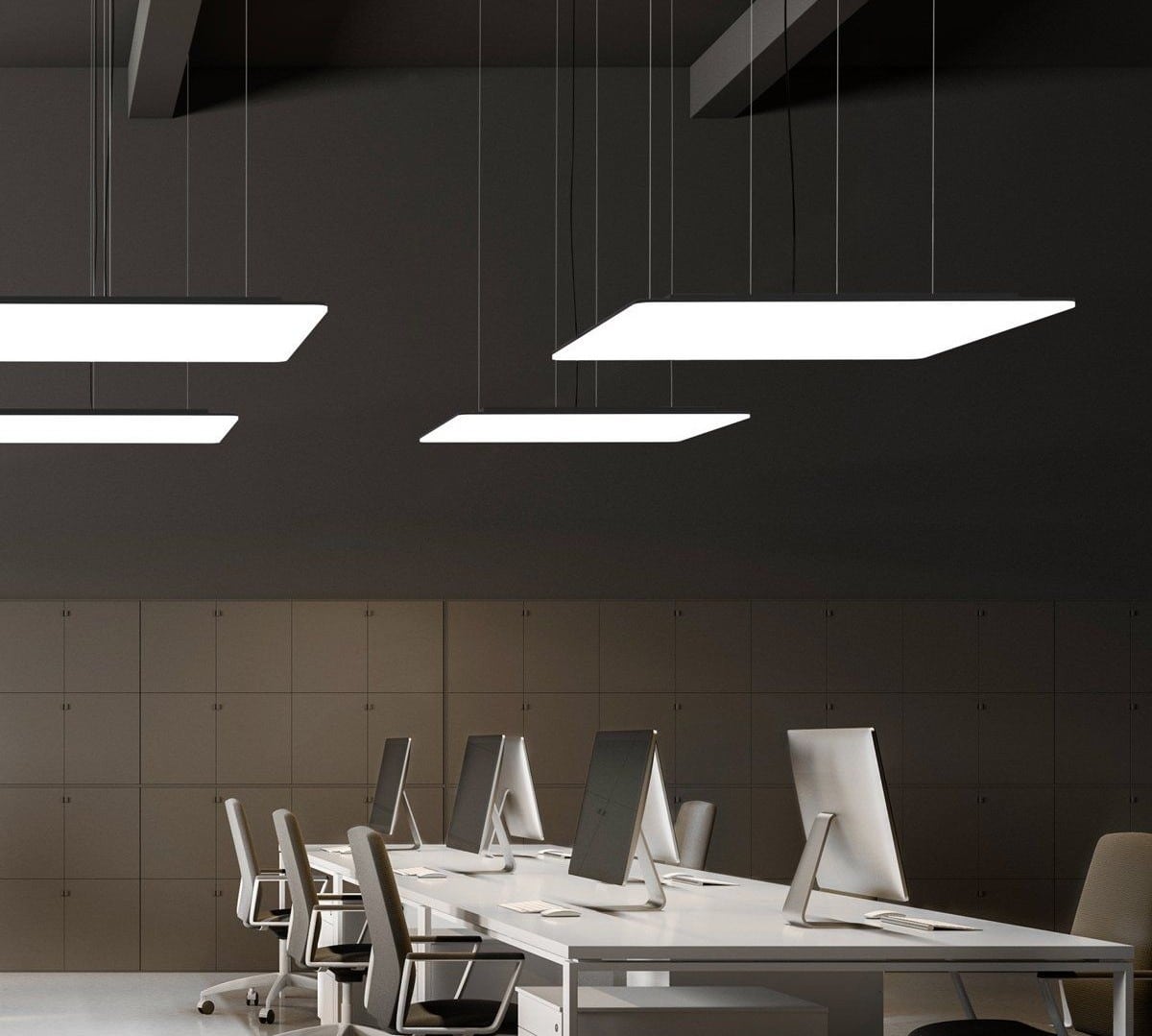
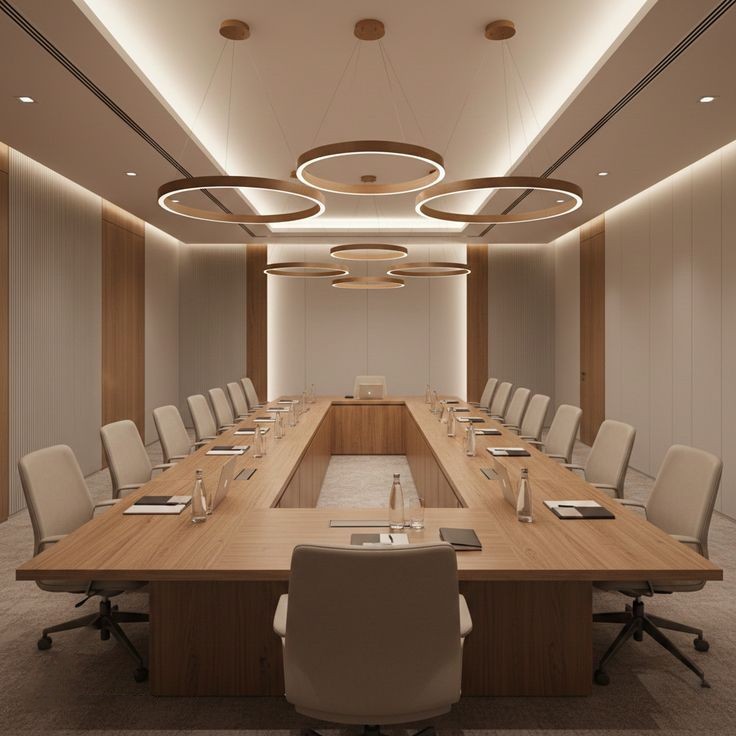
You can find square fixtures in recessed downlights, surface-mounted luminaires, hanging lights for office, larger ceiling panels, each designed for different needs.
The challenge is choosing the right one for your room rather than simply choosing the one that looks best in a product photograph.
WHAT IS SQUARE LED CEILING LIGHT FIXTURES?
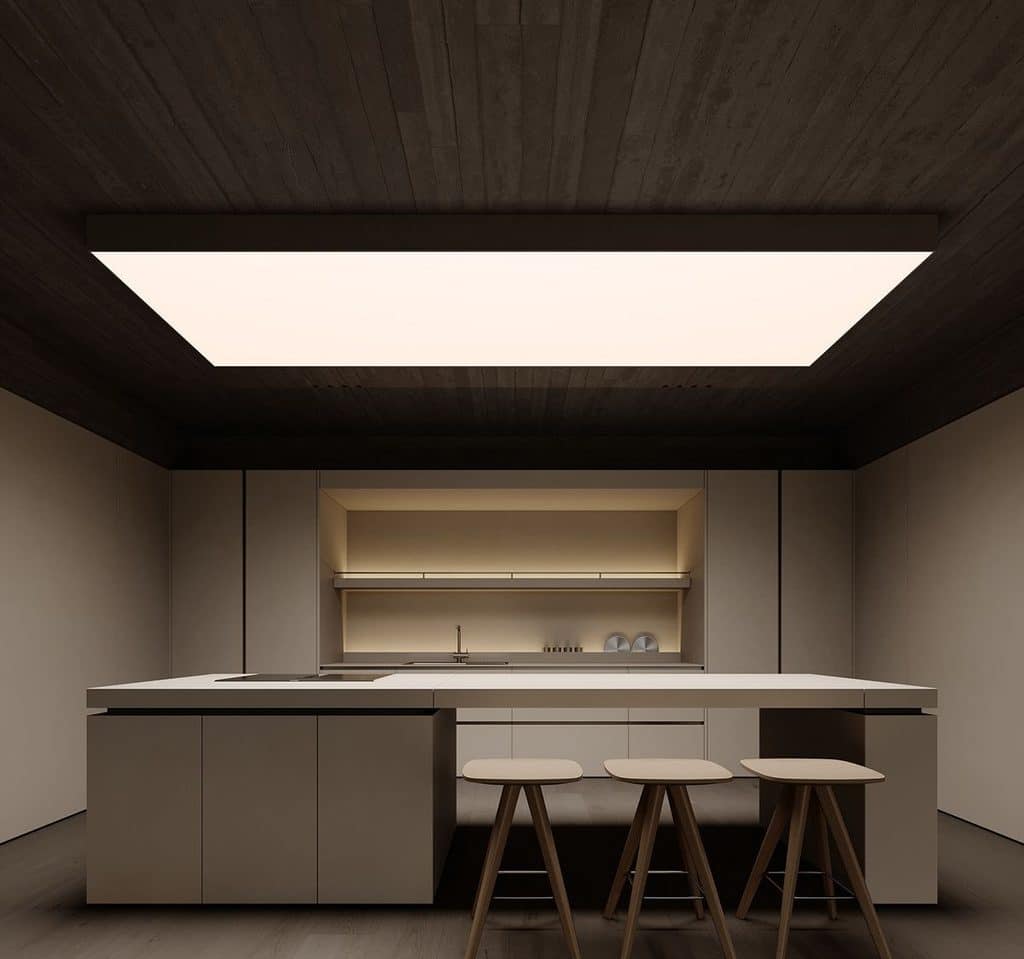
A square LED ceiling light fixture is a luminaire with a square-shaped housing or light-emitting face that uses LED technology.
The category includes compact recessed downlights, larger flat panels, surface-mounted lights, decorative architectural fixtures, and other office ceiling lights.
That distinction matters because two fixtures can look almost identical in a photograph while producing very different lighting results.
A recessed square downlight directs light into a room from a compact opening in the ceiling.
A square panel generally distributes light over a larger surface, while a surface-mounted fixture sits below the ceiling rather than being integrated into it.
For example, the Philips LuxSpace Square recessed downlight range includes a model measuring 200 × 200 mm with a rated power consumption of 7.9 W and a stated light output of 1,200 lumens.
The specified colour temperature is 3000 K, and the manufacturer reports a luminous efficacy of approximately 153 lumens per watt.
Other versions within the same product family have different specifications and control options.
This illustrates why the word square alone tells you very little about a fixture’s performance.
In the UAE, these fixtures can be considered for living rooms, bedrooms, kitchens, hallways, offices, hotel rooms, reception areas, and other indoor spaces.
Their suitability depends on the actual product specifications and the lighting requirements of the room.
Before comparing individual models, decide what you need the fixture to do. Is it intended to provide general illumination?
Will it highlight a particular feature? Does it need to fit into a gypsum board ceiling? Will it be used in a bathroom or another area exposed to moisture?
Answering these questions first makes the buying process considerably easier.

START WITH THE PRODUCT SPECIFICATIONS
A product photograph can tell you whether a fixture suits your interior design.
It cannot tell you whether it will provide enough light, fit your ceiling, or work with your controls.
That is why the technical specification sheet should be part of every serious comparison.
When evaluating a square LED ceiling light fixture, check the following:
- Power consumption: How many watts does the fixture use?
- Luminous flux: How much visible light does it produce, measured in lumens?
- Luminous efficacy: How many lumens does it deliver per watt?
- Colour temperature: Is the light warm, neutral, or cool?
- Colour rendering index (CRI): How accurately does it reveal colours?
- Glare performance: Is the light comfortable to look at?
- Dimensions and mounting: Will it fit the ceiling and available installation space?
- Electrical compatibility: Does the driver support the supply and control requirements?
- Protection rating: Is the fixture suitable for the intended environment?
- Warranty and serviceability: What can be repaired or replaced, and under what conditions?
These are not merely technical details. Each one affects the way the finished space looks or functions.
A fixture with an attractive square frame may still be unsuitable if its light output is too low.
A high-output model may be uncomfortable if it produces excessive glare.
And a recessed fixture may be impractical if its body or driver requires more ceiling space than the project allows.
For a villa or a large property, these decisions are best made alongside the lighting layout, rather than one product at a time.
A coordinated design can account for room dimensions, furniture positions, ceiling details, and the intended use of each space.

LUMENS, WATTS, AND ENERGY EFFICIENCY
One of the most common mistakes when buying LED lighting is comparing products by wattage alone.
Watts measure electrical power consumption. Lumens measure the quantity of visible light produced.
A higher-wattage fixture does not automatically provide a better lighting result, and two fixtures with identical wattages can have different light outputs.
LED products also differ in efficiency, light quality, dimmability, and useful life.
This is why comparing their complete specifications is more useful than judging them by power consumption alone.
For a simple example, consider the Philips square recessed downlight mentioned earlier. Its published figures are 7.9 W and 1,200 lumens.
Dividing its rated light output by its power consumption gives approximately 152 lumens per watt, consistent with the manufacturer’s stated efficacy of 153 lm/W.
This calculation tells us how efficiently the product converts electrical power into light, but it does not tell us whether the fixture is appropriate for a particular room.
A highly efficient fixture can still be the wrong choice if its beam distribution, glare characteristics, or position does not suit the application.
There is no single lumen figure that works for every room.
The amount of light required depends on the size of the space, ceiling height, surface colours, furniture, daylight, visual tasks, and the desired atmosphere.
A kitchen worktop may need more focused illumination than a softly lit bedroom, while a large living room may benefit from several layers of light rather than one powerful ceiling fixture.
For that reason, avoid choosing fixtures solely according to a manufacturer’s suggested room size. Such recommendations can be useful for initial comparison, but a proper lighting calculation provides a more reliable basis for a project.
For larger homes, villas, and commercial properties, the goal is to provide appropriate light where it is needed without unnecessarily overlighting the entire room.
CHOOSE THE RIGHT COLOUR TEMPERATURE
Colour temperature is another specification that can have a noticeable effect on your interior.
It is measured in kelvins (K). Lower correlated colour temperatures generally produce warmer-looking light, while higher values produce cooler-looking light.
For residential and hospitality projects, three commonly encountered choices are:
3000 K: Warm White
Warm white is often considered for living rooms, bedrooms, dining areas, hotel guestrooms, and spaces where a relaxed atmosphere is important.
It can work particularly well with wood, warm neutral colours, and many natural stone finishes.
4000 K: Neutral White
Neutral white can be suitable for kitchens, study areas, offices, utility rooms, and other locations where a clearer, less warm appearance is desired.
It is also available in professional square recessed luminaires, including products in the Philips LuxSpace range.
5000–6500 K: Cooler White
Cooler white light is available on many LED products and may be appropriate for selected functional environments.
It is not automatically the best option for every workspace, nor does it guarantee better visibility. The application, light distribution, glare control, and visual tasks should determine the choice.
Should the Whole Villa Use the Same Colour Temperature?
Not necessarily. Different rooms can have different requirements, but the transition between adjacent spaces should feel intentional.
For example, a warm living room opening onto a kitchen with neutral-white task lighting can work well when both areas are planned as part of the same lighting scheme.
In contrast, an inconsistent mixture of colour temperatures within one visual area can make the overall light installation feel accidental.
For a premium villa, it is worth reviewing the proposed colour temperatures across the entire floor plan before purchasing the fixtures.
COLOUR RENDERING AND VISUAL COMFORT
Colour temperature tells you whether light looks warm or cool. It does not tell you how naturally it reveals colours.
That is where the colour rendering index (CRI) becomes relevant.
CRI is a measure of how accurately a light source renders colours compared with a reference illuminant under the relevant test conditions.
A higher CRI can be useful when the appearance of materials, finishes, furniture, artwork, clothing, or food is important.
The Philips LuxSpace product example lists a CRI greater than 80. That is a specification for this particular product, not a universal recommendation for every space.
Projects with demanding colour-critical requirements may need higher colour-rendering performance.
Glare is equally important. A ceiling light can produce ample illumination and still be uncomfortable if its light-emitting surface is too bright or poorly positioned.
Professional lighting-design guidance emphasizes that visual comfort depends on factors such as luminaire shielding, the arrangement of fixtures, reflections, and brightness contrasts.
Simply increasing brightness is not always the right solution.
For example, in a living room with a television, poorly positioned ceiling lights can create distracting reflections. In a study, glare may become uncomfortable during extended periods of screen use. In a hotel reception area, bright spots can compete with the architecture and decorative features.
When reviewing a square LED fixture, look beyond its external design.
Check its optics, beam distribution, glare data where available, and the way it will be positioned relative to people and reflective surfaces.
Good lighting should support the space rather than constantly draw attention to the fixture itself.
ELECTRICAL COMPATIBILITY, DIMMING, AND CONTROLS
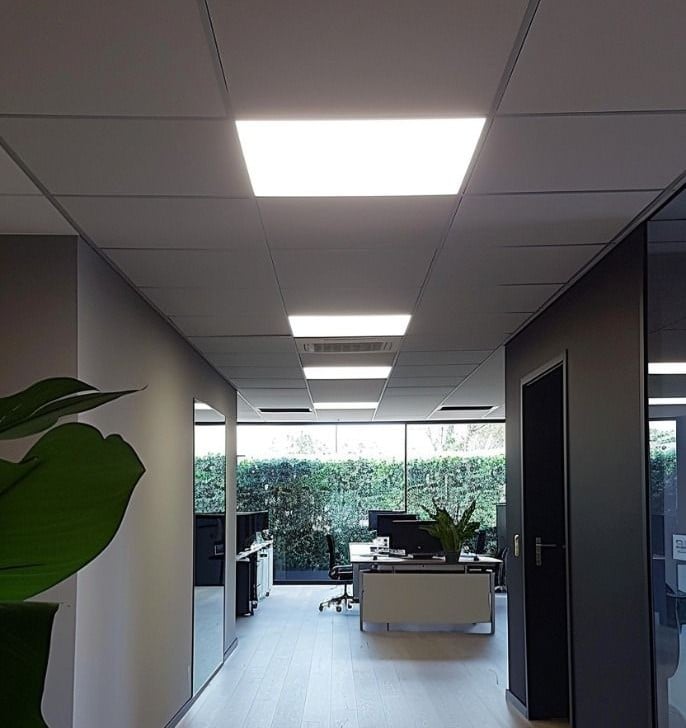
Before purchasing any LED ceiling light in the UAE, verify that its electrical specifications match the project requirements.
Check the rated input voltage and frequency, driver arrangement, connection method, electrical protection classification, and any applicable installation instructions.
One Philips LuxSpace product, for example, is specified for 220–240 V and 50–60 Hz.
Other models may have different requirements, so never assume that every fixture in the same product category has identical electrical characteristics.
Dimming depends on the complete fixture and driver, as well as the chosen control system.
A product may support DALI control, a compatible wall dimmer, another control protocol, or no dimming at all.
The Philips LuxSpace range includes versions that support DALI dimming and versions specified as non-dimmable.
The exact product details and installation documentation identify those differences.
This matters in homes and hotels where different lighting scenes may be required, especially places that include Stretch Ceilings.
A villa owner may want bright light for cleaning, moderate light for everyday use, and a softer evening setting in the living room. A hotel may need coordinated scenes for guestrooms, corridors, restaurants, and reception areas.
If dimming is part of the plan, specify it before ordering. Confirm the compatibility of the fixture, driver, dimmer, and control system rather than assuming that an LED product is automatically dimmable.
SQUARE RECESSED LED CEILING LIGHT FIXTURE
A square recessed LED ceiling light fixture is installed into a ceiling so that much of its housing is concealed.
This is particularly attractive in modern interiors where homeowners want clean ceiling lines and minimal visual clutter.
Recessed square luminaires can work well in living rooms, corridors, kitchens, offices, and selected commercial interiors.
Their suitability depends on the ceiling construction, light distribution, installation depth, and the intended lighting effect.
Check the Ceiling Before Choosing the Fixture
A recessed luminaire is not simply a surface light that can be fitted into any ceiling.
The ceiling must provide enough room for the housing, driver, wiring, and any required clearances. The cut-out must match the installation instructions.
If the project has gypsum board ceilings, the positions of the lights must be coordinated with framing, access points, and other services.
Also check the difference between the visible dimensions of the fixture and its required ceiling cut-out.
A product described as a 200 × 200 mm recessed downlight may have a larger external body and its own specified cut-out size. The dimensions must be taken from the actual product documentation, not guessed from the name.
For a new villa, planning recessed luminaires alongside the ceiling layout can prevent awkward spacing, unwanted overlaps, and costly changes after the gypsum work is complete.
Recessed or Surface-Mounted?
Recessed fixtures are useful when the design calls for an integrated ceiling appearance and the construction allows them.
Surface-mounted fixtures are installed beneath the ceiling and may be more practical where recessed installation is unsuitable or where the fitting itself is intended to remain visible.
Neither option is automatically superior. The choice depends on ceiling height, construction, maintenance access, the desired aesthetic, and the quality of the light.
For a luxury residence, these decisions should be coordinated with the ceiling and interior design rather than made after the finishing work has been approved.
SQUARE LED CEILING LIGHTS (THE RIGHT SIZE AND DESIGN)
Square LED ceiling lights are available in many dimensions and styles, from compact recessed fixtures to large, flat luminous panels.
The right size is not simply a matter of filling an empty part of the ceiling. It should relate to the room proportions, ceiling height, furniture arrangement, mounting location, and desired light distribution.
A small square downlight might suit a corridor or provide a controlled pool of light over a specific area.
A larger square panel can provide broader illumination in a suitable room or functional environment. Decorative square fixtures may also be selected where the fitting is intended to be a visible design feature.
In a minimalist villa, the arrangement of ceiling fixtures can be just as important as the appearance of each individual product.
A ceiling with too many fixtures may look crowded. Lights positioned without reference to furniture and architectural features can produce an arrangement that feels random, even if every fixture is attractive.
Before selecting the final products, consider how the lights will align with walls, cabinets, kitchen islands, dining tables, corridors, and other fixed elements.
For example, a row of square downlights may reinforce the linear geometry of a modern hallway.
In a living room, a uniform grid may be less effective than a more considered combination of general lighting, accent lighting, and concealed illumination.
This is where a lighting layout becomes useful. It shows how the fixtures work together instead of treating each one as an isolated purchase.

CEILING LIGHTS SQUARE LED (WHERE THEY WORK BEST)
Searching for ceiling lights square LED brings up products intended for very different applications. The important step is matching the type of fixture to what happens in the room.
Living Rooms and Family Areas
Square ceiling lights can complement contemporary interiors with clean lines and geometric ceiling details. However, a living room does not always benefit from uniform brightness across the entire ceiling.
A better solution may combine general illumination with separate accent or decorative lighting, allowing the space to change from an active daytime environment to a more relaxed evening setting.
Bedrooms
In bedrooms, consider comfort and flexibility. A square ceiling fixture may provide general lighting, while bedside lights and dimmable sources offer more control.
Warm white light is often a suitable starting point for a relaxing atmosphere, but the final selection should also consider furnishings, finishes, personal preference, and the intended use of the room.
Kitchens and Dining Areas
Kitchens generally require clear illumination for food preparation and other tasks.
A square ceiling fixture may contribute to the general lighting, but it should be coordinated with the lighting over worktops, cabinets, and islands.
Dining areas may benefit from a different approach, particularly when a pendant or chandelier is intended to create a focal point. The square ceiling lights should complement that feature rather than compete with it.
Offices and Workspaces
Office lighting requires attention to the visual tasks performed in the room, screen reflections, uniformity, and glare.
Professional lighting guidance for offices covers principles including colour, flicker, illuminance, luminance, glare, and lighting controls. These considerations are more useful than selecting a fixture based on wattage alone.
A suitable fixture must be selected and arranged according to the actual workspace, including desk positions, display screens, and ceiling geometry.
Hotels and Larger Residential Projects
Hotels, apartment buildings, and large villas often require consistency across many rooms while still accommodating different functions.
Square luminaires can be useful in corridors, service spaces, guestrooms, offices, and selected public areas.
However, the specification should distinguish between areas that need functional illumination and areas where atmosphere, architectural impact, or decorative lighting is more important.
For larger projects, lighting calculations and coordinated fixture schedules help ensure that the chosen products support the overall design and practical requirements.
INSTALLATION REQUIREMENTS AND PROTECTION RATINGS
Even a high-quality fixture can perform poorly if it is installed incorrectly or used in an unsuitable location.
Before installation, confirm the ceiling cut-out, mounting method, driver accessibility, wiring requirements, clearances, and manufacturer’s instructions.
Installation should be carried out by a qualified professional who can verify the product’s suitability and compliance with the applicable local requirements.
Protection ratings also deserve attention. A fixture suitable for an ordinary dry interior should not automatically be selected for a bathroom, shower area, outdoor ceiling, or another location where moisture may be present.
Check the manufacturer’s stated ingress protection (IP) rating and the requirements for the exact installation location. The required level of protection depends on the exposure and applicable electrical and building requirements.
The same principle applies to temperature. In the UAE, room conditions, air conditioning, ceiling voids, and exterior exposure can differ considerably.
Check the luminaire and driver operating-temperature limits rather than assuming a product is suitable for every location because it is sold in the local market.
A product’s installation documentation is an essential part of the selection process. Reliable manufacturers generally publish installation instructions and technical information alongside their luminaires.

ENERGY EFFICIENCY, USEFUL LIFE, AND MAINTENANCE
LED lighting is widely used because it can provide efficient illumination and long useful life compared with many traditional lighting technologies.
But these benefits still depend on the quality of the complete luminaire and how it is used.
The U.S. Department of Energy notes that good-quality white LED products commonly have a useful life of 30,000 to 50,000 operating hours or longer.
Useful life involves more than whether a light switches on: the gradual reduction in light output, colour changes, and potential failure of electronic components also matter.
When comparing square LED ceiling lights, review the manufacturer’s stated lifetime and the basis on which it is reported.
Check the warranty, maintenance requirements, and whether the LED module or driver can be replaced.
Some luminaires may have integrated LED modules that are not designed to be replaced by an ordinary user. Others may have serviceable components.
That distinction can influence long-term maintenance costs, especially in hotels or large properties with many fixtures.
Energy efficiency also depends on how the lighting is used. Appropriate controls, dimming where supported, and switching off lights in unoccupied spaces can help reduce unnecessary energy consumption.
For a large residential project, the sensible approach is to compare the full performance of the lighting system, not just the purchase price of each fixture.
Efficient products, suitable controls, good light distribution, and appropriate maintenance planning all contribute to the result.
HOW TO CHOOSE THE RIGHT SQUARE LED CEILING LIGHT FIXTURE IN THE UAE?
When evaluating products, use a simple sequence rather than beginning with the appearance of the fixture.
First, identify the application. A bedroom, kitchen, office, hotel corridor, and bathroom have different requirements.
Second, establish the desired lighting result. Decide whether the room needs general lighting, focused illumination, a decorative feature, or a combination.
Third, review the technical data. Compare lumens, watts, efficacy, colour temperature, CRI, glare performance, mounting dimensions, driver requirements, and protection rating.
Fourth, coordinate the fitting with the ceiling and electrical design. Confirm that the fixture and driver can be installed correctly and that the controls work as intended.
Fifth, consider maintenance. Review useful-life data, warranty terms, repairability, and the availability of replacement components.
Finally, review how the fixtures work together in the actual space.
This step matters particularly in villas and large residential developments, where a row of visually similar products can still produce an unbalanced result if their placement or light distribution is poorly planned.
If you are building or renovating a villa, buying individual lights before preparing a lighting plan can make it difficult to coordinate the ceiling, furniture, electrical work, and overall lighting effect.
A professional 2D lighting plan can show fixture positions and relevant installation information. A 3D lighting design can help you visualize proposed lighting effects and compare different concepts before installation.
For larger projects, lighting calculations and product schedules can help coordinate the specification, installation, and intended performance.
Blink Lighting provides 2D and 3D lighting design for homes, villas, and larger residential projects, alongside lighting fixture supply and professional installation.
If your project includes custom ceilings, decorative lighting, or coordinated interior and exterior lighting, planning these elements together can make the process more straightforward.

FINAL THOUGHT
A square LED ceiling light fixture can provide a clean, contemporary appearance, but its real value depends on more than its shape.
Light output, efficiency, colour temperature, colour rendering, glare control, installation requirements, and long-term serviceability all influence whether the product is right for your project.
For homeowners in the UAE, the best starting point is to identify how each space will be used, then compare fixtures according to their verified technical specifications.
A carefully selected luminaire can contribute to a comfortable and attractive room, while a coordinated lighting plan helps the entire property work as one design.
If you’re planning a new home, renovating a villa, or specifying lighting for a larger property, consider the overall layout before ordering the fixtures.
Getting the design right at the beginning is usually easier than correcting the installation after the ceiling is finished.

Related Posts
LED Office Light Fixtures for Corporate Offices and Businesses in Dubai and Abu Dhabi

