
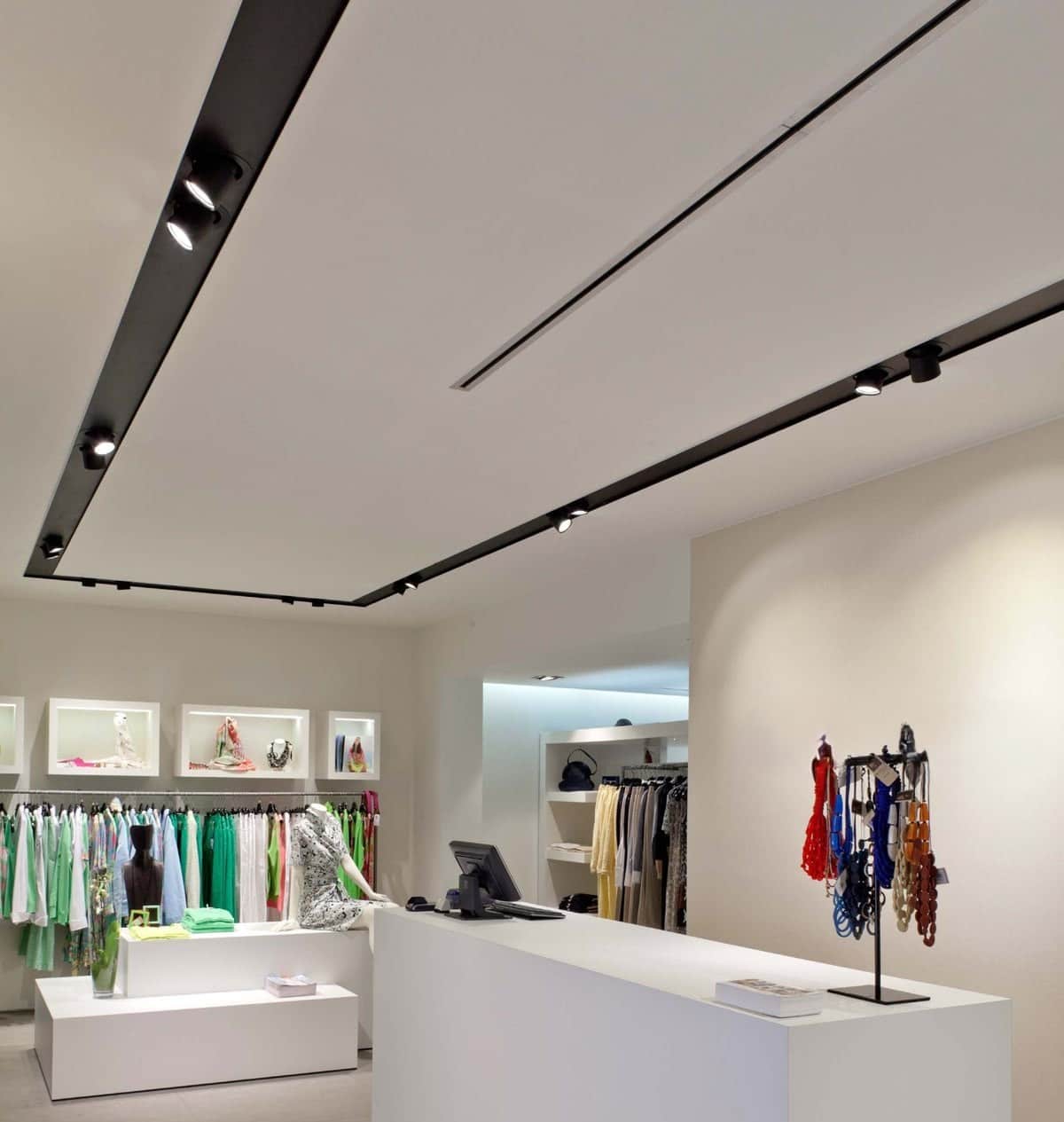
Retail Lighting Design in Dubai and Abu Dhabi: For Shops, Showrooms, and Malls
The top retail stores and shops in the UAE are often those that showcase thoughtful lighting design to their visitors.
Both shoppers and sellers largely agree on this, right?
Look, there is something interesting that happens when you walk into a shop with well-designed lighting:
Your attention naturally shifts toward the products, displays, and details the store wants you to notice.
And how to create this experience? The answer is: thoughtfully planned commercial lighting design.
It can reveal the color of a fabric, bring out the texture of a furniture finish, or make jewelry sparkle.
Business and store owners often benefit from working with a lighting consultant to plan and coordinate their lighting needs.
For retailers in Dubai and Abu Dhabi, lighting design also needs to reflect the store’s identity, the products it sells, and the way customers move through space.
A luxury boutique, a supermarket, an electronics showroom, and a fashion store don’t benefit from exactly the same lighting arrangement.
The challenge is to combine product presentation, visual comfort, architectural design, energy use, and practical maintenance into one coordinated solution.
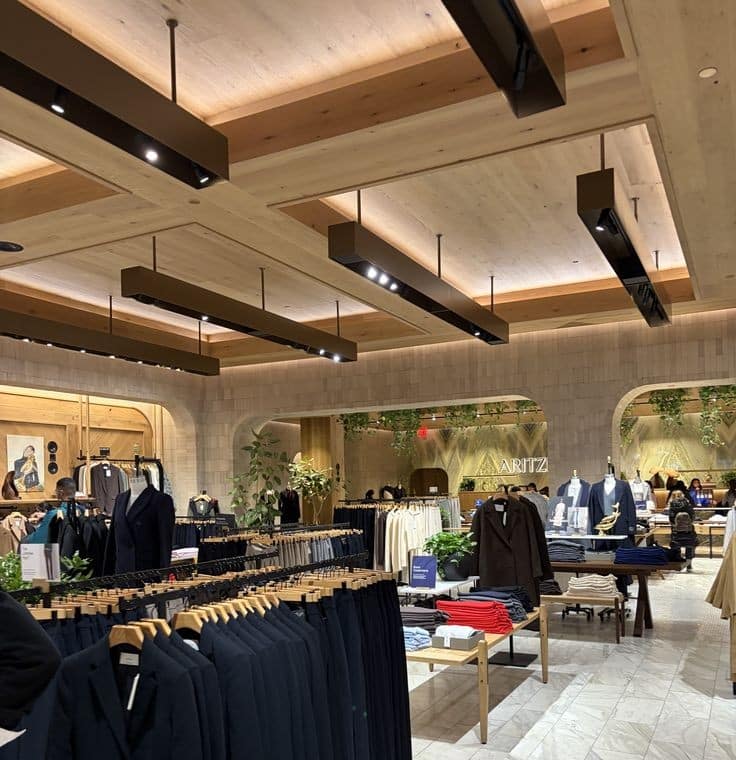
RETAIL LIGHTING DESIGN IN DUBAI AND ABU DHABI
Before choosing fixtures, a lighting designer needs to understand what the store sells and the experience the business wants to create.
A premium fashion boutique may use focused lighting to give individual garments and accessories their own visual space.
A supermarket needs clear aisles, consistent product visibility, and lighting that suits different departments.
A furniture showroom, however, may use lighting to reveal materials, proportions, and the relationship between objects, just like a hotel lighting design.
The Illuminating Engineering Society’s ANSI/IES RP-2-20, Recommended Practice: Lighting Retail Spaces, organizes retail lighting around store types, lighting objectives, visual performance, energy efficiency, and merchandise presentation.
The Store’s Lighting Objectives
Every retail space has several jobs to perform. The entrance should help customers recognize the store and feel invited inside.
The sales floor should make merchandise easy to browse, while feature displays should draw attention to selected products.
Checkout counters, fitting rooms, customer-service areas, and storage spaces have their own requirements.
Treating every zone identically can waste light in some places while leaving other areas poorly illuminated.
The designer should identify the purpose of each zone before selecting the appropriate lighting method.
Matching Lighting to the Brand
Lighting contributes to how customers perceive a retail environment.
A jewelry boutique might use carefully aimed accent lighting and high-quality color rendering to present small, reflective products.
A home-furnishings showroom may need broader lighting that helps customers evaluate timber, upholstery, stone, and other finishes.
A fashion brand may want the store lighting to feel consistent with its identity across several branches.
The objective isn’t to make every store bright. It’s to create the right visual emphasis for the merchandise and the brand.
Planning Around Customer Movement
Lighting can help customers understand the store layout without relying entirely on signs.
A brighter feature wall, a sequence of illuminated displays, or a clearly defined checkout area can help establish visual priorities.
Designers should coordinate these elements with aisles, shelving, furniture, and accessible routes. The lighting must complement the circulation plan rather than create distractions or uncomfortable glare.
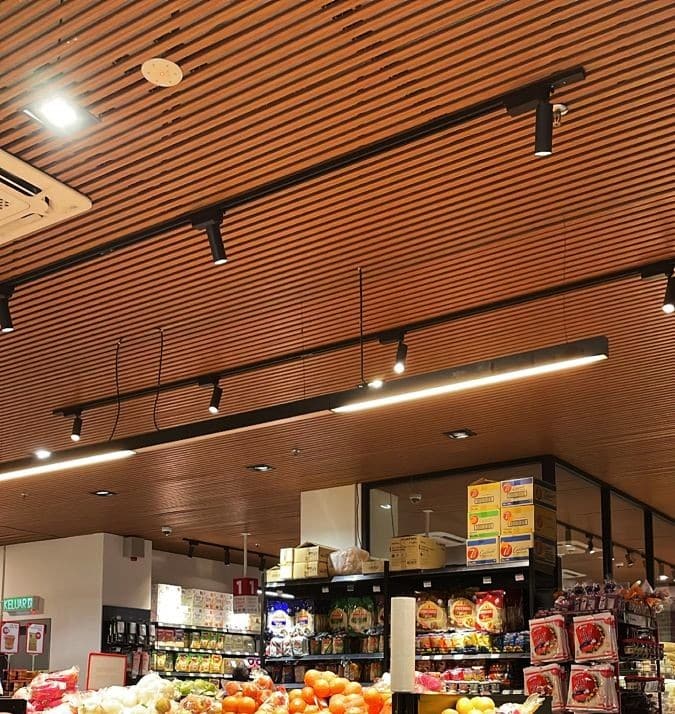
LED RETAIL LIGHTING (LIGHT, COLOR, REFLECTION, AND GLARE)
LED fixtures give retailers extensive control over light distribution, color characteristics, and energy use. But the label “LED” doesn’t tell the complete story.
Two products can look similar in a photograph and produce noticeably different results in a real store.
The designer should evaluate how the light interacts with merchandise, display surfaces, mirrors, glass, and the customer’s viewing position.
Color Temperature and Merchandise Appearance
Correlated color temperature, or CCT, describes whether white light appears warmer or cooler.
Different settings can change the perceived atmosphere of a store and influence how materials appear.
Warmer white light may suit some fashion boutiques, furniture displays, and specialty food environments. Other retail settings may benefit from a more neutral appearance.
The decision should reflect the merchandise and brand rather than follow a universal formula.
A store selling several product categories may also need a consistent approach across adjoining areas.
Color Rendering for Realistic Product Colors
The color rendering index, or CRI, measures how accurately a light source reveals colors compared with a reference source under defined conditions.
This matters when customers need to assess clothing, cosmetics, furniture finishes, fresh produce, or decorative materials.
Poor color rendering can make products look different from their intended appearance.
For color-sensitive displays, designers may consider high-CRI fixtures and request additional color-rendering information, such as IES TM-30 metrics, when appropriate.
The choice should come from actual product data rather than a claim that one color temperature or one CRI number automatically suits every retail application.
Reflections and Glare Control
Glass cabinets, polished counters, glossy packaging, and display screens can create reflections that obscure merchandise.
A lighting designer can reduce these problems by selecting suitable optics, adjusting the angle of the light, and considering the customer’s likely viewing position.
A bright spotlight aimed directly at a glass showcase may illuminate the display but also produce an uncomfortable reflection.
Moving the fixture or changing its beam distribution may solve the problem more effectively than increasing its output.
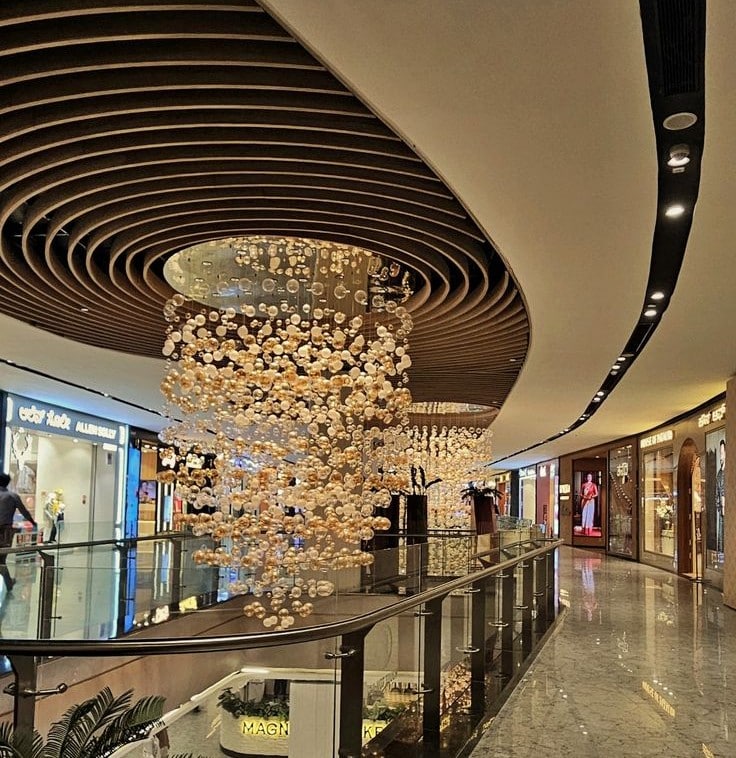
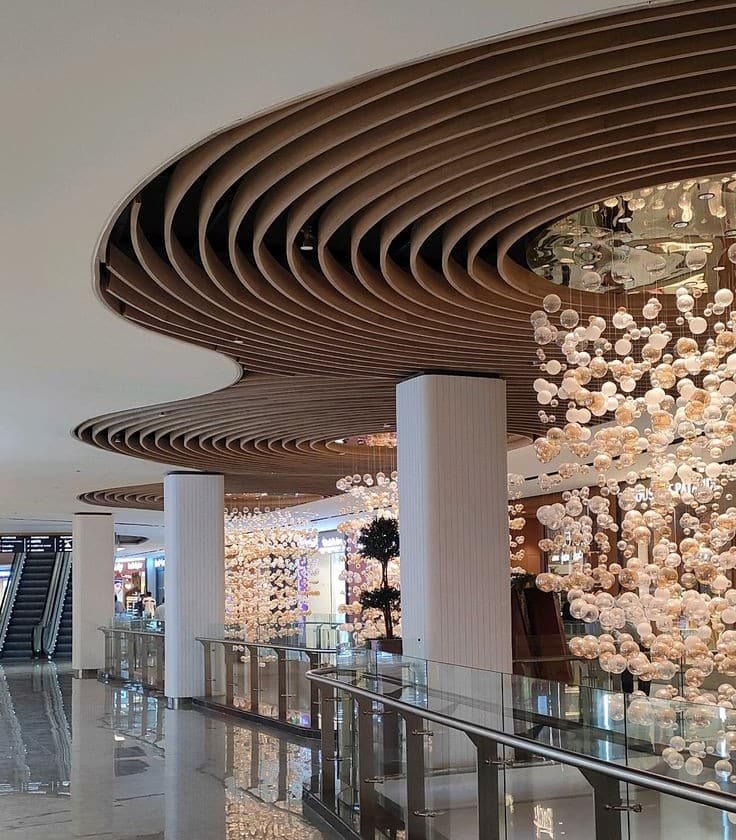
RETAIL LIGHTING SOLUTIONS (DESIGN CONSIDERATIONS FOR SHOPS, MALLS, AND SHOWROOMS)
A good retail lighting plan considers both the visual experience and the practical conditions of the building.
The available ceiling height, window positions, interior materials, display dimensions, and electrical infrastructure all influence the final design.
In malls, for example, designers may also need to coordinate with the wider development’s architectural requirements and restrictions on shopfront alterations.
Start With Drawings and Site Conditions
For a new store, architectural plans and reflected ceiling plans provide a starting point for the lighting layout.
For renovation, the designer should inspect the existing fixtures, circuits, ceiling construction, and display arrangements.
The team can then identify which elements should remain, which need replacement, and where new lighting should go.
Early coordination is especially useful when a shop uses suspended or stretch ceilings, custom joinery, illuminated shelving, or large decorative installations.
Use Contrast to Establish Priorities
A store does not need equal brightness everywhere.
The designer can create visual hierarchy by separating the general lighting from the more focused illumination used for featured products.
For example, a fashion store might use a restrained ambient layer with stronger light on selected mannequins and clothing displays.
A furniture showroom might illuminate the main display pieces while keeping secondary circulation areas visually quieter.
This approach helps distinguish important merchandise without filling the entire store with intense light.
Consider Natural Daylight
Shopfronts and large windows may introduce significant daylight into the retail environment. This can change the appearance of displays throughout the day.
The designer should evaluate how daylight affects merchandise visibility, reflections, and the contrast between the window and interior.
Appropriate fixture positioning and controls can help the store maintain consistent presentation under changing conditions.
Daylight also deserves attention when calculating the required electric lighting.
The design should respond to the actual building rather than rely on a single static arrangement.
RETAIL LIGHTING FIXTURES AND RETAIL CEILING LIGHTS
Retail projects use a mixture of fixture types because different products and surfaces need different lighting effects.
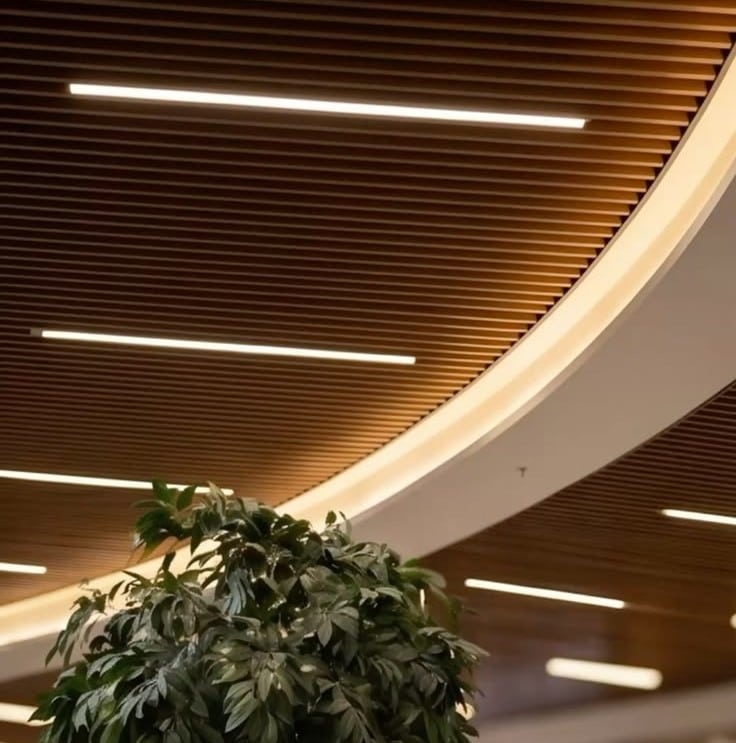
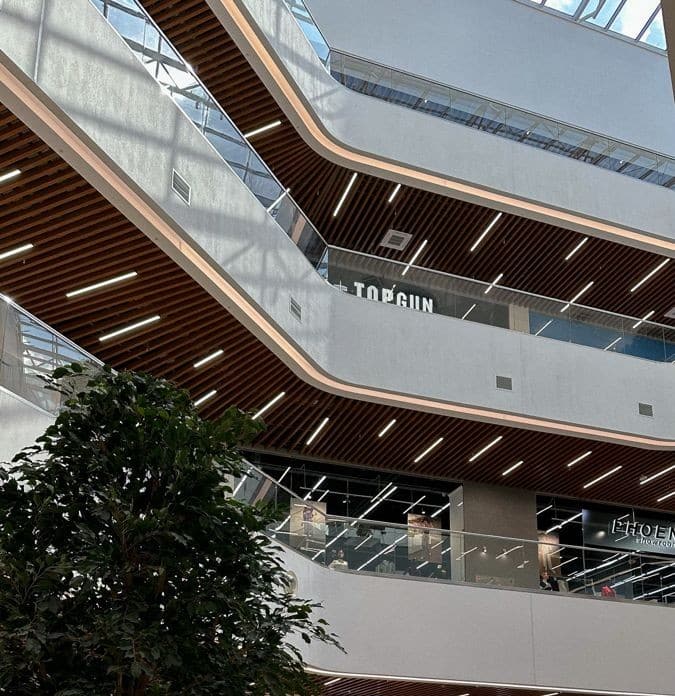
Downlights and linear fixtures can provide general illumination.
Track-mounted spotlights offer flexibility for highlighting merchandise. Wallwashers illuminate vertical surfaces, while integrated LED strips can reveal shelves, counters, and architectural details.
The right combination depends on the store’s design and how its merchandise needs to appear.
Recessed and Surface-Mounted Ceiling Fixtures
Recessed downlights can create a clean ceiling appearance and suit many retail environments.
However, the layout must provide the intended illumination without producing distracting bright patches or leaving display areas underlit.
Surface-mounted fixtures offer another option when the building does not provide sufficient ceiling depth for recessed installation.
The designer should consider the ceiling structure, spacing, light distribution, glare control, and maintenance access before specifying the fixtures.
Linear Lighting for Sales Floors and Aisles
Linear luminaires can deliver continuous illumination across long sales floors, aisles, and cashier areas.
They can also work with the architecture to organize the space visually.
For larger showrooms, suspended linear fixtures may help illuminate the merchandise while making the ceiling arrangement feel deliberate.
A fixture’s distribution and mounting height matter more than its shape alone. The designer should examine photometric data to confirm that the selected product suits the required area.
Choosing the Right Fixture Family
A retail project may combine several products, but they should function as one coordinated lighting system.
The specification should identify the light output, color characteristics, beam distribution, dimensions, electrical requirements, controls, and environmental ratings where relevant.
This information also helps procurement teams compare alternatives without accepting a substitution that changes the intended lighting effect.
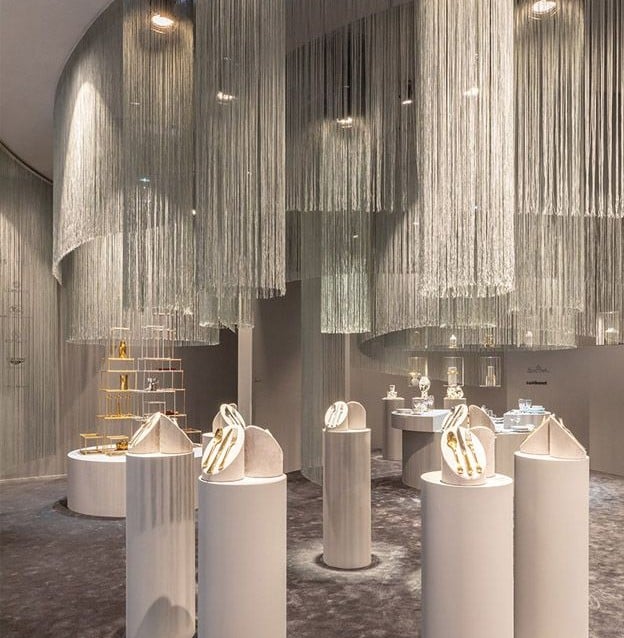
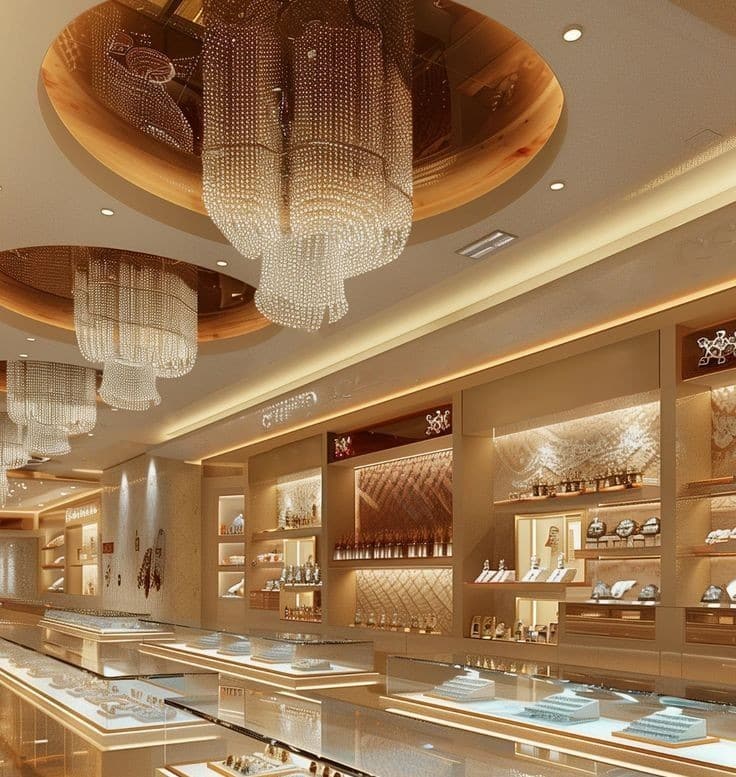
RETAIL DISPLAY LIGHTING FOR DIFFERENT MERCHANDISE AREAS
Display lighting deserves separate consideration because merchandise often sits on vertical surfaces, inside cabinets, or on dedicated tables.
Lighting the floor alone does not guarantee that customers can see the products clearly.
The designer must consider the direction and distribution of light across the actual display.
ERCO’s retail-lighting guidance emphasizes the role of contrast, surface appearance, color rendering, and directional light in presenting products.
Fashion and Apparel Displays
Clothing displays need lighting that helps customers recognize color, texture, cut, and material.
The designer can use adjustable spotlights to highlight mannequins and selected garments while providing general illumination for the surrounding sales area.
Fitting rooms require particular attention.
Harsh overhead lighting can create distracting shadows on faces and clothing, while uneven color rendering may make garments appear different from how they looked elsewhere in the store.
A combination of suitable general lighting and carefully positioned vertical illumination around mirrors can improve the viewing experience.
Jewelry, Watches, and Luxury Merchandise
Jewelry and watches often benefit from precise accent lighting that reveals fine details, reflective surfaces, and small changes in shape.
However, high-output spotlights can create excessive sparkle or glare when positioned poorly.
The designer should consider the display case, the viewing angle, the background material, and the reflectivity of both the merchandise and the glass.
Some fixtures may integrate into display cases to keep the light source discreet. The design should also account for heat management, cleaning access, and electrical safety.
Furniture and Home-Furnishing Showrooms
Furniture showrooms need to reveal how products look in context. Customers often evaluate surface texture, color, shape, and how different materials work together.
Directional accent lighting can emphasize a table, sofa, or display arrangement.
Broader lighting can help customers inspect the surrounding area and understand the overall product presentation.
The designer should consider whether glossy finishes create reflections and whether the lighting changes the perceived color of upholstery or timber.
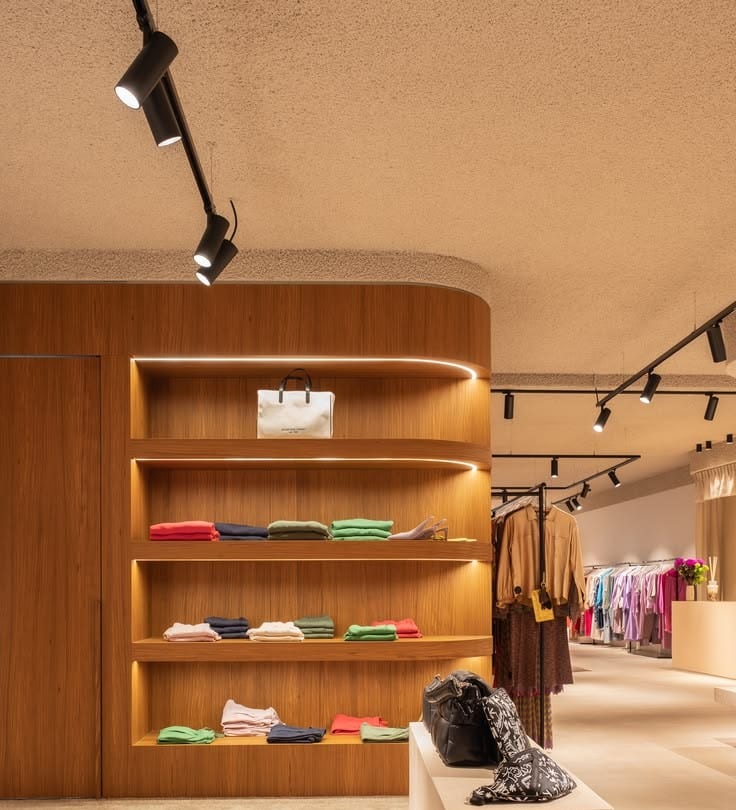
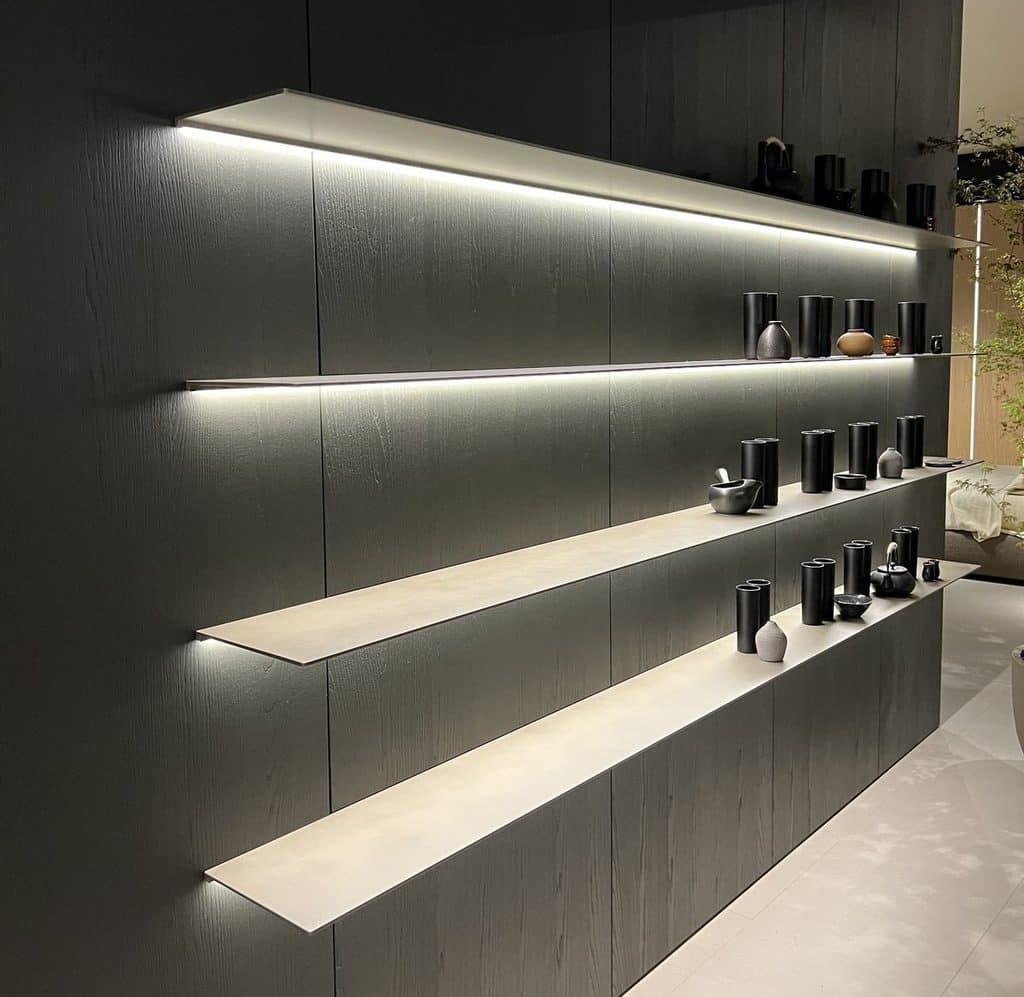
RETAIL SHELF LIGHTING FOR PRODUCTS, RACKS, AND GONDOLAS
Shelves are where small lighting decisions can make a noticeable difference.
A display may receive plenty of light from ceiling fixtures while its lower shelves remain dim or uneven.
Retail shelf lighting directs suitable illumination onto the products themselves, helping customers identify labels, colors, details, and variations.
Integrated LED Strips and Linear Shelf Fixtures
LED strips and compact linear luminaires can work well beneath shelves, inside cabinets, and along selected display edges.
The designer should check the strip’s output, dimensions, color characteristics, driver requirements, dimming compatibility, and mounting arrangement.
A suitable profile and diffuser can help create a more continuous appearance. The installation also needs to consider heat management, wiring, and future access for maintenance.
Avoiding Bright Spots and Dark Gaps
The spacing and direction of shelf lighting affect the result. A narrow fixture may create a bright strip across a limited area while leaving the rest of the shelf unevenly illuminated.
The designer should test the beam distribution against the actual shelf depth, product dimensions, and mounting position.
Fixtures must also avoid shining directly into customers’ eyes when they browse nearby displays.
Lighting That Adapts to Merchandising Changes
Retail shelves and gondolas may change when a store introduces seasonal products or rearranges its assortment.
A flexible lighting arrangement can accommodate those changes without requiring a complete redesign.
Adjustable fixtures or modular shelf systems can provide useful flexibility, provided the design maintains consistent product presentation and electrical safety.
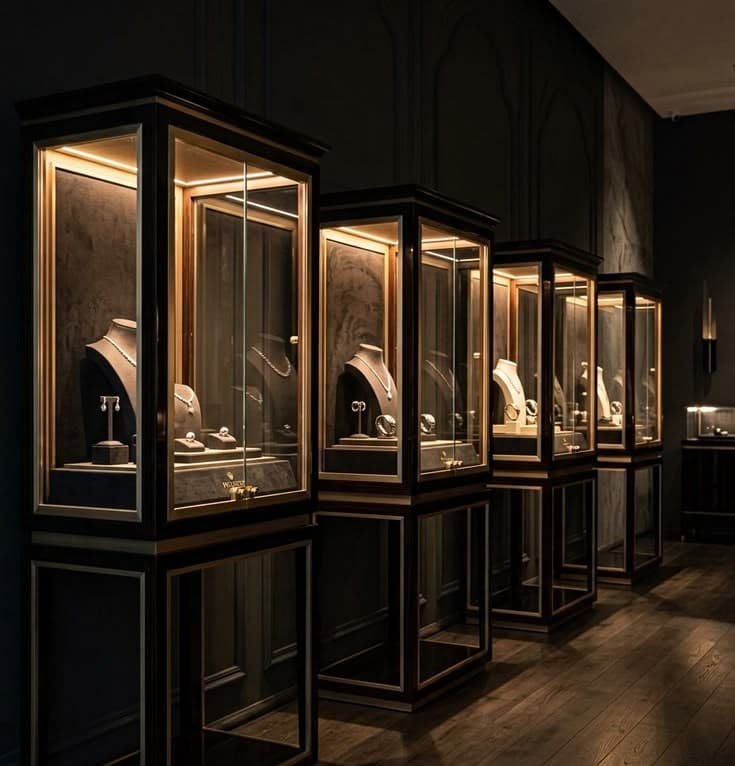
RETAIL WINDOW DISPLAY LIGHTING
A shop window has a limited amount of time to communicate the store’s identity to someone passing by.
Lighting helps determine what that person notices first.
A carefully designed display can separate featured products from the background, create depth, and make the shopfront visible without turning the window into a mass of competing bright spots.
Build a Foreground, Middle Ground, and Background
Window lighting can use different layers to create a sense of depth. Focused accent light can emphasize selected products in the foreground, while softer lighting reveals the surrounding display and rear wall.
This arrangement helps the viewer understand the composition rather than seeing every object at the same visual level.
ERCO’s specialist guidance on shop windows describes how directed spotlights, background wallwashing, and vertical illumination can work together to highlight merchandise and create depth.
Control Reflections on Glass
Shopfront glass introduces another technical challenge.
Depending on the fixture position and surrounding brightness, the window can reflect interior lighting and make the display harder to see from outside.
The designer should consider the angle of the glass, fixture positions, brightness inside the shop, and nighttime viewing conditions.
A mock-up or evening review can help identify reflections that may not appear obvious in daytime drawings.
Coordinate Shopfront and Interior Lighting
The window should connect visually with the interior rather than appear as a separate bright panel.
Illuminating selected vertical surfaces inside the shop can help establish that connection and give the store more depth.
The design should also account for the shopfront architecture, signage, circulation, and any requirements imposed by the mall or building owner.
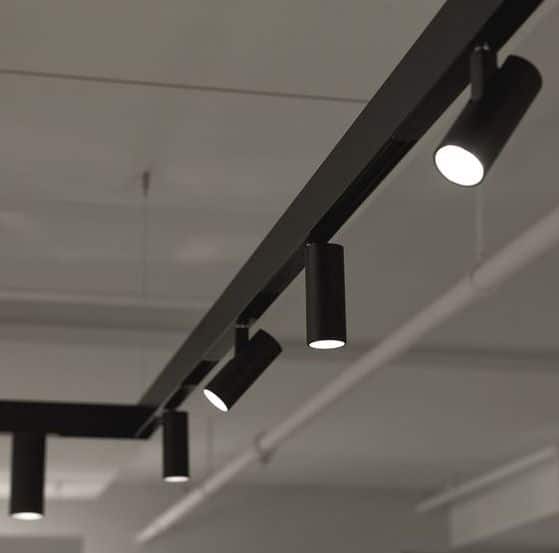
RETAIL TRACK LIGHTING FOR FLEXIBLE PRODUCT PRESENTATION
Track lighting remains useful in retail because it allows the team to reposition or re-aim compatible fixtures when merchandise layouts change.
A track system can support different spotlight types, beam angles, and optical arrangements, depending on the selected product family.
This flexibility suits stores that frequently update displays or need to highlight different products across the year.
Adjustable Spotlights and Beam Angles
A narrow beam can emphasize a small display or individual product. A wider beam can illuminate a larger object or create a more generous distribution across a display wall.
The choice depends on the product dimensions, mounting height, distance from the display, and intended effect.
A narrow beam is not automatically better for luxury retail, nor does a wide beam suit every mass-market store.
The designer should select the optics according to the actual merchandise and viewing conditions.
Track Layouts and Ceiling Coordination
The track layout should respond to the display arrangement, ceiling design, electrical supply, and intended flexibility.
For a new store, the designer can coordinate the track with the reflected ceiling plan and lighting calculations. For an existing store, the available electrical points and mounting arrangement may limit the layout.
The specification should also confirm compatibility between the track, adapters, fixtures, drivers, and control system.
Planning for Future Display Changes
Track lighting makes it easier to redirect light when racks, display tables, or featured merchandise move.
However, flexibility works best when the store team understands how to aim the fixtures without causing glare or poor light distribution.
The installer should focus and test the lights before handover, while the retailer should receive clear guidance on safe adjustment and maintenance.
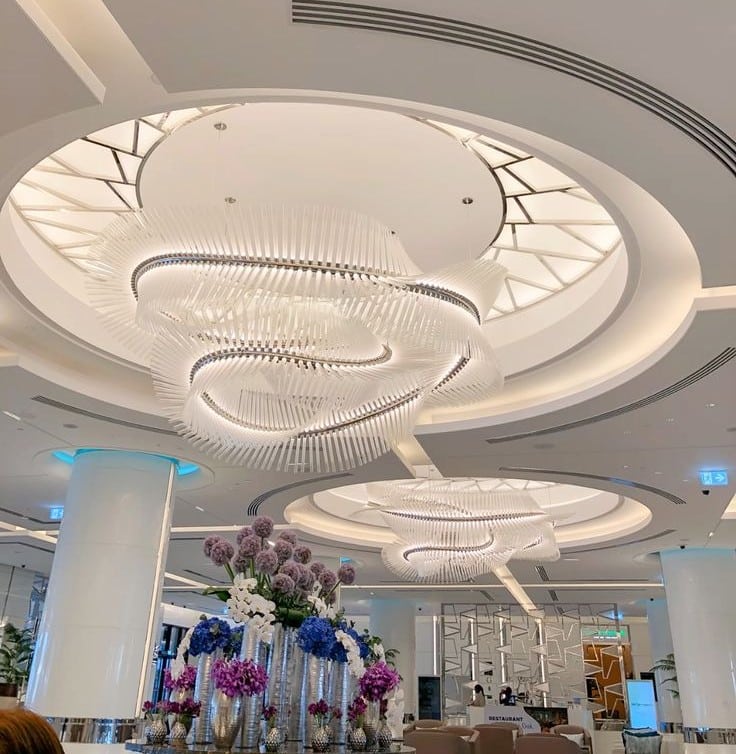
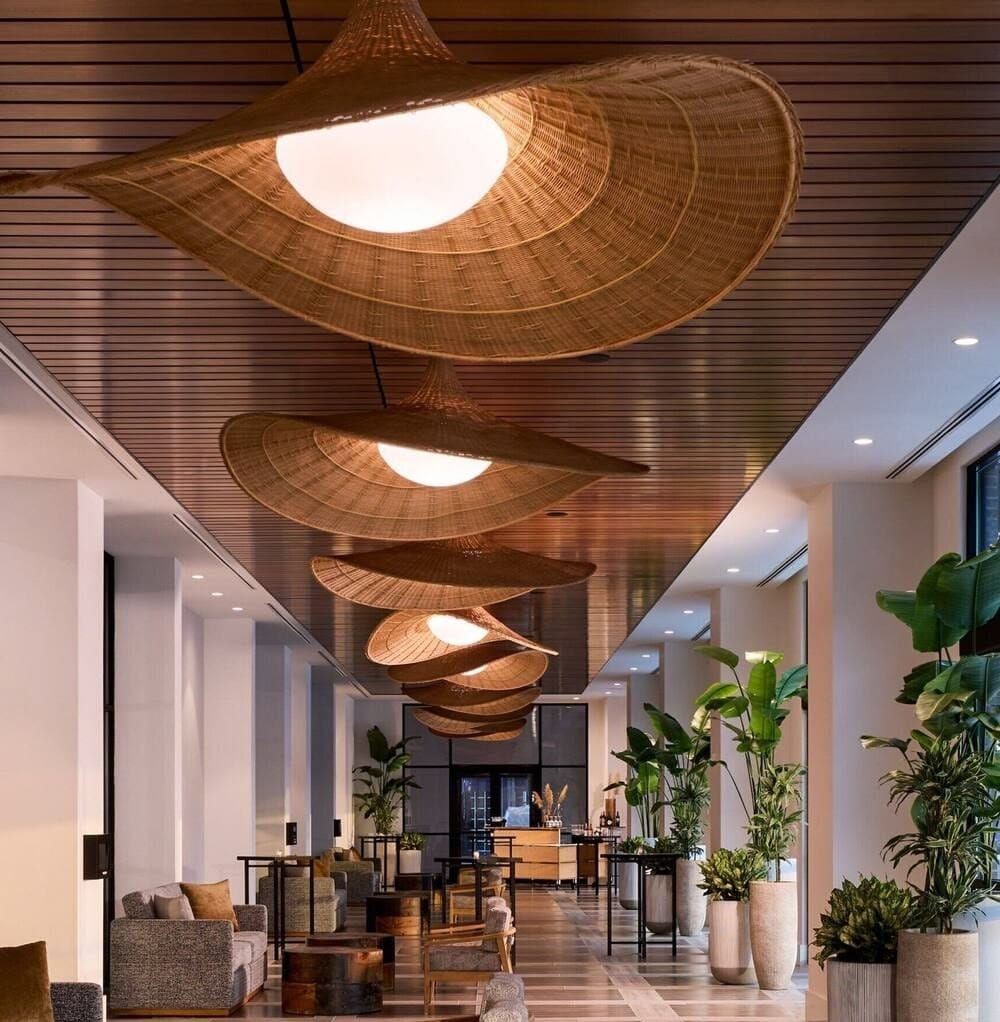
RETAIL PENDANT LIGHTING AND RETAIL CHANDELIER LIGHTING
Decorative fixtures can contribute to a store’s identity, particularly in boutiques, furniture showrooms, home-design stores, and premium retail spaces.
Pendant lighting can define a counter or display table.
A retail custom chandelier may establish a focal point in a large showroom or help communicate a more formal visual character.
Pendants Above Counters and Display Tables
A pendant can make a display table feel like a distinct zone within a larger store. Its dimensions, suspension height, and light distribution should suit the table and the products below it.
The designer should check viewing angles and ensure the fixture does not obstruct customers or staff. It also needs to provide useful illumination without creating harsh shadows or unwanted reflections.
Statement Chandeliers in Luxury Retail
A chandelier can reinforce a brand’s visual identity, but its decorative function should work with the rest of the lighting plan.
The surrounding space still needs suitable general illumination, product lighting, and practical visibility.
A striking decorative fixture does not replace the focused lighting required for merchandise.
For larger showrooms, the team should also confirm the chandelier’s weight, structural support, access for cleaning, electrical requirements, and maintenance arrangements.
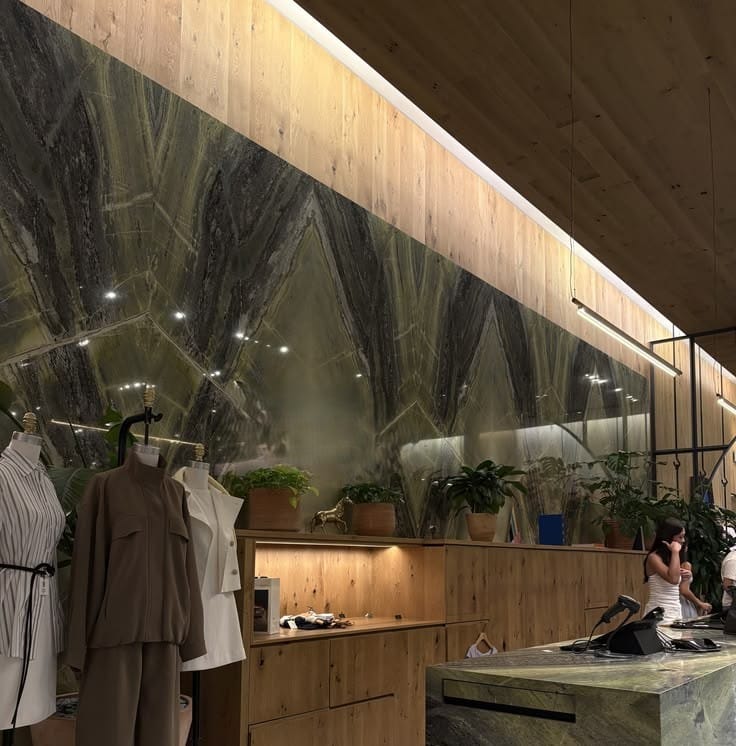
ACCENT LIGHTING RETAIL FOR CONTRAST WITHOUT OVERLIGHTING
Accent lighting directs attention toward selected merchandise, architectural features, promotional displays, or brand elements.
It can help customers recognize the most important items within a larger field of products.
But the effect depends on contrast, placement, and control, not simply on using the highest-output fixture.
Establish a Clear Lighting Hierarchy
A sales floor may combine general lighting with stronger illumination on mannequins, featured products, display tables, and selected walls.
The difference between these layers helps the customer understand where to look first.
If every display receives equally intense lighting, that hierarchy can disappear.
The designer should identify priority areas and select suitable beam distributions and light levels for each one.
Reveal Texture and Shape
Directional lighting can create shadows that reveal the three-dimensional form of a product. It can help display the texture of wood, fabric, stone, or other surfaces.
However, the angle needs to suit the object. A strong beam may produce attractive highlights on one material and harsh reflections on another.
The team should review representative samples or actual merchandise when choosing the fixtures.
Avoid Excessive Contrast and Glare
Contrast creates visual interest, but too much can make it difficult for customers to see merchandise in surrounding areas.
The designer should balance the display brightness against the ambient lighting and consider how the eye adjusts while moving around the store.
Careful aiming, shielding, and fixture selection also help prevent direct glare and reflections.
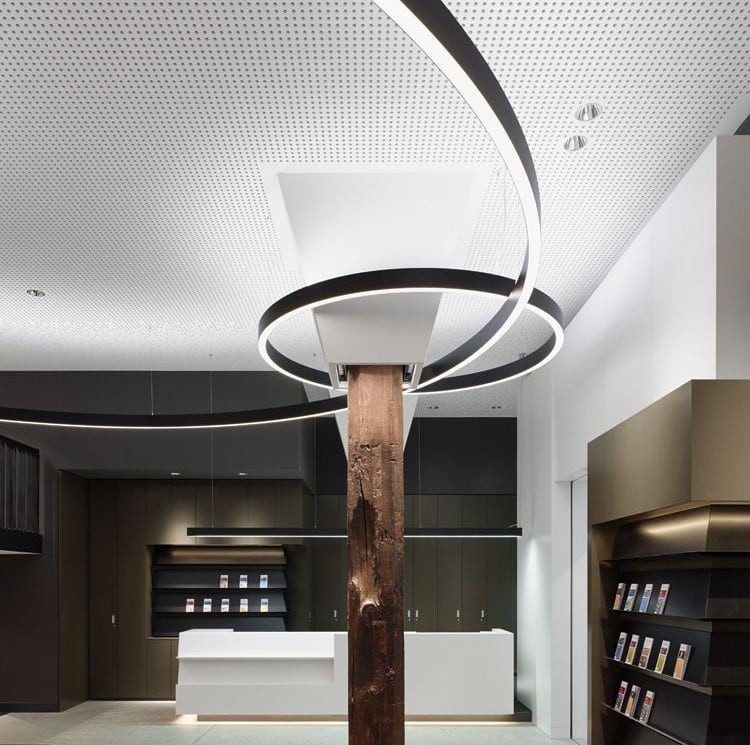
BEST LIGHTING FOR RETAIL STORE IN UAE
There is no single lighting arrangement that suits every retailer.
The best lighting for a retail store depends on the products, store layout, customer activities, and the visual identity the business wants to communicate.
A practical design begins by identifying the visual tasks and selecting the appropriate illumination for each area.
Lux and Light Distribution
Lux measures illuminance, or how much light falls on a surface.
Retail designers use illuminance calculations to evaluate areas such as sales floors, counters, fitting rooms, and displays.
To calculate the right lighting levels and fixture positions, a retail store may benefit from a DIALux lighting design service.
The appropriate level depends on the task, product type, surface, and applicable standard.
General sales areas often need a different approach from detailed display counters or checkout stations.
IES RP-2-20 provides recommendations for horizontal and vertical illuminance as well as uniformity.
These distinctions matter because merchandise may sit on shelves or walls rather than horizontal surfaces.
Vertical Illumination and Product Visibility
Lighting the floor is only part of the job. Customers also need to see clothing racks, shelving, signs, mannequins, and products displayed against walls.
Vertical illumination helps reveal these surfaces and can make a store feel more visually open.
The designer should therefore assess the light reaching the merchandise itself, not just the brightness of the aisle.
Comfort, Uniformity, and Product Color
A well-designed retail space balances appropriate light levels with manageable contrast and good color rendering.
The designer should review glare, reflection, fixture spacing, surface characteristics, and the appearance of the merchandise under the selected light sources.
These decisions help produce a space that supports browsing while keeping the products visible and recognizable.
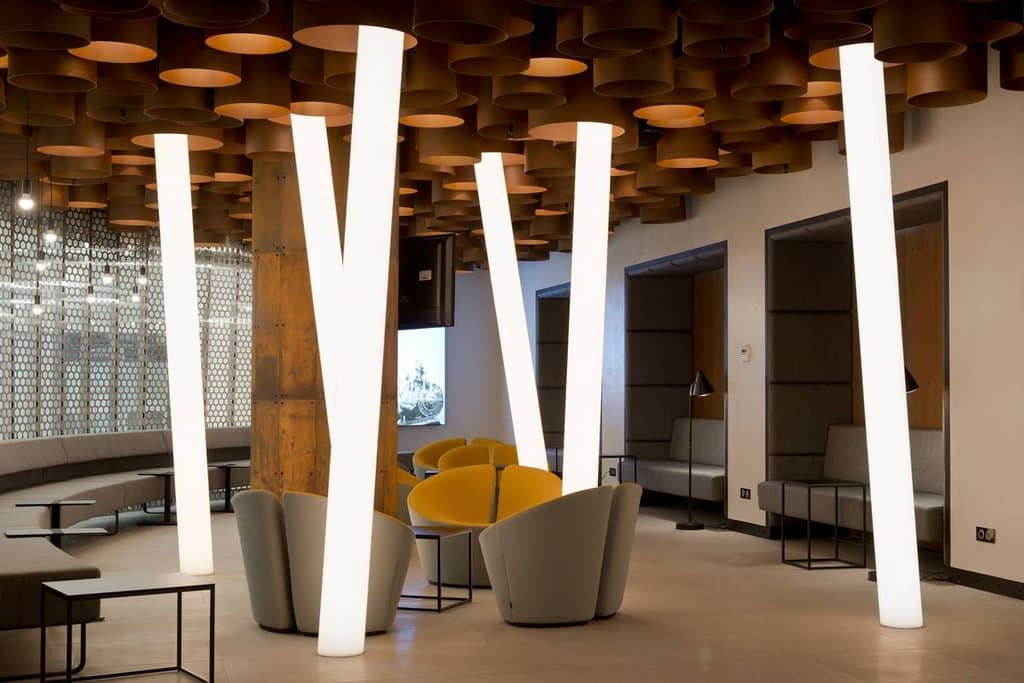
RETAIL LIGHTING SUPPLIERS IN DUBAI AND ABU DHABI
Selecting a retail lighting supplier involves more than comparing product prices.
Retailers should consider the design service, product specification, installation support, technical documentation, and the supplier’s ability to meet the project schedule.
A supplier should help the team identify suitable fixtures and confirm that the products match the intended lighting effect.
What to Ask a Lighting Supplier?
Before procurement, ask for the exact product models, technical datasheets, photometric information where applicable, driver specifications, warranty details, and delivery estimates.
If the supplier recommends an alternative to the specified product, review the light distribution and compatibility before approval.
The team should also clarify whether the quotation includes lighting calculations, design drawings, installation, aiming, commissioning, and after-sales support.
Lighting Design and Lux Calculations
For a new store or major renovation, a lighting plan can help the team determine fixture positions and assess the proposed illumination.
Photometric calculations can evaluate the distribution of light across sales areas and displays.
The plan should coordinate with the architecture, ceiling layout, shelving, furniture, and electrical provisions.
This process also gives the procurement team a clearer fixture schedule, which makes it easier to compare supplier quotations.
Installation, Focusing, and Handover
After installation, track lights and spotlights may need careful aiming to place the light where the design requires it.
Shelf lighting, display fixtures, decorative pendants, and control scenes may also require final adjustment.
The team should review the store under realistic operating conditions before completing the handover.
For retailers with several branches, documentation can help maintain consistent product specifications and lighting quality across locations.
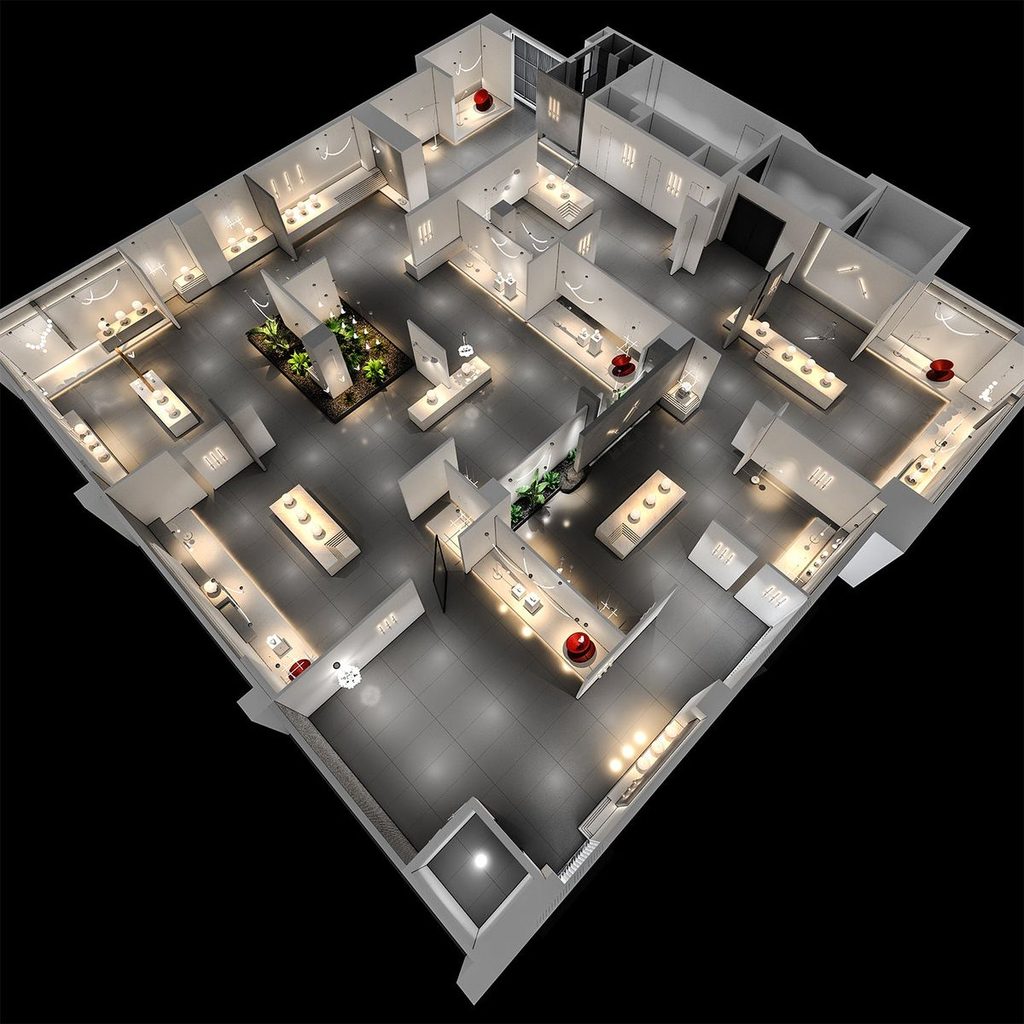
RETAIL LIGHTING COST IN DUBAI AND ABU DHABI
Retail lighting budgets vary with the size of the store, fixture selection, ceiling construction, 3D lighting design requirements, and installation complexity.
- For a small shop or store, a retail lighting project can cost around AED 15,000 to AED 20,000, including design, fixtures, and installation.
- For larger retail spaces, the cost may range from AED 25,000 to AED 40,000.
- Large-scale mall lighting projects can reach AED 200,000 to AED 2 million or more, depending on the size of the project, fixture specifications, lighting controls, and installation requirements.
So, a small boutique with a simple track system has a different scope from a large showroom with extensive display lighting, custom decorative fixtures, intelligent controls, and multiple sales zones.
The quotation may include several separate items:
- Lighting design: Concept development, layouts, calculations, specifications, and visualization.
- Fixture supply: Downlights, track lights, linear fixtures, shelf lighting, decorative pendants, and control equipment.
- Installation: Wiring, mounting, electrical work, aiming, and adjustments.
- Control systems: Dimming, sensors, scene programming, and integration with other systems.
- Commissioning: Testing, focusing, configuration, and handover documentation.
- Maintenance: Warranty support, replacement components, and future servicing.
Ask suppliers to specify the scope clearly so you can compare quotations on a consistent basis.
LED technology can reduce lighting energy use compared with less efficient alternatives, but the actual result depends on the installed products, operating hours, lighting levels, and controls.
A well-designed scheme avoids unnecessary illumination and uses suitable optics to direct light where it is needed.
Daylight-responsive dimming, occupancy sensors, and scheduled operation can also help manage consumption where the store layout and operating requirements support them.
The goal is to meet the lighting requirements without using more energy than necessary.
Furthermore, retail lighting should remain practical to maintain after the store opens. Fixtures need suitable access for cleaning, aiming, driver replacement, and repairs.
For stores that update displays regularly, the lighting system should also allow staff to make routine adjustments without compromising the design or creating glare.
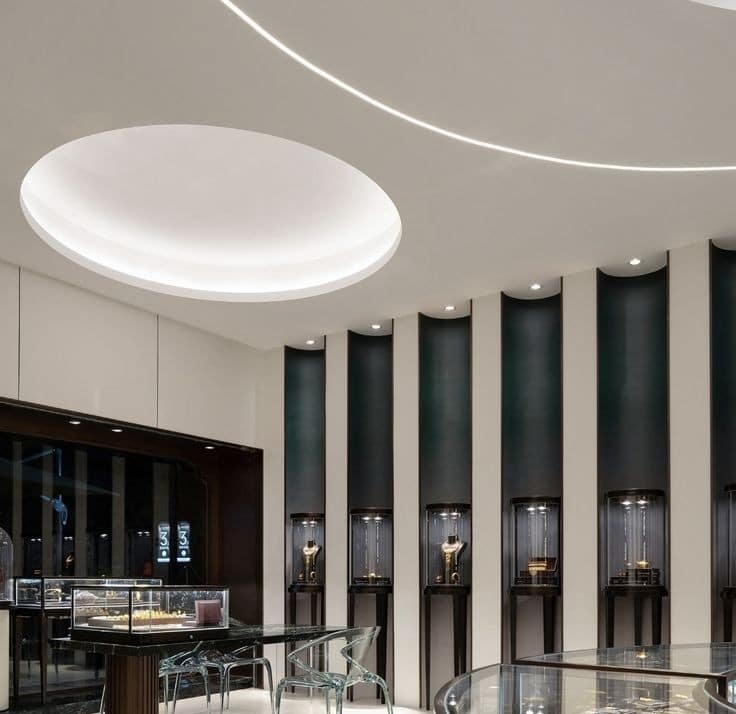
FINAL THOUGHT
Retail lighting works best when it supports the products and the experience the store wants to create.
It can help customers notice merchandise, understand its colors and textures, navigate the space, and recognize the brand’s visual identity.
For shops, malls, and showrooms in Dubai and Abu Dhabi, successful lighting design starts with understanding the retail environment.
It then connects the right fixtures, optical performance, controls, and installation details into one coordinated system.
The objective isn’t to make every surface brighter. It’s to put the right light in the right place, using a specification that suits the merchandise, building, and budget.
Related Posts
Villa Lighting Cost in Dubai and Abu Dhabi in 2027
Villa Facade Lighting in Dubai and Abu Dhabi: 3D Design, Outdoor LED Supply, and Installation in 2027
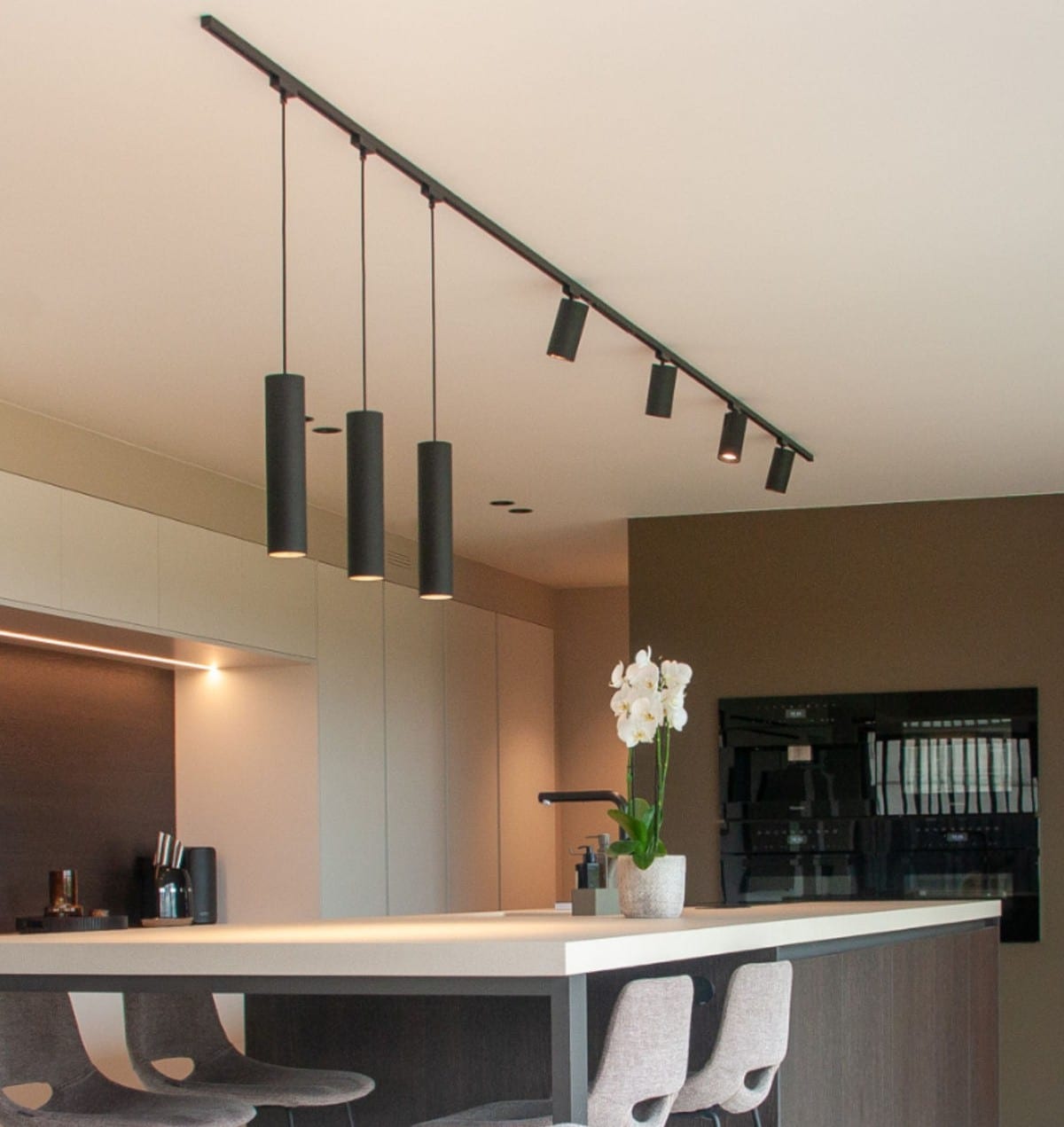
Track Lights in Dubai and Abu Dhabi: LED, Magnetic, and Mini Track Lights in 2027
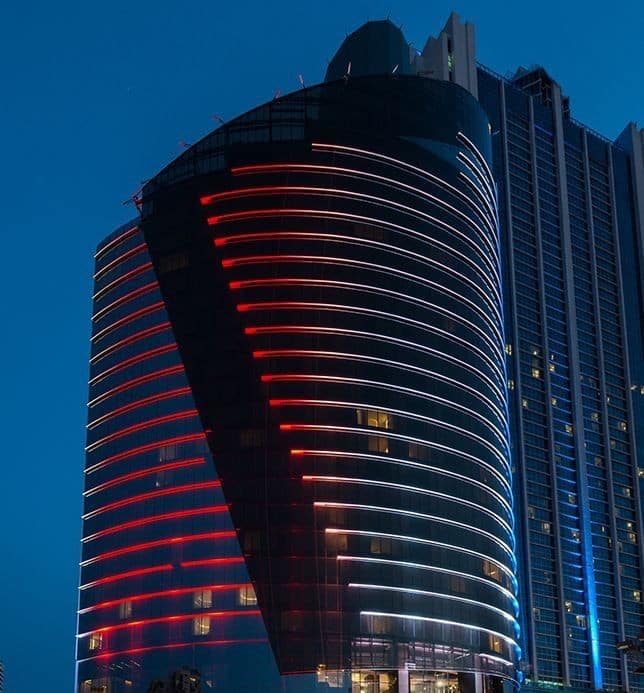
Tower Lighting in Dubai and Abu Dhabi: Design, Supply, and Cost in 2027
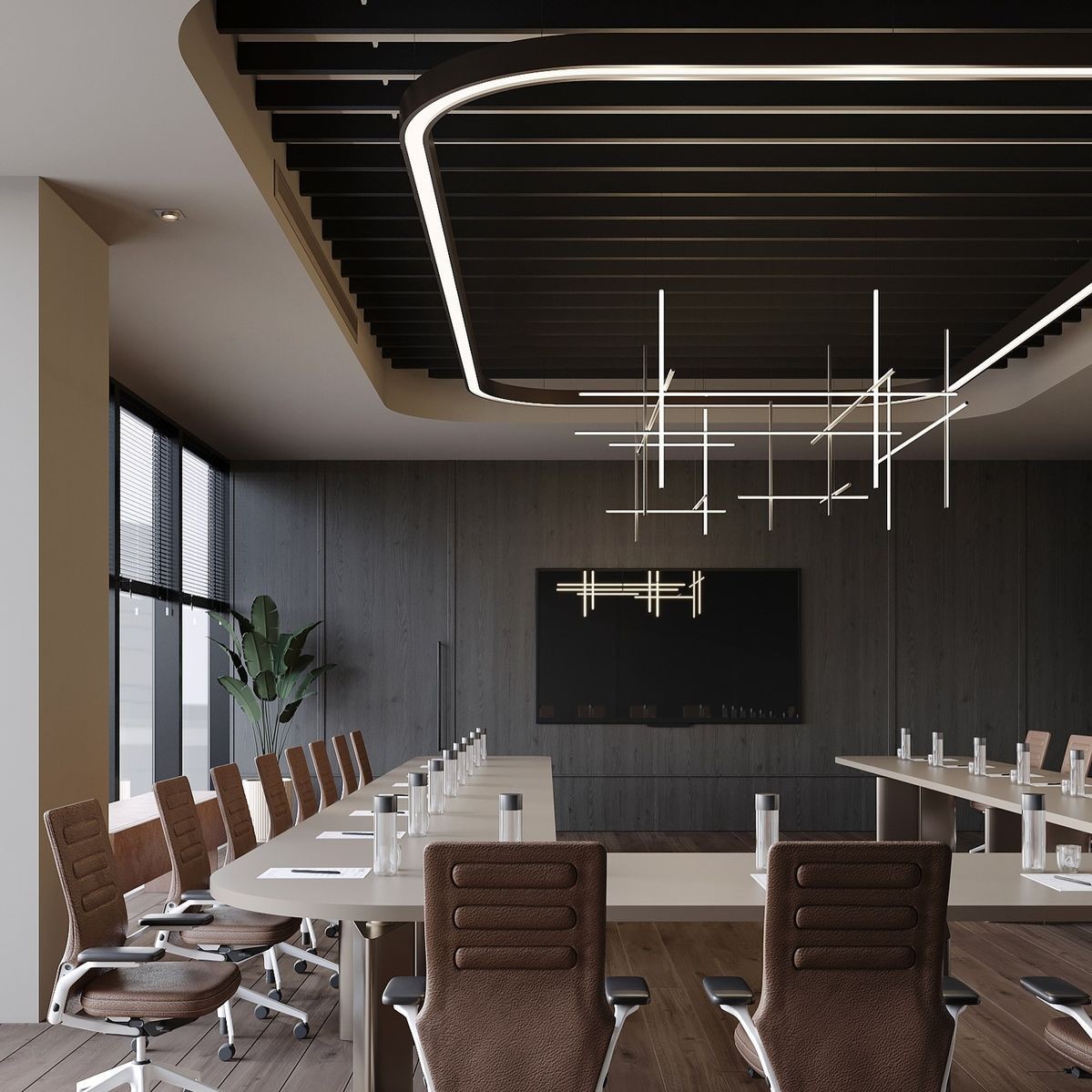
Office Lighting in Dubai and Abu Dhabi: For Modern Corporate Workspaces in 2027
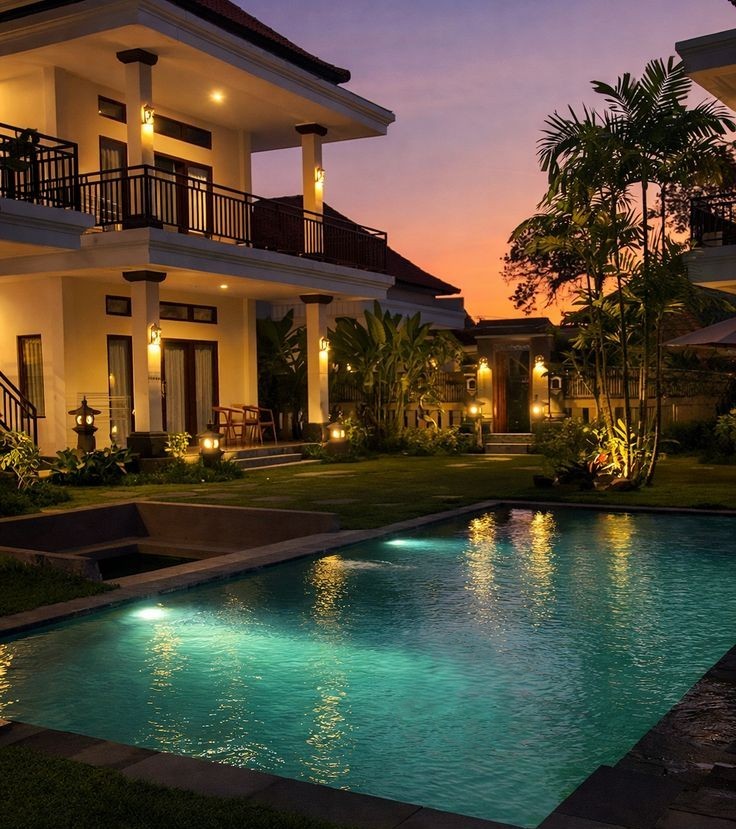
Villa Lighting Projects in Dubai and Abu Dhabi: 3D Design, Supply, and Installation
Lighting Designer in Dubai and Abu Dhabi for Villa and Large Projects in 2027
2D Lighting Plans in Dubai and Abu Dhabi for New Villa Construction
3D Lighting Design in Dubai and Abu Dhabi for Villas, Hotels, and Luxury Spaces
DIALux Lighting Design Service for Dubai and Abu Dhabi Projects


Wall Light Design in UAE for Homes & Villas

Staircase Light Design in UAE for Homes, Villas, & Large Malls


Light Installation in UAE for Homes, Villas, and Shops
