
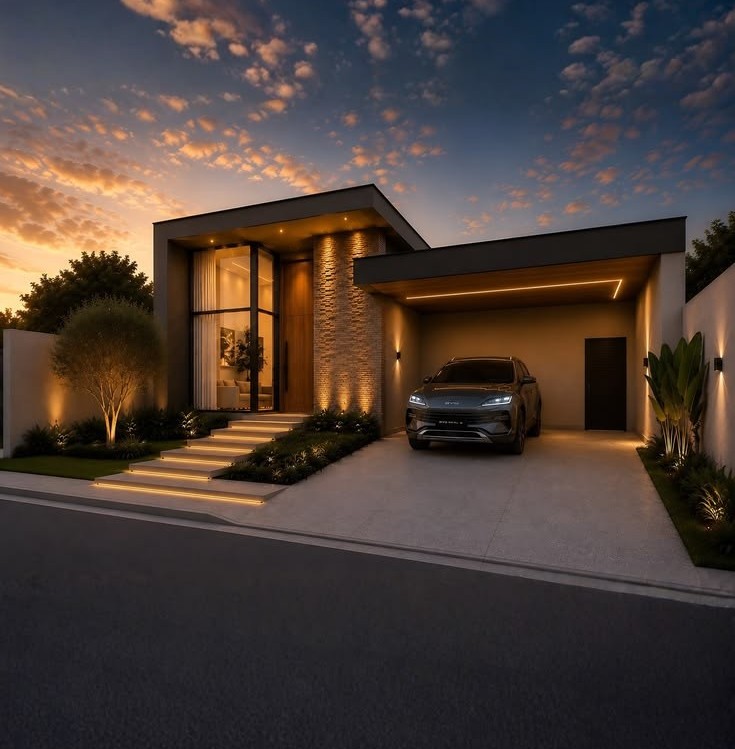
Villa Facade Lighting in Dubai and Abu Dhabi: 3D Design, Outdoor LED Supply, and Installation in 2027
After sunset, a villa can lose much of its beauty if the facade lighting isn’t done right.
Indeed, the right villa facade lighting makes all the difference, especially for high-end villas or mansions.
Stone walls develop depth, architectural arches become more noticeable, and a carefully lit entrance can change the way the entire property feels.
Sometimes, a few concealed lights make a stronger impression than dozens of visible fixtures.
That’s what makes villa facade lighting in the suburbs of Dubai and Abu Dhabi so interesting.
The goal is not simply to make the outside of a building brighter.
It is to reveal its architectural character, emphasize selected details, and create a balanced villa lighting design.
For homeowners in Dubai and Abu Dhabi, achieving this result requires more than choosing attractive outdoor decorative wall lights.
The design needs to account for facade materials, fixture placement, color temperature, electrical requirements, light distribution, and the surrounding environment.
3D lighting designs or visualization also gives homeowners and project teams a more practical way to review the proposed effect before purchasing fixtures or starting installation.
VILLA FACADE LIGHTING IN DUBAI AND ABU DHABI
Every villa has its own architectural language. Some feature clean geometric lines and large glass surfaces.
Others use natural stone, decorative arches, classical columns, textured plaster, or elaborate entrance structures.
The first step in facade lighting design is understanding which features deserve attention.
Instead of placing lights at regular intervals simply to illuminate the walls, a designer studies the building’s shape and identifies the elements that give it character.
This approach helps establish visual hierarchy.
The entrance might receive the strongest accent, while secondary walls remain softer and darker.
A textured column can become a focal point without competing with the main entrance.
Villa’s Shape and Proportions
The architectural drawings provide the starting point for any lighting consultant.
The consultant reviews the elevation, wall dimensions, recesses, projections, columns, balconies, roofline, and entrance.
These details help determine where fixtures should sit and how they should distribute light across the surfaces.
A fixture that works well on a broad wall may create unwanted bright spots when placed against a narrow column or deep architectural recess.
The consultant should also consider the viewing experience from the street, driveway, entrance, garden, and neighboring areas.
A facade can look attractive from one angle but uneven from another. Reviewing several viewpoints helps the team develop a more consistent composition.
Creating a Balanced Light-and-Dark Composition
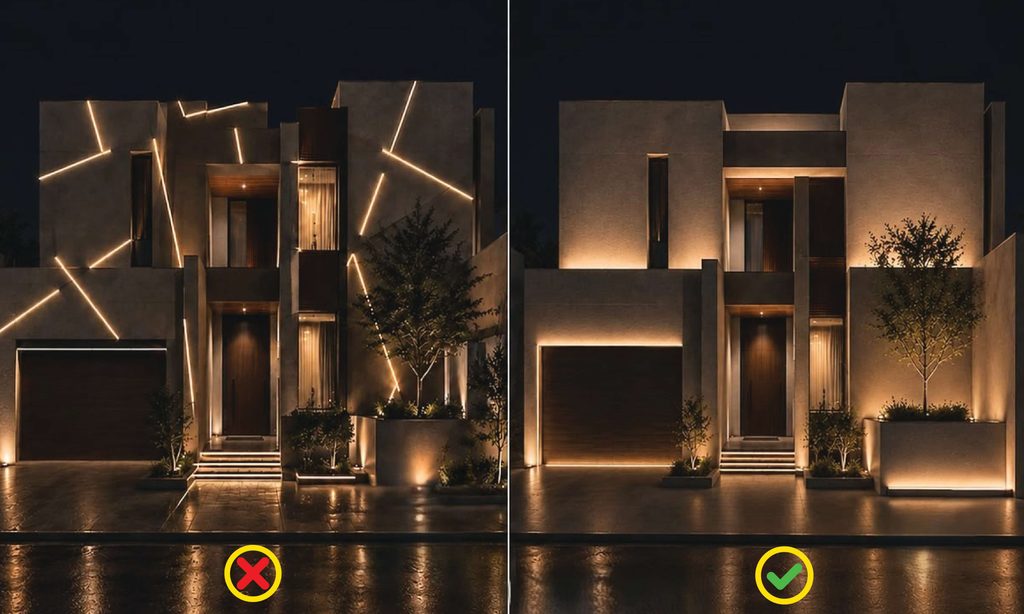
Lighting every surface equally can make a villa appear flat and overly bright.
A more controlled approach combines illuminated details with quieter areas.
For example, a lighting designer might accent a central entrance, illuminate selected columns, and softly reveal a textured boundary wall while leaving less important surfaces darker.
This contrast helps the eye understand the building’s structure. It can also reduce unnecessary fixture quantities and limit unwanted light spill.
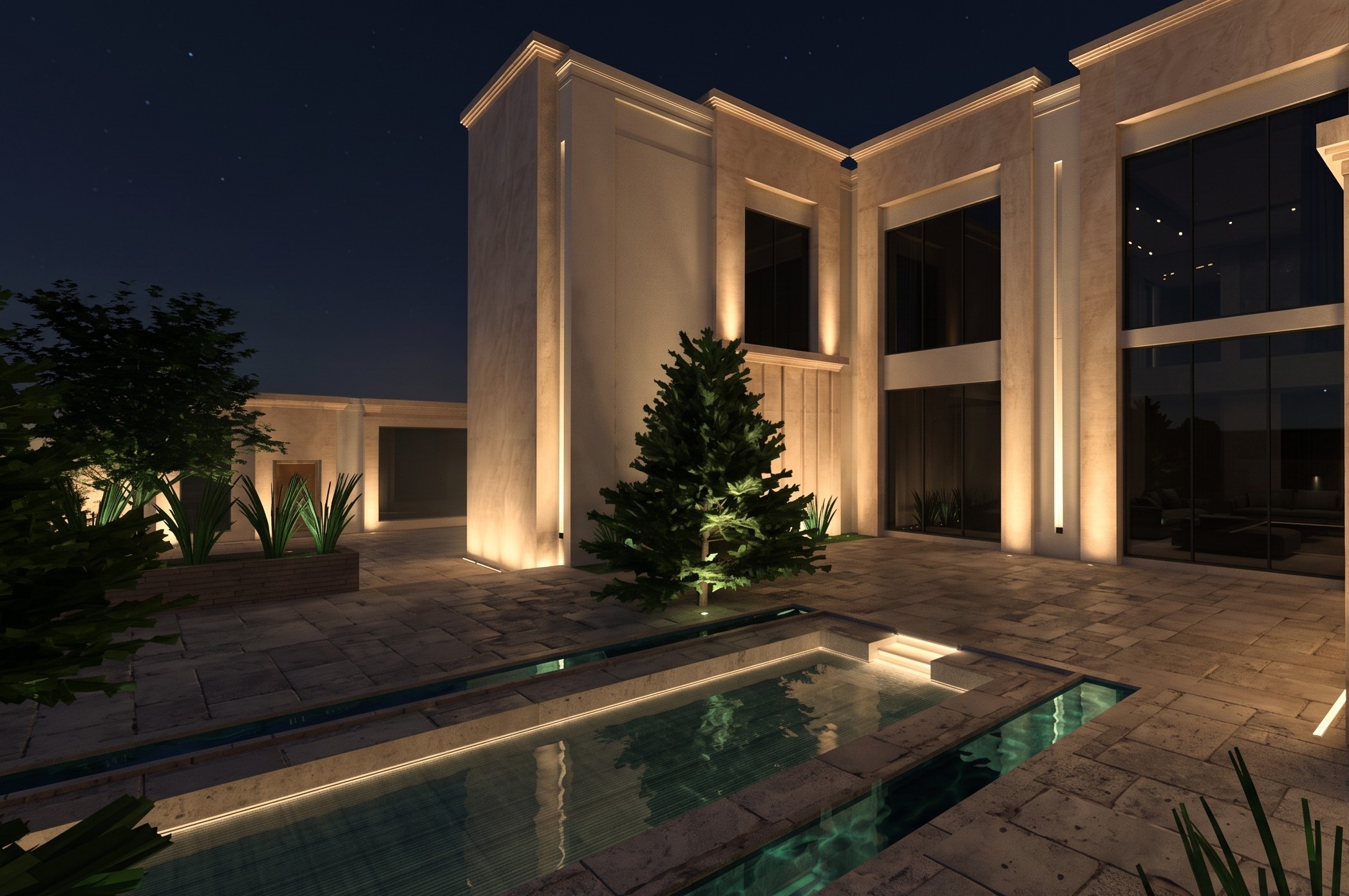
A useful example is Villa SKV in Abu Dhabi, where the facade lighting concept emphasizes the building’s geometric edges, grooves, and architectural masses.
Concealed lighting details support the appearance of light emerging from within the architecture rather than simply shining onto it.
VILLA FACADE LIGHTING TECHNIQUES (WALLWASHING, GRAZING, ETC.)
Different surfaces respond differently to light.
A smooth plaster wall, a rough stone facade, and a recessed entrance each need a suitable lighting approach.
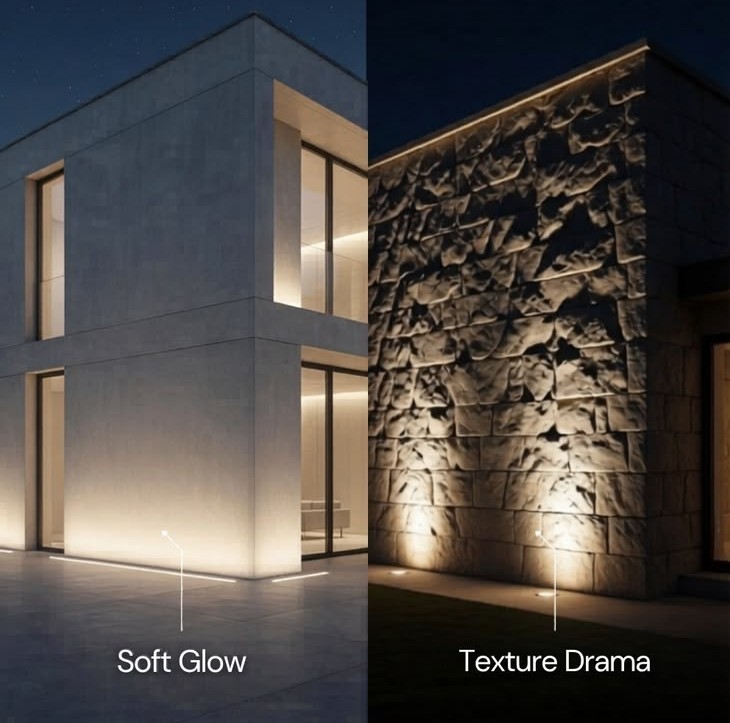
Professional facade lighting design commonly uses wallwashing, grazing, and focused accent lighting. Designers can combine these methods when the architecture benefits from several layers of illumination.
Wallwashing for Smooth and Large Surfaces
Wallwashing distributes light across a vertical surface to create a relatively even appearance.
It works well when the design aims to reveal the overall scale of a wall rather than emphasize small surface details.
On a large villa facade, wallwashing can establish a calm background while accent lights draw attention to selected architectural features.
The fixture’s optical design matters. A product designed specifically for wallwashing can produce a more controlled distribution than a generic spotlight aimed at the wall.
The designer must consider the wall’s height, fixture position, beam distribution, spacing, and mounting angle to avoid obvious bright spots or dark patches.
Grazing for Textured Stone and Architectural Details
Grazing directs light across a surface at a shallow angle.
This creates highlights and shadows that reveal texture, joints, relief, and changes in depth.
It can work particularly well with textured stone, architectural concrete, decorative plaster, and other materials with visible surface detail.
However, grazing can also expose imperfections. Uneven finishing, irregular joints, and surface defects may become much more noticeable when the light passes closely across the wall.
That is why fixture selection and placement should respond to the actual material rather than relying solely on a rendering or catalog photograph.
Accent Lighting for Columns, Arches, and Entrances
Accent lighting directs attention toward specific architectural features. It can highlight a column, frame an entrance, emphasize a decorative niche, or reveal a distinctive roofline.
The key is selecting the right beam distribution and aiming the fixture carefully.
A narrow beam may suit a particular detail, while a wider beam may create a softer effect across a broader surface.
Accent lighting should support the architecture rather than create unrelated patterns across the facade.
Manufacturers such as ERCO provide technical guidance on wallwashing, grazing, light distribution, and facade illumination.
Their documentation emphasizes the importance of matching the lighting technique to the surface and architectural objective.
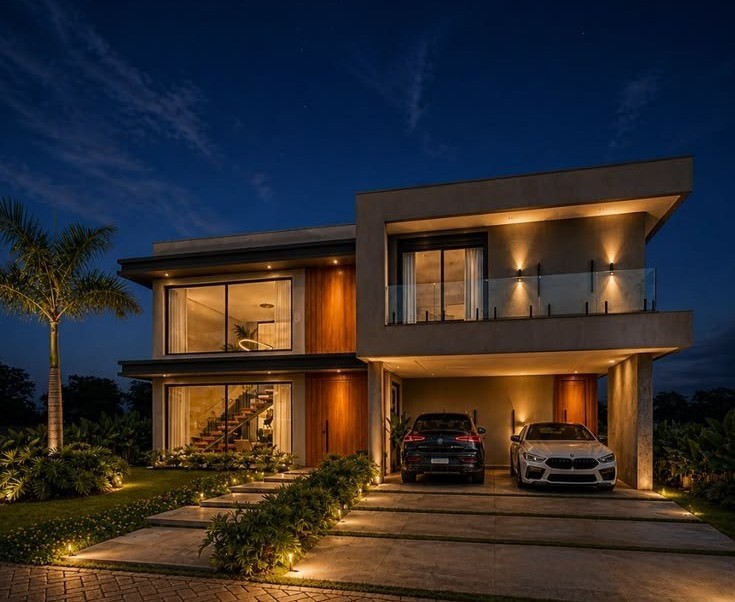
3D VILLA FACADE LIGHTING DESIGN
Imagine selecting outdoor fixtures, paying for installation, and discovering that the entrance looks too bright while the main facade remains almost invisible.
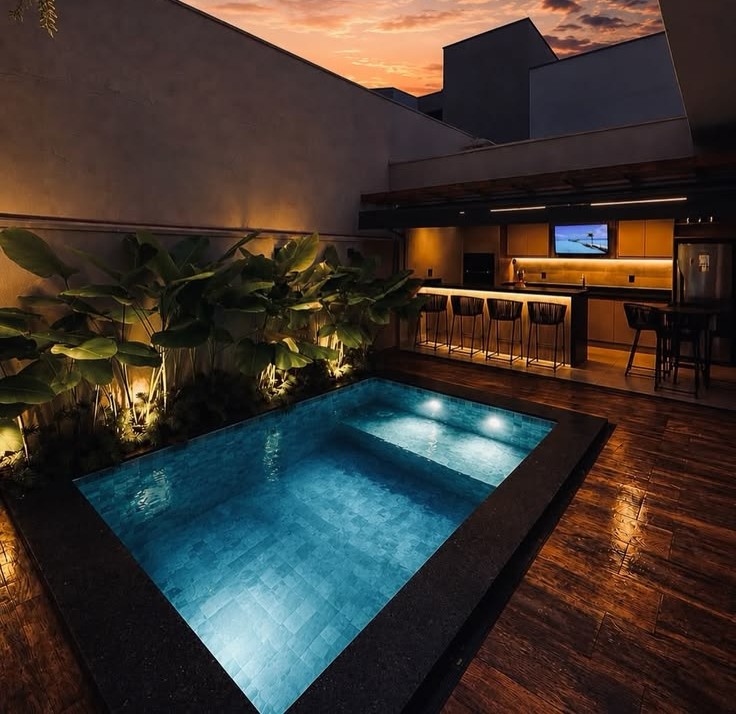
A 3D exterior lighting design helps reduce this uncertainty by allowing the project team to examine a proposed lighting concept before installation begins.
Instead of relying entirely on imagination the outdoor lighting design, the homeowner can review how the design may look against the building’s geometry, materials, and landscaping.
How a 3D Lighting Simulation Works?
The process usually starts with architectural elevations, floor plans, photographs, or a digital model of the villa.
The designer builds or imports the relevant geometry into lighting software and identifies the surfaces that need illumination.
Next, the designer selects suitable luminaires using technical data such as light output, beam distribution, color characteristics, and fixture positioning.
The software then calculates light distribution and generates visualizations that help the team evaluate the proposed effect.
A DIALux lighting design service, for example, supports outdoor lighting planning for facades and gardens.
Its outdoor workflow includes lighting calculations, visualizations, and documentation that can help designers assess stray light and the distribution of illumination.
What Homeowners Can Review in 3D?
A useful 3D design should communicate more than an attractive nighttime image. It should help the client understand the lighting concept and the proposed placement of fixtures.
The visualization may show:
- How the entrance and main architectural features will appear at night.
- How light interacts with stone, plaster, columns, and other materials.
- Where linear lights, wallwashers, and accent fixtures will sit.
- How the facade relates to the garden, driveway, and surrounding areas.
- How different fixture positions or lighting levels change the effect.
The team can compare alternatives before confirming the final specification.
This can help identify unwanted glare, uneven illumination, or excessive brightness before the villa lighting project reaches installation.
3D Visualization and Technical Calculations Serve Different Purposes
A realistic rendering helps homeowners understand the proposed appearance.
Lighting calculations evaluate performance using fixture data, model geometry, and relevant assessment criteria.
Neither should replace the other. A beautiful rendering alone does not prove that the fixtures will deliver suitable light levels or that the installation will meet applicable requirements.
For a comprehensive project, the designer should coordinate the visualization with the technical layout, fixture schedule, calculations, and installation details.
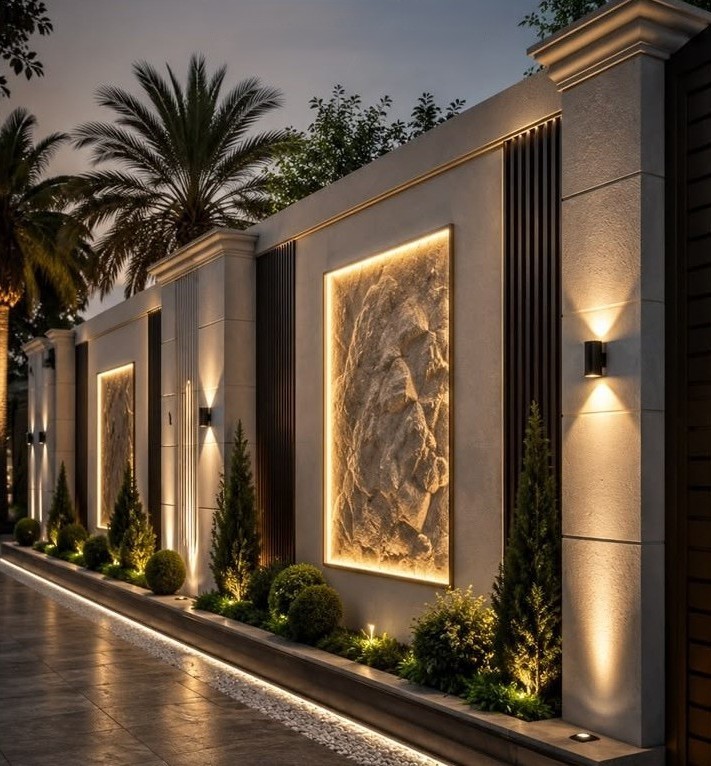
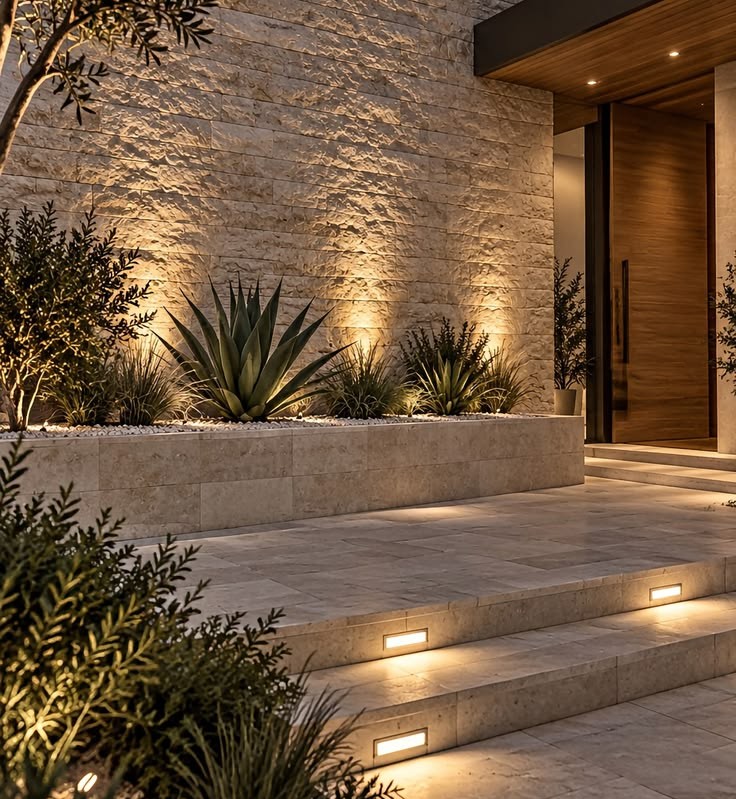
BEST LED FIXTURES FOR VILLA FACADE LIGHTING
The best fixture depends on what it needs to illuminate.
A recessed uplight, a linear wallwasher, and a compact architectural spotlight produce different effects even when they have similar light outputs.
For villas in Dubai and Abu Dhabi, product selection should balance visual performance with durability, installation requirements, and future maintenance.
Linear LED Fixtures for Architectural Edges
Linear LED fixtures can follow the edges of selected architectural elements, illuminate cornices, or emphasize horizontal and vertical lines.
They can also sit inside concealed coves or recessed channels when the architecture allows the light source to remain hidden.
The designer should coordinate the dimensions of these channels with the fixture profile, installation accessories, wiring, and driver location before the contractor completes the relevant details.
For exposed installations, the team should also review the fixture’s mounting system, optical options, environmental rating, and manufacturer’s instructions.
Recessed Uplights and Ground-Mounted Fixtures
Ground-recessed uplights can produce a striking effect when the designer positions them near suitable facade elements.
They can emphasize columns, textured walls, and selected architectural masses.
However, their location requires careful consideration. The beam should illuminate the intended surface rather than shine into the eyes of residents or visitors.
Ground installations also need suitable drainage provisions, environmental protection, and access for maintenance, depending on the product and site conditions.
The installation team should confirm the manufacturer’s requirements before embedding fixtures in paving, planting beds, or other exterior surfaces.
Color Temperature and Color Rendering
Color temperature influences whether the light appears warm or cool.
Warm white often complements warm-toned stone, wood, and other materials, while a different white-light appearance may suit particular contemporary finishes.
There is no universal setting for every villa. The designer should evaluate the material palette and the intended nighttime effect, ideally using product samples or suitable visualizations.
Color rendering also matters because exterior lighting can change the appearance of facade finishes.
The selected fixtures should reveal the materials in a way that suits the architectural concept.
Environmental Ratings and Product Durability
Exterior fixtures operate in conditions that differ from those of indoor luminaires.
The specification should consider exposure to heat, dust, moisture, and other environmental factors relevant to the installation.
Before purchasing a product, review the manufacturer’s technical documentation for the ingress protection rating, operating temperature and warranty terms.
The driver and electrical connections also deserve attention.
A fixture may perform well initially but become difficult to maintain if the driver is inaccessible or replacement components are unavailable.
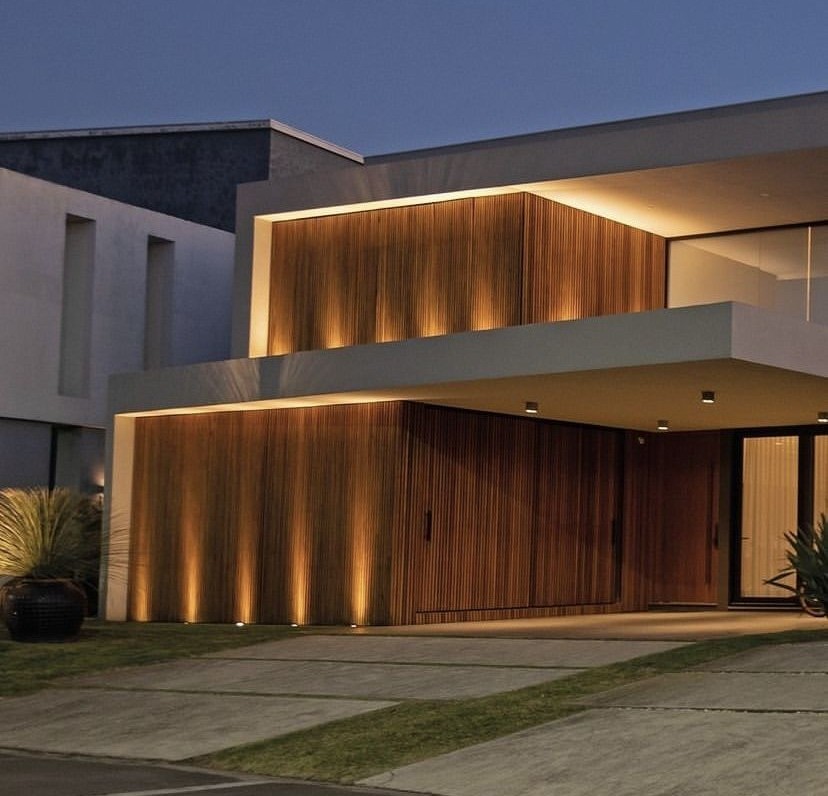
VILLA FACADE LIGHTING SUPPLY
Once the lighting concept and technical layout are approved, the project team can prepare the fixture schedule and begin procurement.
This stage links the design intent to the actual products that installers will use on site.
Clear product specifications help prevent substitutions that change the intended light distribution, appearance, or compatibility.
Fixture Schedule
A fixture schedule identifies each luminaire and its intended use.
Depending on the villa project, it may include the product model, mounting method, light output, beam distribution, color temperature, control requirements, dimensions, and environmental rating.
The schedule should also identify accessories, drivers, mounting brackets, connectors, and other components needed for a complete installation.
If a supplier proposes an alternative fixture, the design team should check its photometric data and physical dimensions before approving the substitution.
Two fixtures can look almost identical in a catalog but produce very different lighting effects.
Lighting Suppliers
A supplier should provide technical documentation that matches the approved specification. This can include product datasheets, installation instructions, photometric files, warranty details, and information about available accessories.
For projects with custom linear profiles or concealed lighting, the supplier should also confirm dimensions, connection details, driver placement, and any restrictions on installation.
Where the project includes a complex facade, a sample or mock-up can help the team review the effect before ordering products for the entire property.
Delivery with Construction
Timing matters. Facade lighting components may need installation before the team closes a ceiling, finishes a wall, or completes surrounding landscaping.
The contractor should confirm delivery schedules and installation sequences early enough to avoid delaying other trades.
For larger projects, the procurement plan should also include spare parts, maintenance considerations, and clear product identification for future service.
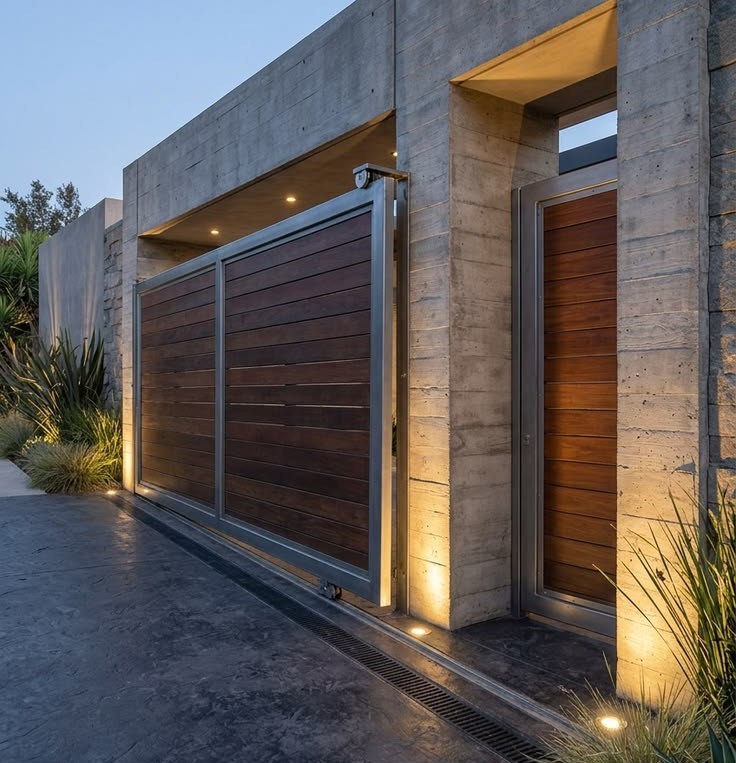
VILLA FACADE LIGHTING INSTALLATION IN DUBAI AND ABU DHABI
A lighting design can look excellent on paper, but the finished result depends on careful installation.
Fixture alignment, mounting depth, aiming, wiring, and coordination with exterior finishes all influence the final appearance.
These details become especially important when the design relies on concealed fixtures or precise linear lighting.
Installation During Construction
Planning facade lighting during construction gives the team more flexibility to coordinate recesses, coves, wiring routes, mounting points, and electrical connections.
For example, a linear fixture designed to sit inside an architectural groove needs suitable space, access, and mounting details before the facade work reaches completion.
Retrofitting the same fixture after the wall is finished may require additional work or compromise the intended appearance.
Early coordination also helps the project team account for electrical supply, driver locations, controls, and access for future maintenance.
Aiming and Adjusting Fixtures on Site
After installation, the team should review the actual lighting effect at night.
The designer or installation team can check whether fixtures illuminate the intended surfaces and whether the result matches the approved concept.
The team may need to adjust fixture angles, dimming levels, or certain positions to improve uniformity and reduce glare.
This final review helps identify issues that daylight inspection alone may not reveal.
Testing and Handover
Before completing the project, the installer should verify that the equipment operates correctly and that the installed fixtures match the approved specification.
The handover should include relevant product documentation, warranty information, control instructions, and maintenance guidance.
For systems with separate control zones or dimming, the project team should also explain how to operate the controls and how to arrange future servicing.
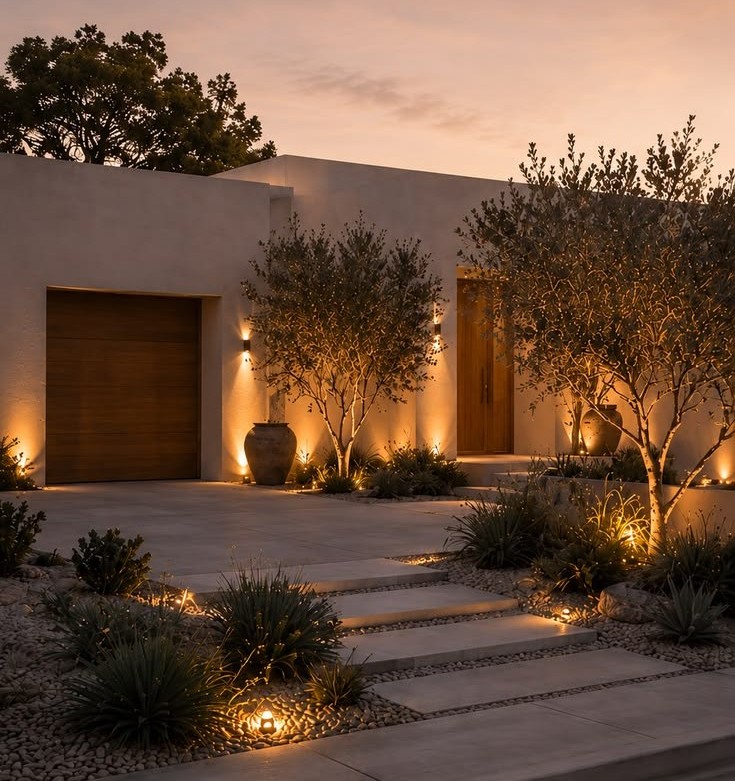
LIGHT POLLUTION, GLARE, AND LOCAL REQUIREMENTS
Facade lighting should improve the appearance of a property without creating unnecessary disturbance for neighboring homes or the surrounding environment.
A fixture that sends light beyond the facade may cause glare, illuminate unwanted areas, or contribute to unnecessary sky glow. Careful optical selection and aiming help prevent these problems.
Control Light Spill
The designer should direct light onto the intended surface and avoid excessive illumination beyond the architectural boundaries.
Shielding, appropriate beam distributions, careful aiming, and suitable dimming can help control the result.
Dubai’s Building Code includes specific provisions for exterior lighting power, fixture shielding, architectural accent lighting, wallwashing spill, and automatic controls.
Under the published code, wallwashing must limit spill beyond the facade, and exterior lighting must include automatic controls that allow it to remain off during daylight hours.
The team should confirm the current applicable requirements with the relevant authority before finalizing the design.
Projects in Abu Dhabi should follow the requirements applicable to their location and approval process.
Use Only the Brightness the Design Needs
More light does not automatically create a better facade.
Excessive brightness can flatten architectural features, create harsh contrasts, and make a home feel disconnected from its surroundings.
The Five Principles for Responsible Outdoor Lighting published by DarkSky International and the Illuminating Engineering Society recommend using light for a clear purpose, directing it where needed, avoiding unnecessary brightness, controlling operating times, and favoring warmer colors where practical.
These principles provide a useful framework for villa facade lighting in residential neighborhoods, where visual quality and consideration for nearby properties matter.
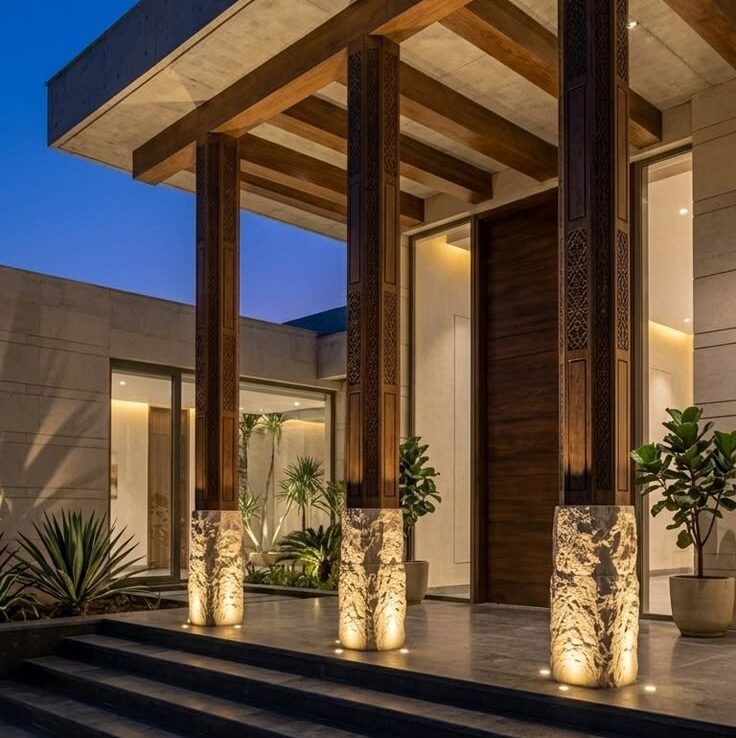
VILLA FACADE LIGHTING COST
There is no fixed price for villa facade lighting in Dubai or Abu Dhabi.
A typical project may cost between AED 13,000 and AED 25,000, including design, lighting fixtures, and installation, depending on the property’s size, architectural complexity, and lighting requirements.
The cost depends on the building’s size, architectural complexity, fixture selection, installation requirements, and level of design detail.
A project that highlights only the entrance and selected columns will have a different scope from one that illuminates multiple elevations, boundary walls, gardens, and architectural features.
In sum, several elements can affect the final quotation:
- Design complexity: Detailed 3D visualizations, lighting calculations, and multiple design options require additional work.
- Fixture quantity and type: Linear profiles, wallwashers, recessed uplights, and specialty fixtures have different costs.
- Facade materials: Textured surfaces, deep recesses, and complex geometry may require specialized optics or installation details.
- Installation access: Mounting heights, concealed wiring, and difficult access can influence labor and equipment requirements.
- Controls: Dimming, schedules, and dynamic color systems may require additional control equipment and commissioning.
- Site coordination: Working alongside facade contractors, electricians, landscapers, and other trades affects the project scope.
Ask each supplier to explain exactly what the quotation includes.
Design, 3D visualization, fixture supply, installation, controls, testing, and commissioning may appear as separate items.
Check whether the proposal identifies specific product models and installation accessories.
A low initial price may not provide the same technical performance or level of service as a more complete proposal.
The most useful comparison focuses on the finished result, equipment specification, installation scope, and maintenance requirements rather than the fixture price alone.
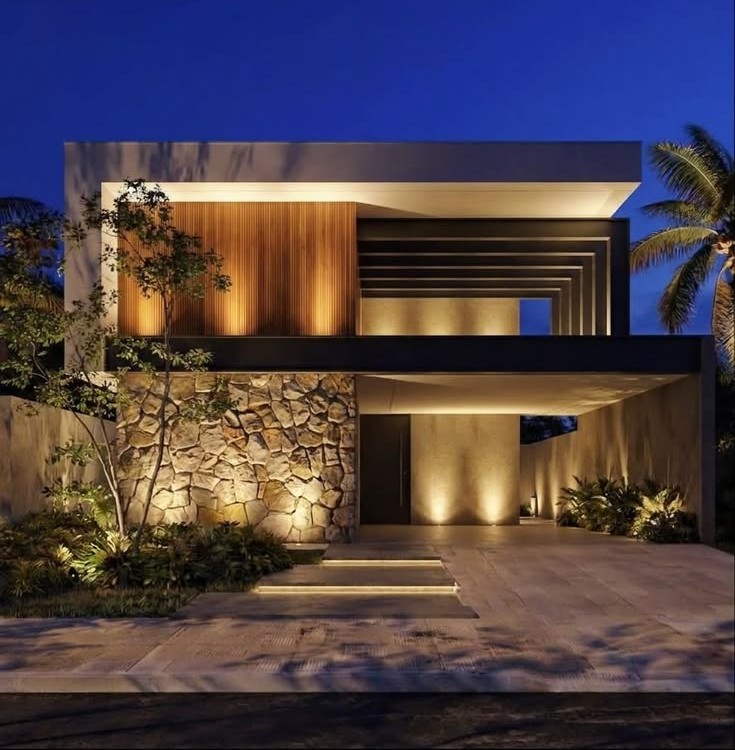
FINAL THOUGHT
Great villa facade lighting does not come from placing a light beside every architectural feature.
Indeed, as we discussed earlier, it comes from understanding what makes the building distinctive and using light to reveal that character with care.
For homeowners in Dubai and Abu Dhabi, 3D lighting design provides a way to examine the concept before installation.
A coordinated specification then connects the design to suitable products, electrical requirements, and the construction process.
When the team plans the lighting early, it can address concealed fixtures, mounting details, glare, light spill, and maintenance before those decisions become difficult to change.

Related Posts
Villa Lighting Cost in Dubai and Abu Dhabi in 2027
Track Lights in Dubai and Abu Dhabi: LED, Magnetic, and Mini Track Lights in 2027
Tower Lighting in Dubai and Abu Dhabi: Design, Supply, and Cost in 2027
Retail Lighting Design in Dubai and Abu Dhabi: For Shops, Showrooms, and Malls
Office Lighting in Dubai and Abu Dhabi: For Modern Corporate Workspaces in 2027
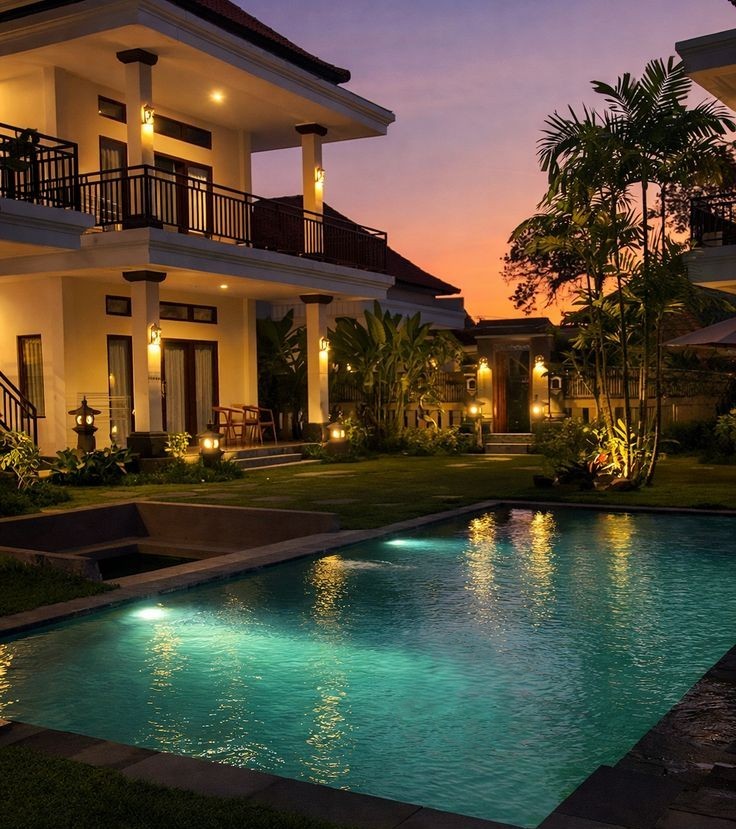
Villa Lighting Projects in Dubai and Abu Dhabi: 3D Design, Supply, and Installation
Lighting Designer in Dubai and Abu Dhabi for Villa and Large Projects in 2027
2D Lighting Plans in Dubai and Abu Dhabi for New Villa Construction
3D Lighting Design in Dubai and Abu Dhabi for Villas, Hotels, and Luxury Spaces
DIALux Lighting Design Service for Dubai and Abu Dhabi Projects
Facade Lighting in Dubai and Abu Dhabi for Villas and Homes
Skyscraper Facade Lighting in UAE: A Guide for CEOs, Contractors, and Architects


Wall Light Design in UAE for Homes & Villas

Staircase Light Design in UAE for Homes, Villas, & Large Malls


Light Installation in UAE for Homes, Villas, and Shops
