
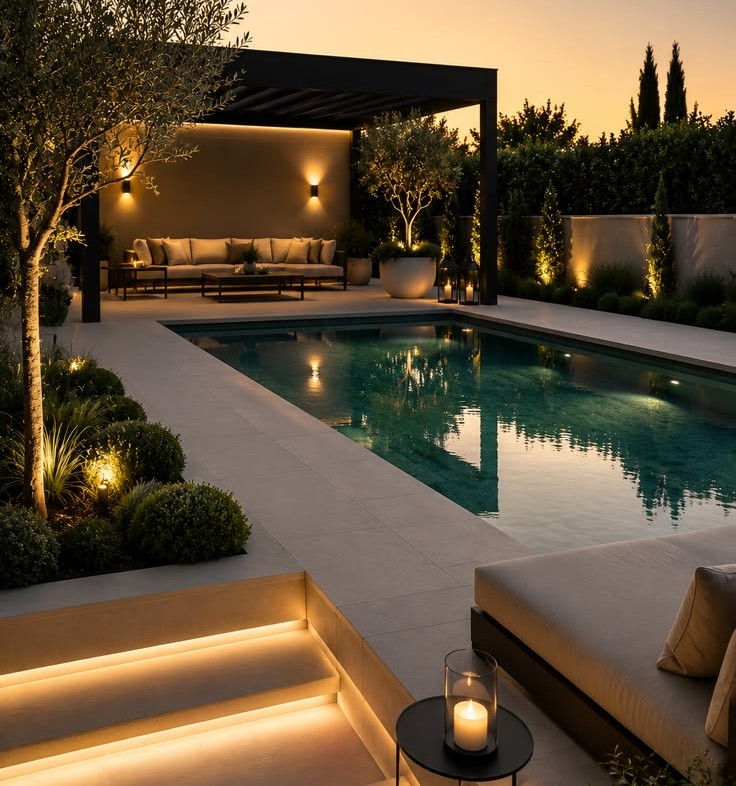
Outdoor Lighting Design for Villas, Pools, and Landscapes in Dubai and Abu Dhabi
Just look at a beautiful villa after sunset and you might notice how the right lighting seems to bring the entire property to life.
The entrance looks more welcoming, the trees create interesting shadows, and the garden feels like an extension of the house rather than a dark space beyond the windows.
That effect rarely comes from installing more lights.
Often, it comes from deciding where light is needed, which features deserve attention, and how each source should work with the architecture and landscape.
Outdoor lighting design combines technical planning with creative decisions to improve the appearance, usability, and nighttime experience of outdoor spaces.
It covers architectural facades, gardens, pathways, swimming pools, terraces, entrance areas, boundary walls, and other exterior features.
Indeed, it’s an essential part of any serious or well-planned villa lighting design.
In Dubai, these decisions are particularly important for villas with landscaped gardens, contemporary facades, and swimming pools.
The design also needs to account for environmental exposure, maintenance access, electricity use, glare, and applicable building requirements.
A good lighting scheme doesn’t try to illuminate every corner equally. Instead, it creates a clear visual hierarchy, providing practical illumination where people need it and using controlled accents to reveal the property’s most interesting features.


NATURAL ACCENTS OUTDOOR LIGHTING DESIGN
One of the most effective ways to make an outdoor space feel natural is to work with the features already there in Dubai and Abu Dhabi.
Mature trees, textured stone, garden walls, architectural recesses, and changes in ground level can all become visual elements after dark.
The goal is to use light to reveal these features without making the entire property feel like a brightly illuminated showroom.
Start With the Features That Matter
Before selecting fixtures, identify the elements that deserve attention. For one villa, that might be a large entrance tree and a textured stone facade.
For another, it could be a sculptural staircase, a garden water feature, or the view from the living room toward the pool.
This decision helps determine where lighting is useful and where darkness can remain part of the composition.
If every tree, wall, planter, and architectural detail is illuminated equally, the result can become visually crowded. Choosing a few focal points creates contrast and makes the property easier to appreciate.
Use Uplighting to Reveal Trees and Textures
Uplighting directs light upward from a low position toward a tree, wall, column, or architectural feature. It can reveal a tree trunk, emphasize the shape of branches, or make a textured surface more visible.
The fixture’s beam angle, distance from the target, output, and aiming direction all influence the result.
A narrow beam may suit a slender tree trunk, while a broader distribution may be more appropriate for a wide canopy.
The surrounding surfaces also matter. A pale wall may reflect more light than a dark stone surface, so the same luminaire can produce very different visual results.
Use Downlighting for a Softer Landscape Effect
Downlighting places light above the area being illuminated, directing it toward paths, planting, seating areas, or selected ground surfaces.
When mounted appropriately in a tree or architectural structure, it can create a softer effect than a row of exposed path lights.
The actual result depends on the fixture position, shielding, and the way light falls through the canopy.
Downlighting should be designed carefully to avoid glare and unwanted spill.
The mounting arrangement also needs to be safe and maintainable, particularly when fixtures are installed in trees.
Preserve the Balance Between Light and Shadow
Shadow is not a problem that always needs to be eliminated.
In landscape and architectural lighting, it can help reveal depth, separate different features, and keep the scene visually interesting.
For example, lighting one textured wall while leaving an adjacent wall relatively dark can create a more defined composition than flooding the entire facade with equal brightness.
The most effective design gives each illuminated feature enough visual presence without making everything compete for attention.


LANDSCAPE LIGHTS AND OUTDOOR LIGHT CEILING
The terms and fixture categories used for landscape lighting can be confusing because several products may create similar effects while serving different installation needs.
A path light, an in-ground uplight, a wall-mounted fixture, and a ceiling light under a covered terrace all have different roles.
Choosing the product should begin with the intended lighting effect and installation location.
Path Lights and Step Lights
Path lights help people identify walkways, changes in level, and routes between the entrance, garden, terrace, and other outdoor areas.
Their light should be directed toward the walking surface without shining uncomfortably into people’s eyes.
After all, they are not just outdoor decorative lights.
Spacing should follow the path geometry and the distribution of the selected fixtures rather than using an arbitrary equal distance everywhere.
Step lights may be integrated into walls, risers, or nearby structures. Their positions should reveal changes in level clearly while avoiding bright sources that distract people as they move.
In-Ground Lights and Uplights
In-ground luminaires are commonly used where a ground-level fixture can illuminate a facade, column, tree, or landscape feature.
Their installation requires careful attention to drainage, structural mounting, cable routing, access, and the manufacturer’s instructions.
The fixture’s environmental rating alone does not guarantee that every installation detail will be suitable.
Products near paving may also be exposed to dirt, standing water, cleaning equipment, or mechanical loads. These conditions should be assessed before selection.
Ceiling Lights for Covered Terraces and Entrances
Outdoor ceiling lights can provide practical illumination beneath covered terraces, balconies, canopies, and entrance areas.
Recessed downlights, surface-mounted fixtures, exterior pendant light fixtures, and linear luminaires may all be suitable, depending on the ceiling construction and intended appearance.
The selected product must be appropriate for the actual exposure conditions, including any risk of moisture, dust, or direct weather.
The design should also consider ceiling height, glare, furniture positions, and whether the light source will be visible from the garden or neighboring spaces.
Wall-Mounted and Decorative Exterior Fixtures
Wall-mounted or decorative wall lights can support movement around entrances and covered outdoor areas while contributing to the property’s appearance.
Some provide predominantly downward illumination, while others distribute light upward and downward.
The choice depends on the surface, the desired effect, and the need to control glare.
Decorative fittings should not be selected on appearance alone.
The product’s light distribution, installation requirements, weather suitability, and maintenance needs should all be checked.

LANDSCAPE LIGHTING CONTRACTORS (FOR DESIGN AND INSTALLATION)
A successful outdoor lighting project begins before anyone digs a trench or mounts a fixture.
The designer and installation team need to understand the site, the intended lighting effects, the available electrical infrastructure, and the construction sequence.
For villas under construction, early coordination can make it easier to conceal wiring and integrate lighting into paving, walls, ceilings, and landscaping.
Conduct a Site Assessment
The first step is to review the property’s layout and identify the key lighting zones.
These may include the entrance, driveway, pathways, gardens, facade, pool, covered terrace, boundary walls, and outdoor seating areas.
The assessment should consider the building materials, planting, existing electrical points, likely cable routes, water features, and maintenance access.
It is also useful to consider the property after dark. Views from the entrance, garden, windows, seating areas, and street can reveal problems that may not be obvious during daylight.
Develop a Coordinated Lighting Plan
The plan should identify fixture locations, intended effects, product references, and relevant installation notes.
Larger projects may also require technical drawings, photometric calculations, control zones, cable routing information, and product schedules.
A lighting layout helps the installation team understand the intended arrangement.
Photometric calculations can help evaluate light distribution using the selected luminaires and their technical data.
These documents serve different purposes, and neither remove the need to review the actual site conditions.
Coordinate With Architects and Landscape Designers
Outdoor lighting often intersects with paving, irrigation, planting, waterproofing, exterior finishes, and electrical services.
A ground fixture may conflict with a drainage route. A wall light may need a cable connection before cladding is completed.
A tree uplight may be poorly positioned if its location is selected before the final planting arrangement is known.
Coordination between the lighting designer, landscape designer, architect, electrician, and other relevant trades helps resolve these issues before installation.
Test the Effect at Night
The final aiming and adjustment stage can make a substantial difference to the finished result.
Two fixtures of the same model can create very different effects depending on their positions and directions.
Where practical, a sample installation can help evaluate the brightness, beam shape, glare, and appearance of actual materials before the arrangement is repeated across the property.
The goal is to confirm the intended effect in the real environment, not simply to check that every fixture turns on.
Plan for Handover and Maintenance
A completed project should include a clear record of the installed fixtures and relevant control information.
For larger systems, this may include product codes, driver details, circuit references, and the locations of concealed components.
Drivers and connections should remain accessible where required for inspection or replacement.
Fixtures installed in trees, at height, or within paving may need particular attention to future maintenance.

DESIGNER OUTDOOR WALL LIGHTS AND FACADE
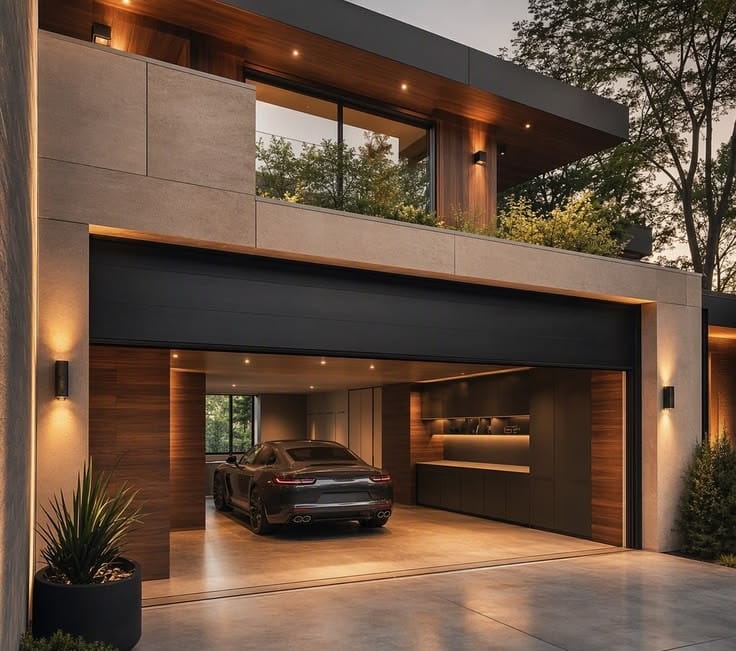
Outdoor wall lights can be functional, decorative, or a combination of both.
When chosen carefully, they help define entrances, illuminate circulation routes, and emphasize architectural details without requiring the entire facade to be illuminated.
The right fixture depends on the shape of the wall, the surrounding materials, the mounting position, and the intended distribution of light.
Up-and-Down Wall Lights
Up-and-down wall lights direct light in both vertical directions, creating a recognizable pattern on the surrounding surface.
They can work well on plain exterior walls, entrance columns, and selected architectural features.
However, the result depends on the optics, spacing, output, and surface finish.
A highly reflective or textured surface may make the beam pattern look stronger than expected.
Before specifying multiple fixtures, it is worth checking how the selected product looks on a sample of the actual finish.
Wallwashing and Grazing
Wallwashing creates a relatively even illumination across a vertical surface, while grazing light emphasizes its texture and relief.
These are different techniques and require appropriate products.
A standard wall light should not automatically be expected to produce an even wallwash, and a broad floodlight may not reveal fine texture as effectively as a suitable grazing arrangement.
Manufacturer photometric data and lighting calculations can help evaluate product suitability before installation.
Shielding and Glare Control
Some wall lights expose their light source directly, while others use shielding, louvers, reflectors, or diffusing elements to manage brightness.
The choice should account for common viewing angles.
A fitting that looks comfortable when viewed straight on may produce glare for someone walking past or looking toward it from a nearby window.
Good positioning and appropriate shielding help the light remain useful without becoming distracting.
Matching Wall Lights to the Property
Exterior wall lights should relate to the architectural language of the villa. A traditional facade may suit a different fixture shape and finish from a minimalist contemporary home.
Consistency is useful, but it does not mean every wall needs the same fixture.
Different areas may require different distributions, particularly where the entrance, outdoor seating, service access, and decorative features have different functions.
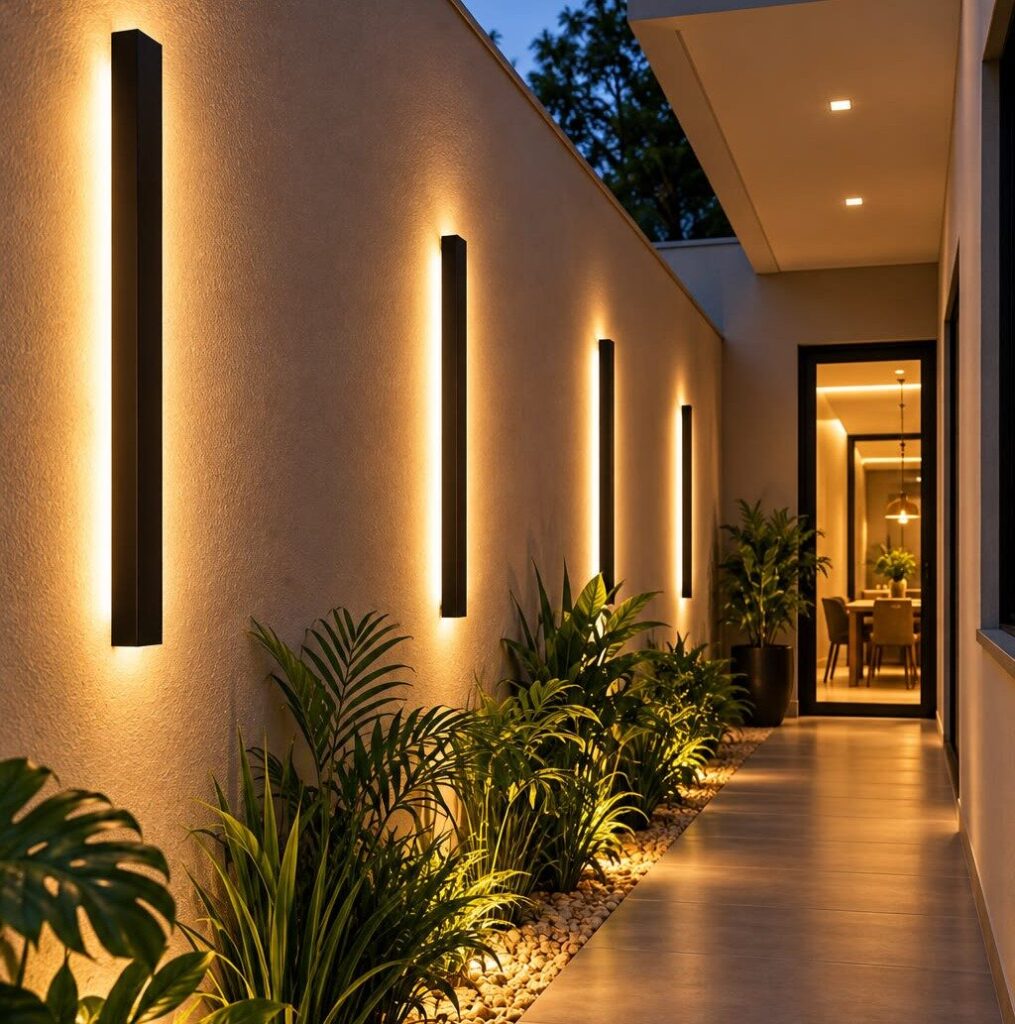

ULTRA MODERN OUTDOOR WALL LIGHTS
Modern exterior lighting often uses clean geometry, simple forms, concealed sources, and carefully controlled beams.
These approaches can complement contemporary villas, especially where the architecture relies on simple planes, strong lines, glass, and textured finishes.
The challenge is to maintain that clean appearance while ensuring that the lighting remains practical.
Minimalist Fixtures and Architectural Lines
Slim wall lights, recessed linear luminaires, and compact directional fixtures can emphasize the geometry of a facade without introducing visual clutter.
They may be used to highlight an entrance portal, define a covered terrace, or create a controlled vertical pattern on an exterior wall.
The product dimensions and light distribution should be considered together.
A visually narrow fixture may still produce a broad beam, while a larger housing may offer better shielding or more precise optics.
Integrated Lighting in Walls and Ceilings
Concealed lighting can create a subtle effect when the light source is hidden within an architectural detail. Examples include light integrated into a canopy, a recessed wall detail, or a carefully designed landscape edge.
However, concealment does not remove the need for access to electrical components.
The designer should coordinate driver locations, maintenance openings, and the actual mounting conditions.
The chosen construction detail must also prevent water ingress and protect the fixture according to the manufacturer’s instructions.
Avoiding Overly Bright Decorative Effects
A modern fixture with a sharp beam pattern can easily become the dominant visual feature if its output is too high or the arrangement is too dense.
The designer should consider the overall scene, not just the isolated product. A smaller amount of controlled light may produce a more refined result than repeating a dramatic effect across every exterior wall.
LED OUTDOOR LIGHTING DESIGN (EFFICIENCY, PRODUCT QUALITY, AND CONTROLS)
LED technology provides a wide range of outdoor lighting options, from compact path lights and wall fixtures to architectural projectors and integrated linear systems.
Choosing LED products is only the beginning. The performance of the complete installation depends on product specifications, optical distribution, electrical compatibility, controls, and how the lights are used.
Understand the Main Product Specifications
The important characteristics vary by application, but often include:
- Luminous flux: The amount of visible light emitted by the luminaire.
- Power consumption: The electrical power required for operation.
- Color temperature: The apparent warmth or coolness of white light.
- Color rendering: How accurately the source reveals the colors of materials.
- Beam distribution: How the light is directed across the target surface.
- Ingress protection: The level of protection against entry of solids and water under specified test conditions.
- Dimming compatibility: Whether the product works correctly with the intended control equipment.
These specifications should be evaluated together. A fitting with high light output is not necessarily the best choice if its beam is poorly suited to the surface or produces uncomfortable glare.
Choose Color Temperature Deliberately
Warm-white light is often used in residential gardens and on warm-toned exterior materials because it can produce a relaxed appearance.
More neutral white light may suit some contemporary architectural schemes.
The actual choice should consider the materials, nearby lighting, landscape, and the intended visual effect.
Consistency across related areas helps avoid a patchwork appearance in which adjacent fixtures look noticeably different.
Where color is important, review manufacturer data rather than assuming that two products with the same nominal color temperature will render surfaces identically.
Use Controls to Reduce Unnecessary Operation
Timers, photocells, motion sensors, and compatible dimmers can help match exterior lighting to actual use.
For example, a decorative facade scheme may operate at a lower output later in the evening, while entrance lighting remains active when people are expected to arrive.
Motion-activated lighting may suit selected functional areas, depending on the project’s requirements.
The control approach should be simple enough to maintain and should be tested after installation. Incompatible drivers, dimmers, or control equipment can lead to flicker or unreliable behavior.
Consider Lifetime and Maintenance
Outdoor luminaires are exposed to environmental conditions that can affect their performance over time. Product warranties, driver access, corrosion resistance, cleaning requirements, and the availability of replacements should be considered during selection.
A high-quality fixture should be suitable not only for its initial appearance but also for the conditions in which it will operate.
For a large villa, standardizing selected products can also make future maintenance easier, as long as the same model is genuinely suitable for each application.

POOL AND GARDEN LIGHTING DESIGN
In many Dubai villas, the garden, pool, terrace, and interior living areas are visually connected.
Large windows and sliding doors mean that the outdoor lighting can be seen from inside the home, making the nighttime view an important part of the overall interior experience.
The design should therefore consider how the exterior appears from multiple viewpoints rather than treating every outdoor zone as a separate project.
Lighting the Pool Without Overpowering the Garden
Water reflects light, so a brightly illuminated pool can become the dominant feature of the entire property.
The designer should consider the pool’s shape, edge materials, surrounding seating, landscaping, and views from inside the villa.
Carefully controlled lighting can help the pool feel connected to the architecture while allowing nearby planting and seating areas to remain visible.
Pool lighting also requires appropriate product selection and electrical safety measures.
The design and installation should comply with the requirements applicable to the specific location and equipment.
Lighting Outdoor Dining and Seating Areas
Outdoor dining requires useful light at the table and around the areas used for serving and movement.
Seating areas often benefit from softer illumination that supports conversation without directing a bright source into people’s eyes.
Ceiling lights beneath a pergola or covered terrace can be combined with selected wall and landscape lights to create different scenes.
The design should account for the height of the ceiling, furniture arrangement, nearby glazing, and the effect of the light when viewed from inside the house.
Coordinating Planting, Irrigation, and Electrical Work
Landscape fixtures should be located with the planting plan and irrigation system in mind.
A fixture placed too close to a sprinkler or hidden behind mature planting may create maintenance or performance problems later.
Cable routes, accessible connections, mounting details, and drainage should be resolved before paving and planting are completed.
These practical details are easy to overlook in a visual concept, but they help the finished system remain reliable.

OUTDOOR LIGHTING DESIGN IN DUBAI (REQUIREMENTS AND ENVIRONMENTAL RESPONSIBILITY)
Outdoor lighting in Dubai needs to be designed with the applicable building requirements and the surroundings in mind. Product selection and visual appearance are only part of the process.
The design team should confirm the current rules, approval conditions, and technical requirements that apply to the particular property, especially where permanent exterior lighting is integrated into the building envelope.
Exterior Lighting Requirements in the Dubai Building Code
The Dubai Building Code 2021 includes provisions addressing exterior lighting power, shielding, light pollution, and automatic controls.
For covered exterior building-envelope lighting, the code specifies maximum average connected lighting power densities and requires permanent exterior lighting to be shielded or aimed appropriately under the relevant provisions.
It also addresses wallwashing spill beyond the facade and calls for automatic controls so exterior lighting can be set not to operate during daylight hours.
The precise requirements and how they apply to an individual villa should be checked against the applicable code provisions and project approval conditions.
Protecting Neighbors from Light Trespass
Light trespass occurs when light reaches a location where it is not intended or wanted, such as a neighboring bedroom window or garden seating area.
This can be reduced through appropriate beam control, shielding, careful fixture aiming, and sensible operating schedules.
The property’s boundaries and surrounding homes should be considered during design.
More light is not automatically better. A successful scheme should provide useful visibility and architectural emphasis without creating unnecessary spill.
Following Responsible Outdoor Lighting Principles
DarkSky International and the Illuminating Engineering Society jointly developed five principles for responsible outdoor lighting:
Make light useful, direct it where needed, keep levels no higher than necessary, control when it operates, and favor warmer-colored light where practical.
These principles support functional lighting while reducing unnecessary energy use, glare, and environmental effects.
They are useful design guidance, although local regulations and project-specific safety requirements still need to be followed.

COST OF OUTDOOR LIGHTING DESIGN FOR VILLAS IN DUBAI AND ABU DHABI
The cost of outdoor lighting design for villas in Dubai and Abu Dhabi typically ranges from AED 7,000 to AED 15,000.
However, it depends on the property’s size, architectural complexity, landscape features, and level of detail required.
A villa with a relatively simple facade, entrance, and pathway layout may require less design work than a luxury property with extensive gardens, multiple outdoor seating areas, terraces, a swimming pool, etc.
The design process involves more than choosing attractive outdoor lights.
It requires careful planning of fixture positions, beam angles, color temperatures, brightness levels, and lighting effects to highlight the architecture while providing practical illumination for entrances, walkways, gardens, and outdoor living spaces.
A professional lighting design may also include a detailed 2D lighting layout, fixture specifications, lighting calculations, and 3D visualizations to help the owner understand how the villa will look after dark before installation begins.
FINAL THOUGHT
Outdoor lighting design is not simply about making a villa visible after sunset.
It is about deciding how people move through the property, which architectural features deserve attention, and how the garden, facade, pool, and outdoor living areas work together.
For villas in Dubai, the best results come from beginning with the site and the architecture, selecting suitable products, controlling glare and spill, and coordinating installation details before finishes and landscaping are complete.
The most successful schemes are often the most deliberate.
They use light where it adds value, maintain visual balance, and avoid making every surface compete for attention.
With appropriate planning, product selection, controls, and maintenance access, outdoor lighting can enhance the property’s appearance while supporting practical use and responsible operation.


Related Posts
Facade Lighting in Dubai and Abu Dhabi for Villas and Homes
Hospitality Lighting in Dubai and Abu Dhabi for Luxury Hotels and Resorts
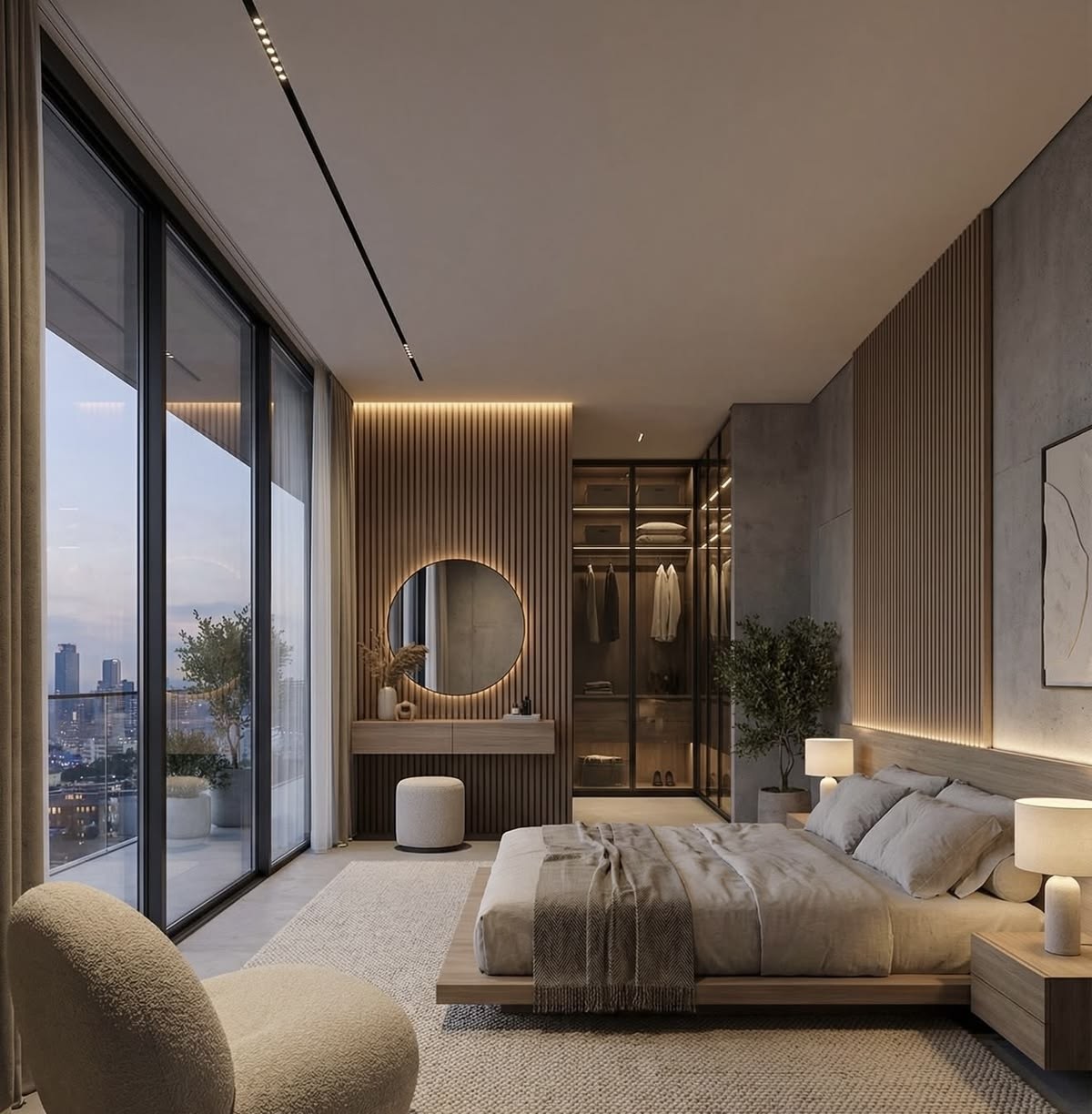
Hotel Lighting Design in UAE: for Hospitality Projects in Dubai and Abu Dhabi (2027)
Lighting Consultant In UAE: Services, Benefits, and Costs for Villas and Large Projects
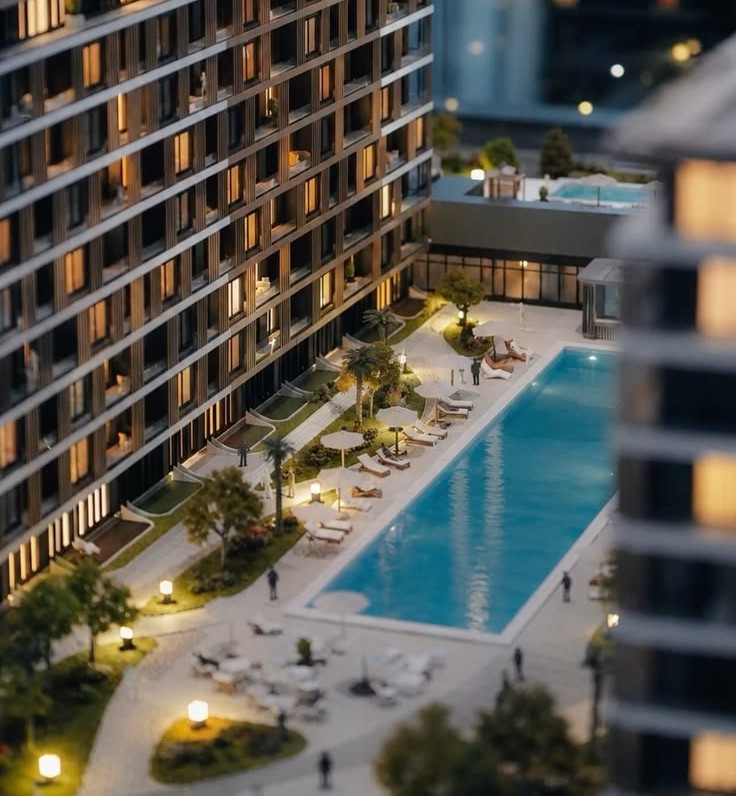
Lighting Design for Large Residential Projects: Villas, Apartments, and Residential Towers in UAE
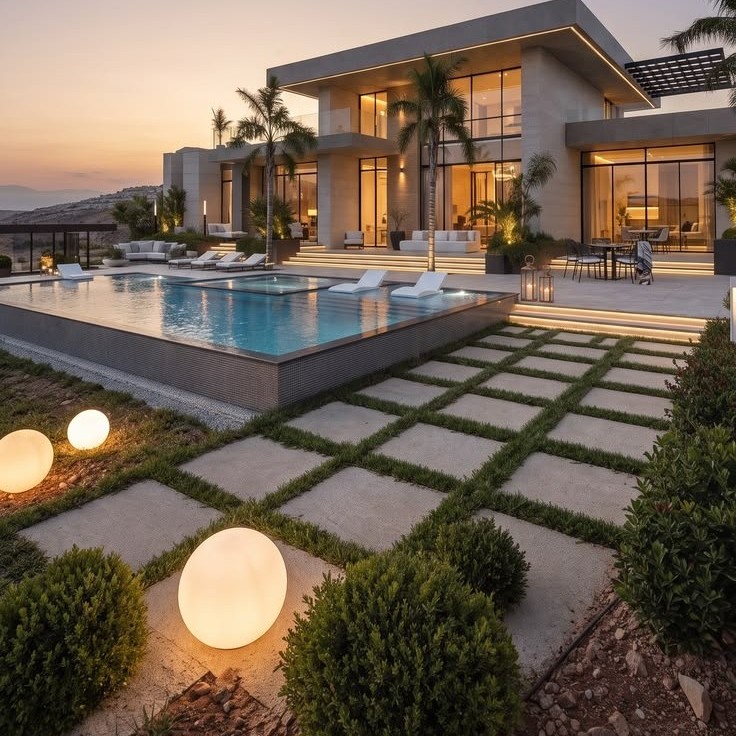
Lighting Design for Property Developers in Dubai: Residential and Commercial Projects
Villa Lighting Design in Dubai and Abu Dhabi: A Complete Guide in 2027


Wall Light Design in UAE for Homes & Villas

Staircase Light Design in UAE for Homes, Villas, & Large Malls

