
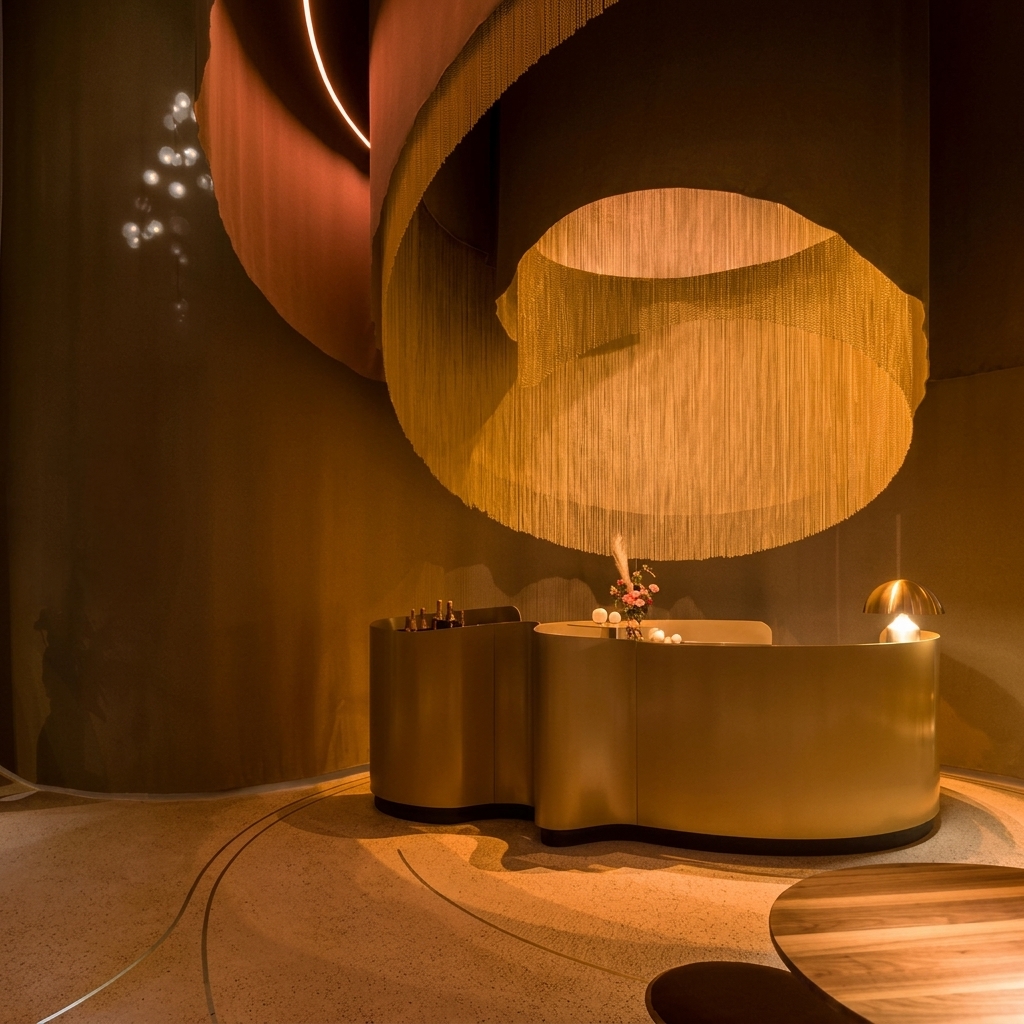
Hospitality Lighting in Dubai and Abu Dhabi for Luxury Hotels and Resorts
That feeling of luxury in a space rarely comes from a single fixture, especially in hotels or resorts.
More often, it’s the result of a carefully coordinated lighting scheme that makes the architecture, materials, furniture, and people feel connected.
The luxury hospitality lighting in Dubai and Abu Dhabi that you often see on social media is all about getting these details right.
A hotel needs lighting that welcomes arriving guests, supports staff, makes rooms comfortable, helps people navigate corridors.
Just like villa lighting design, hospitality lighting design helps guests navigate different areas of a property, such as spas and event spaces, etc.
In the UAE, these requirements are particularly relevant to luxury hotels and resorts.
Projects in Dubai and Abu Dhabi often combine dramatic entrances, high ceilings, bespoke interiors, expansive glazing, landscaped grounds, and extensive outdoor leisure areas.
These architectural features create excellent opportunities for hotel lighting design, but they also introduce technical challenges.
The right approach needs to consider light distribution, color quality, control systems, maintenance, energy consumption, and local project requirements.
A successful design brings these decisions together from the beginning by effort of a lighting consultant in UAE.
Instead of treating lighting as a finishing detail, it makes light an integral part of the guest experience and the property’s long-term operation.
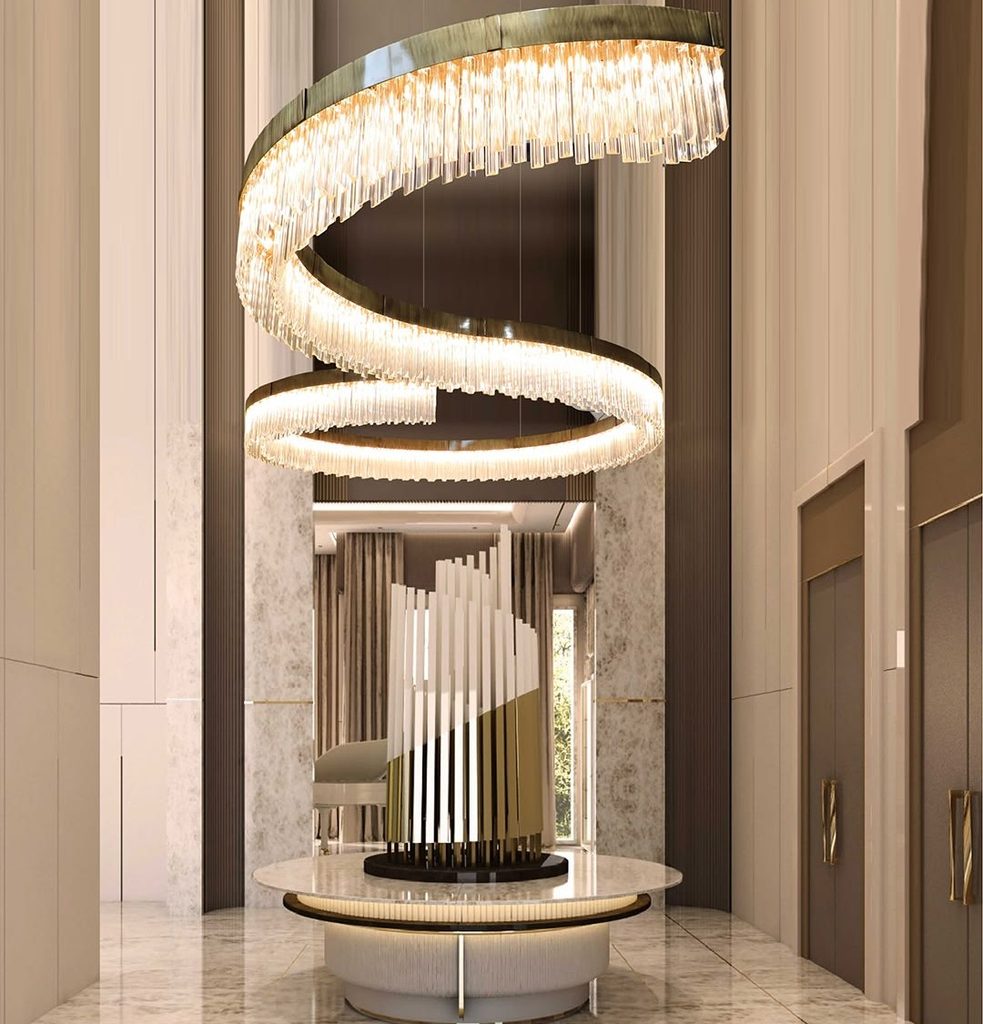
LUXURY HOSPITALITY LIGHTING IN DUBAI AND ABU DHABI
The first thing to understand about hospitality lighting is that a hotel cannot be treated as one large room with the same lighting requirements everywhere.
A reception desk, guest bedroom, restaurant, corridor, conference room, and swimming pool serve completely different purposes.
Each space needs a lighting arrangement that reflects its function while contributing to the property’s overall identity.
The Illuminating Engineering Society’s ANSI/IES RP-9-23 recommended practice for hospitality spaces addresses this challenge by treating hotel lighting as an integrated system of layers and distinct areas of illumination.
Start With the Guest Experience
Before selecting fixtures, the design team should understand how guests move through the property.
The arrival experience begins outside, continues through the entrance and lobby, and extends into guest rooms, restaurants, leisure facilities, and other spaces.
Each transition offers an opportunity to guide attention and establish the right atmosphere.
A clearly illuminated entrance can help visitors recognize where to go, while a carefully composed lobby can communicate the hotel’s architectural character.
The lighting should support this experience without becoming a distraction. Brightness, contrast, reflections, and the visibility of important features all influence how a space is perceived.
Understand the Function of Each Space
Different areas need different lighting priorities.
A reception desk requires practical illumination for staff, while the surrounding lobby may use a more atmospheric combination of ambient and accent lighting.
Guest rooms need flexible controls, corridors need comfortable visibility, and restaurants may require several scenes for different service periods.
These requirements should be identified before the fixture layout is finalized.
Establish a Consistent Visual Identity
A hotel does not need identical lighting everywhere to feel consistent.
Instead, the design can repeat certain characteristics, such as color quality, fixture finishes, lighting details, or the way architectural surfaces are illuminated.
For example, a resort might use concealed lighting to reveal natural materials throughout the property, while decorative pendants and chandeliers distinguish individual restaurants or lounges.
This creates a recognizable visual language without making every room look the same.

CUSTOM HOSPITALITY LIGHTING IN UAE
Custom hospitality lighting in Dubai and Abu Dhabi often include bespoke chandeliers, decorative pendants, architectural linear fixtures, custom-finished wall lights, and luminaires developed for a particular ceiling or interior detail.
But customization is not limited to appearance.
It can also involve adjusting dimensions, light distribution, mounting arrangements, finishes, or control compatibility to meet the needs of a specific project.
Light Sources for the Application
LED lighting is widely used in modern hospitality projects because it offers product choices across a broad range of output levels, distributions, color temperatures, and form factors.
However, not all LED fixtures perform equally.
The design team should review manufacturer data for luminous flux, wattage, color rendering, optical distribution, glare control, dimming compatibility, and expected operating conditions.
These specifications help establish whether a fitting is appropriate for its intended location.
A decorative pendant and a recessed downlight may have similar power consumption but distribute light in very different ways.
Color Temperature and Color Rendering
Correlated color temperature, measured in kelvins (K), describes the apparent warmth or coolness of white light.
Lower values generally appear warmer, while higher values tend to look cooler.
The appropriate choice depends on the atmosphere, activity, materials, and intended visual experience. A restaurant designed for relaxed evening dining may need a different approach from a meeting room or service area.
Color rendering also matters. The Color Rendering Index (CRI) is one commonly used measure of how a light source reveals colors compared with a reference.
Additional metrics, such as R9 for saturated red, may be useful when evaluating particular applications.
When a project includes custom stone, colored fabrics, wood veneers, or artwork, the designer should consider how the selected light sources will affect the appearance of those materials.
Match Controls to the Lighting System
Dimming allows space to shift between different operating conditions.
A restaurant can use one setting during daytime service and a softer scene for dinner, while a guest room can offer separate settings for reading, relaxing, and general use.
The controls must be compatible with the specified fixtures, drivers, and control protocol.
Otherwise, the installation may experience flicker, uneven dimming, limited adjustment, or unreliable operation.
For larger hotels and resorts, a connected lighting control system may also support scheduled operation, occupancy-based control, centralized monitoring, and repeatable lighting scenes.


HOSPITALITY LIGHTING DESIGN FOR EXTERIOR AREAS
The guest experience begins before someone walks through the front door. Exterior lighting helps identify the property, reveal its architecture, guide visitors toward the entrance, and create a clear relationship between the building and its surroundings.
For hotels and resorts in Dubai and Abu Dhabi, outdoor lighting also needs to account for environmental exposure, landscape design, circulation, and applicable requirements concerning energy use and unwanted light spill.
Hotel Facade Lighting
Facade lighting can emphasize the geometry, texture, and materials of a building.
It may highlight columns, recessed surfaces, entrance portals, balconies, or other architectural elements.
The technique should be selected according to the surface.
If the hotel is a tower or skyscraper, skyscraper facade lighting in UAE is a must to create a striking architectural presence after dark.
Wallwashing is generally used to provide relatively even illumination across a vertical plane, while grazing light uses a shallow angle to reveal texture and relief.
These approaches create different visual effects. A highly textured stone facade may benefit from controlled grazing light, while a smoother architectural surface may be better suited to a more even distribution.
Entrance Drives and Arrival Areas
Entrance lighting needs to help drivers, pedestrians, and arriving guests understand the approach to the hotel.
It should support safe movement and make the main entrance recognizable without creating excessive brightness or glare.
The design may combine architectural lighting with appropriate illumination for canopies, drop-off areas, pedestrian routes, signage, and landscaping.
Fixture positions and beam directions should be reviewed from relevant viewing angles, including the approach by vehicle and the view from the entrance itself.
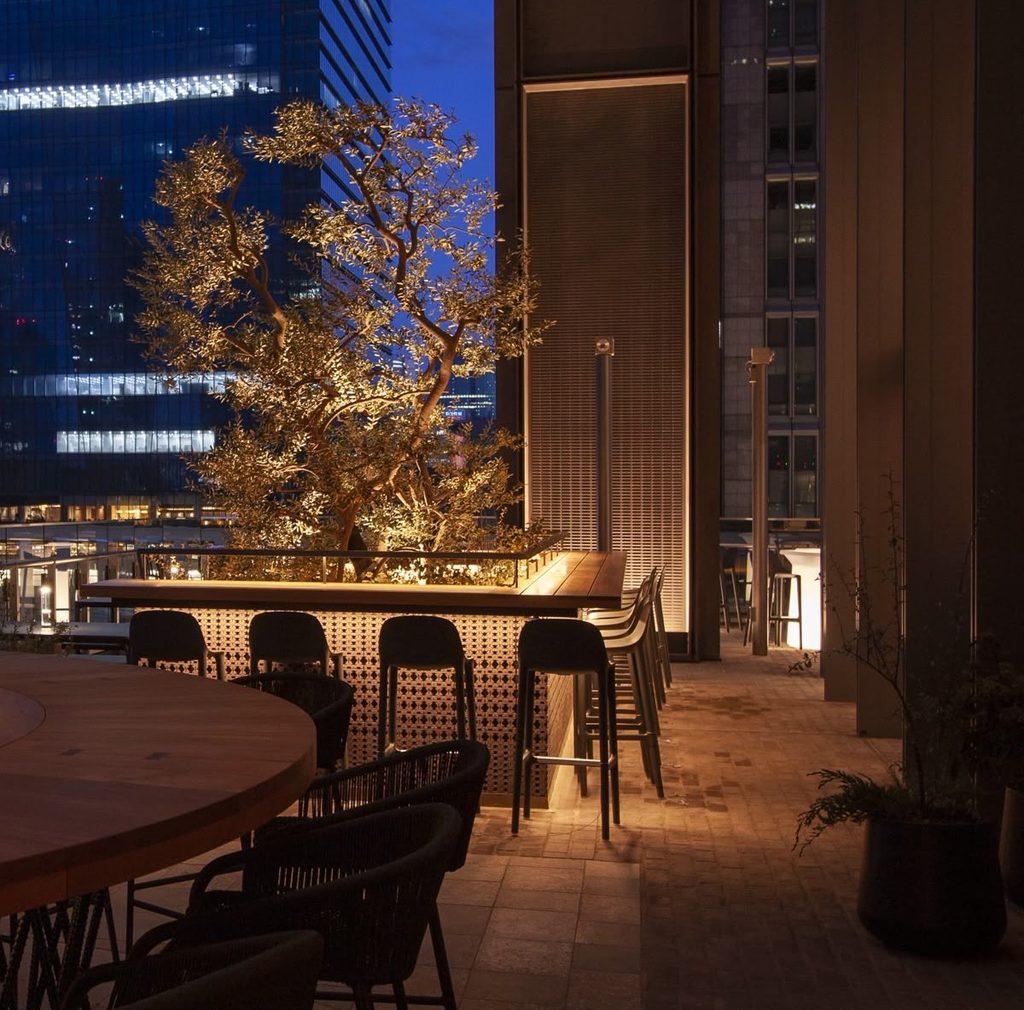
Landscape, Pools, and Outdoor Dining
Resorts often include gardens, pathways, terraces, pools, outdoor restaurants, and seating areas.
Each requires a suitable balance between practical illumination and atmosphere.
Low-level path lighting can support orientation, while carefully directed accent lighting can reveal planting or selected landscape features.
Only an intentional outdoor lighting design can settle the matter.
Outdoor dining areas may need additional task lighting, but it should remain compatible with the intended mood.
Fixtures must be selected for their actual environmental conditions, including exposure to water and dust.
Pool and water-feature lighting also requires appropriate electrical design and product selection under applicable safety requirements.
Light Spill and Energy Use
Exterior lighting should direct light where it is needed instead of illuminating every surface at maximum output.
Poorly controlled beams can create glare, send light beyond the property, or reduce the visibility of intended focal points.
The Dubai Building Code includes provisions addressing exterior lighting power, shielding, controls, and unwanted light beyond illuminated facades.
The project team should confirm the applicable edition and the requirements that apply to the specific development.
Appropriate optics, aiming, shielding, and control schedules can help the design create a strong nighttime appearance without unnecessary illumination.
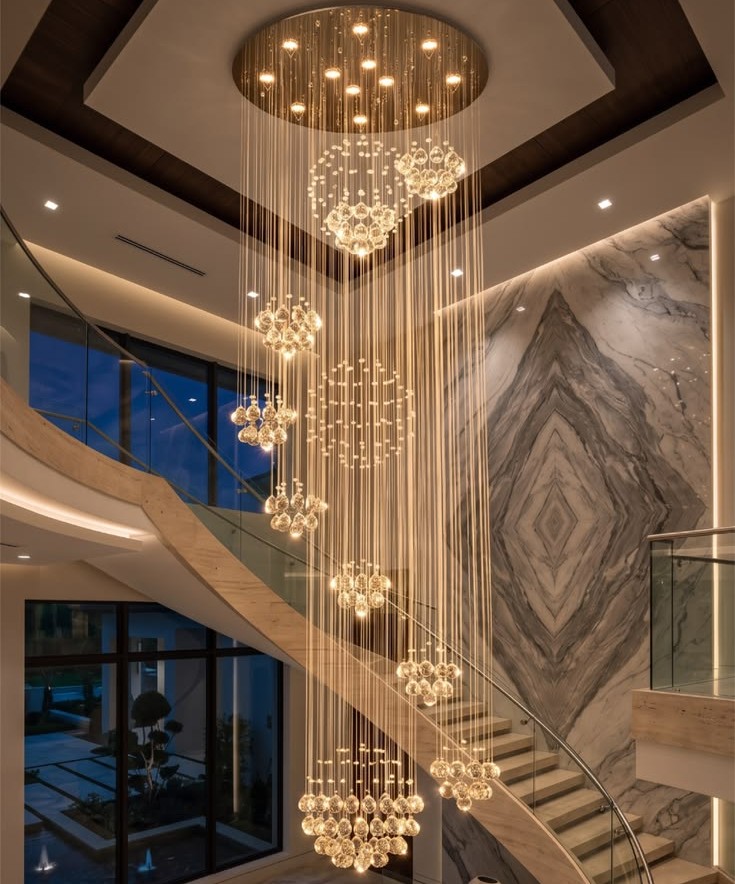
LOBBY LIGHTING DESIGN
The hotel lobby lighting design often sets the tone for the entire hotel.
It is where guests arrive, ask questions, wait for rooms, meet other people, and begin to understand the character of the property.
Lighting needs to support all those activities while making the space feel intentional.
A dramatic entrance can be impressive, but the reception desk, seating areas, circulation routes, and architectural details must still be easy to see and use.
Layered Lighting for the Lobby
A successful lobby typically combines several lighting layers.
General illumination supports circulation, task lighting helps staff work, and accent lighting emphasizes architectural features or artwork.
Decorative fixtures can contribute to the overall composition, but they should not be expected to provide all the required light on their own.
A chandelier might draw attention toward a double-height ceiling, while wall washers reveal a stone feature wall and concealed lighting adds depth around selected architectural details.
Reception Desk and Seating Areas
The reception desk requires sufficient illumination for practical work, including reading and handling documents.
The lighting should avoid uncomfortable reflections on glossy surfaces and should not create excessive contrast for people facing the desk.
Guest seating areas may benefit from a softer arrangement, especially where people wait or have conversations.
The design should also consider how daylight affects the lobby during the day and how the space looks after sunset.
Decorative Fixtures and Feature Walls
Large pendants and chandeliers can help establish the hotel’s identity, but their scale must suit the ceiling height and room dimensions. Their visual impact should be evaluated from multiple viewpoints.
Feature walls often benefit from deliberate light distribution rather than simply receiving whatever light happens to come from nearby downlights.
The selected beam, distance from the wall, and aiming angle all influence the result. Photometric information and sample testing can help the design team assess these decisions before installation.

ELEVATOR LOBBIES AND PUBLIC CORRIDORS LIGHTING
Elevator lobbies and public corridors connect the hotel’s main spaces. Guests may pass through them quickly, but the lighting still influences whether the property feels easy to navigate, comfortable, and visually consistent.
The design should establish a clear route while avoiding excessive brightness and repetitive visual monotony.
Lighting Elevator Lobbies
Elevator lobbies need to make lift doors, call controls, signs, and nearby circulation routes easy to identify. The arrangement may also need to accommodate reflective metal, glass, stone, and other materials that can create glare.
Vertical illumination can make surrounding walls and finishes easier to perceive. Accent lighting may distinguish the lift area from adjoining corridors without introducing unnecessary visual complexity.
Public Corridors and Transition Spaces
The lighting should support consistent visibility along the route and help guests locate important features.
Changes in brightness between a lobby, elevator area, and guest corridor should be considered so that transitions feel comfortable.
The best arrangement depends on the corridor’s proportions, ceiling height, wall finishes, and the location of doors and signs.
Repeated fixture spacing can help create order but should not replace an assessment of the actual distribution of light.
Maintenance and Emergency Provisions
Corridor lighting is repeated across many floors in larger hotels, making product consistency and maintenance access important.
Drivers and replaceable components should be accessible using a practical maintenance method.
Emergency lighting and egress illumination must be addressed through the approved life-safety design and applicable requirements. Decorative fixtures alone should not be assumed to satisfy these provisions.
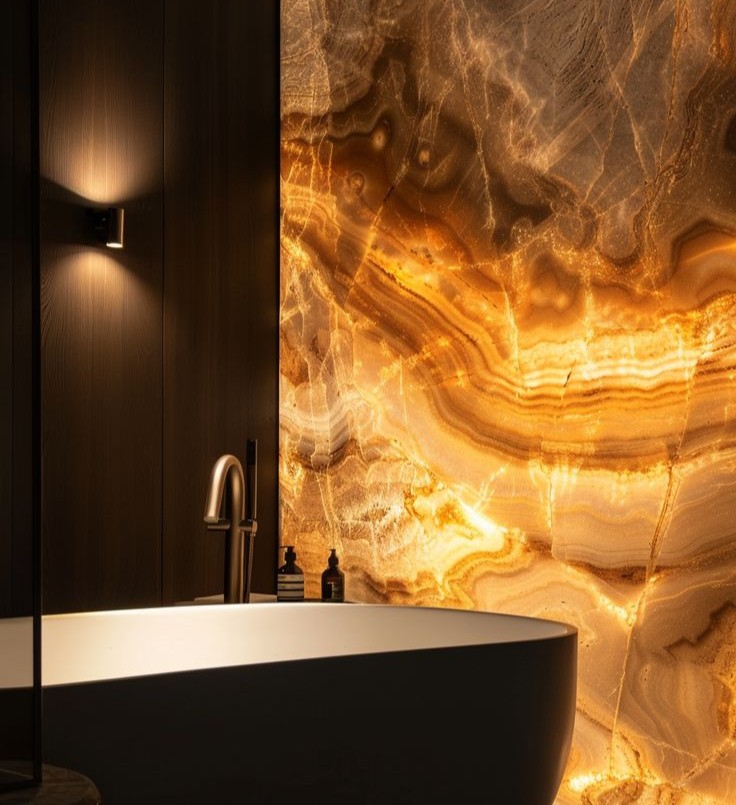
PUBLIC RESTROOMS AND EMERGENCY LIGHTING
Public restrooms are functional spaces, but they still contribute to the quality of the hotel experience. Guests expect mirrors, washbasins, entrances, and circulation areas to be well illuminated without uncomfortable glare or harsh shadows.
Emergency lighting, meanwhile, has a separate safety function that needs to be planned and verified independently of the decorative design.
Public Restroom Lighting
Lighting near mirrors should help people see faces clearly and avoid strong shadows. The designer should consider the location of the light source, mirror dimensions, reflective finishes, and the likely position of the user.
General illumination should support movement, while product selection must account for the environment and applicable electrical requirements.
Fixtures near wet areas may require suitable protection according to their location and installation conditions.
The combination of color rendering, color temperature, and surface reflectance also influences how materials and skin tones appear.
Emergency Lighting and Egress
Emergency lighting is intended to support safe movement when normal lighting fails or when another emergency condition requires evacuation.
It is governed by the applicable safety design and regulations, not just by aesthetic preferences.
The project team should coordinate emergency lighting with exit signs, escape routes, power arrangements, and required testing procedures.
The exact requirements depend on the jurisdiction, building, approved design, and applicable standards.
A hospitality lighting package should identify the boundary between decorative lighting and the specialist systems needed to satisfy life-safety requirements.

BALLROOMS, MEETING ROOMS, AND FOOD AND BEVERAGE SPACES
Hotels frequently use the same spaces for several purposes. A ballroom may host a conference in the morning, a wedding in the evening, and a private celebration later that week.
Lighting needs to adapt to these different scenarios without making the system difficult to operate or maintain.
Ballrooms and Multifunction Meeting Rooms
Ballrooms benefit from a control strategy that allows multiple lighting groups and scenes.
General illumination, decorative lighting, wall lighting, and stage or presentation lighting may need to operate independently.
Meeting rooms require a different balance. The lighting should support reading, communication, presentations, and screen use while managing glare and reflections.
The design should be coordinated with audio-visual equipment, ceiling infrastructure, and any stage or event requirements. Controls should be tested against realistic event settings before space opens.
Restaurants and Bars
Food and beverage areas need lighting that responds to their identity and service model.
A fine-dining restaurant may use more controlled contrast and warm decorative light, while a breakfast restaurant may need greater flexibility for daytime use.
Lighting also affects how food, drinks, and materials are perceived. Color rendering, surface reflectance, and light distribution should be considered alongside the atmosphere the restaurant aims to create.
Retail, Business Centers, and Shared Facilities
Hotel retail areas may require accent lighting to draw attention to products, while business centers need more task-oriented illumination.
Fitness centers, spas, and other shared facilities also have specific requirements that should be addressed individually.
ANSI/IES RP-9-23 includes guidance across these different hospitality applications, supporting the principle that each space should be designed around its actual use.

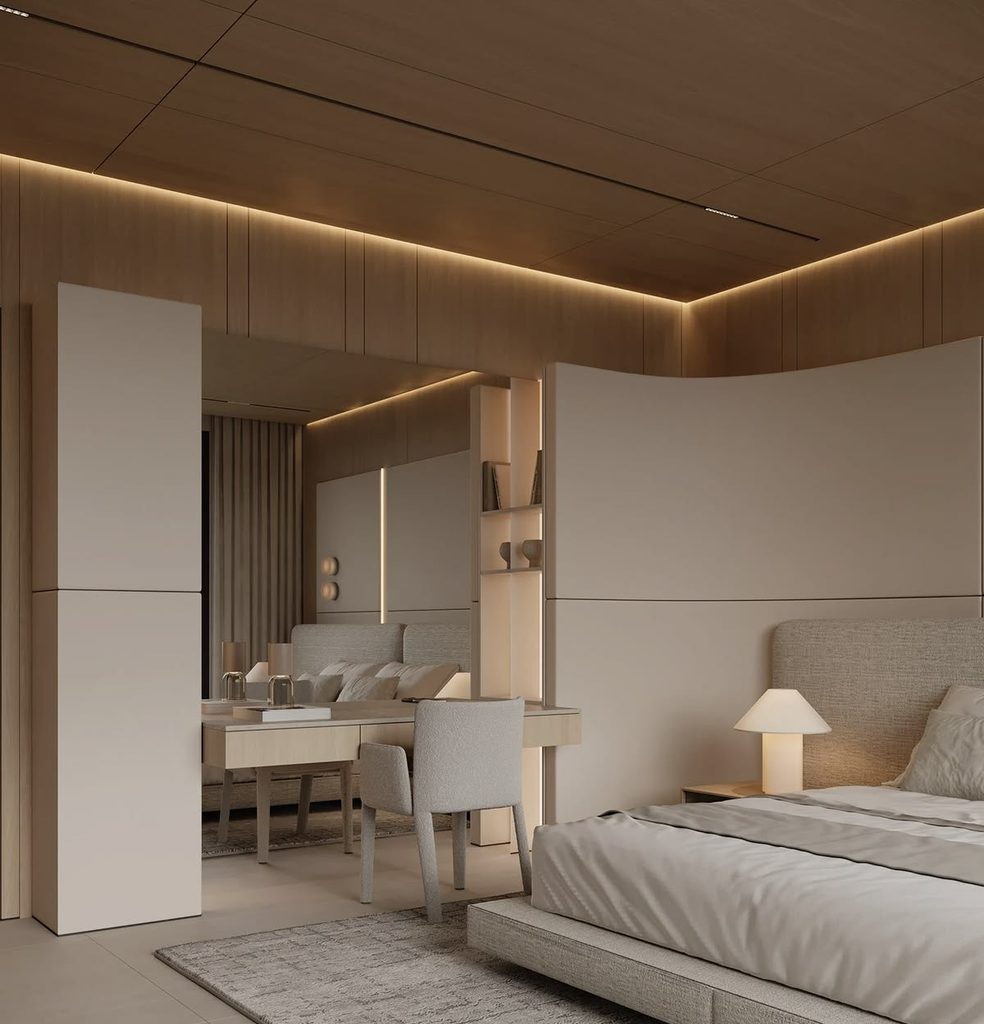
GUEST ROOMS AND GUEST BATHROOMS
Guest rooms are among the most personal spaces in a hotel. Guests may use them for sleeping, reading, working, dressing, relaxing, and preparing for the day.
A single overhead light is unlikely to provide the flexibility required for all these activities. A layered system with intuitive controls is generally more useful.
General and Bedside Lighting
General lighting should provide suitable illumination for the room’s everyday use.
Bedside lighting should be conveniently controlled and directed so that one guest can read without unnecessarily disturbing another.
The exact fixture arrangement depends on the bed position, headboard design, room size, and other furniture.
Where the design includes integrated headboard lighting, the electrical and mounting requirements should be coordinated with the joinery.
Desk, Wardrobe, and Mirror Lighting
A desk area may need task lighting that supports reading and screen use while managing reflections.
Wardrobe lighting helps guests identify clothing and organize their belongings.
Bathroom mirror lighting should provide a useful view of the face, with product selection appropriate to the installation environment.
The designer should consider both practical illumination and the visual quality of the surrounding materials.
Intuitive Controls and Guest Choice
Guests should be able to understand the room’s controls without needing assistance.
Clear labels, sensible grouping, and straightforward scenes can make the room easier to use.
Connected systems may allow brightness and color characteristics to be adjusted, but advanced features should only be included when they provide a genuine benefit and can be operated reliably.
SPA SERVICES, FITNESS CENTERS, AND RESORT LEISURE AREAS
Resorts often bring together spaces with very different lighting objectives.
A spa treatment room may need a calm environment, while a fitness center requires comfortable visibility for exercise and equipment use.
Outdoor lounges, pool areas, and recreation spaces introduce additional environmental and safety considerations.
Spa and Treatment Rooms
Spa lighting generally needs to support relaxation while allowing staff to perform their work. Layered lighting and adjustable controls can help provide different settings for treatment, cleaning, and general operation.
However, the design should not assume that every treatment room needs to be as dim as possible.
Staff tasks, safe movement, hygiene procedures, and the particular service being offered all influence the appropriate arrangement.
Fitness Centers and Wellness Facilities
Fitness areas need suitable illumination for users to move around safely and use equipment effectively.
The designer should consider glare, shadows, mirror reflections, and how light interacts with screens and reflective surfaces.
Where the facility contains different zones, such as strength training, cardio equipment, and stretching areas, the lighting can be adapted to their activities.
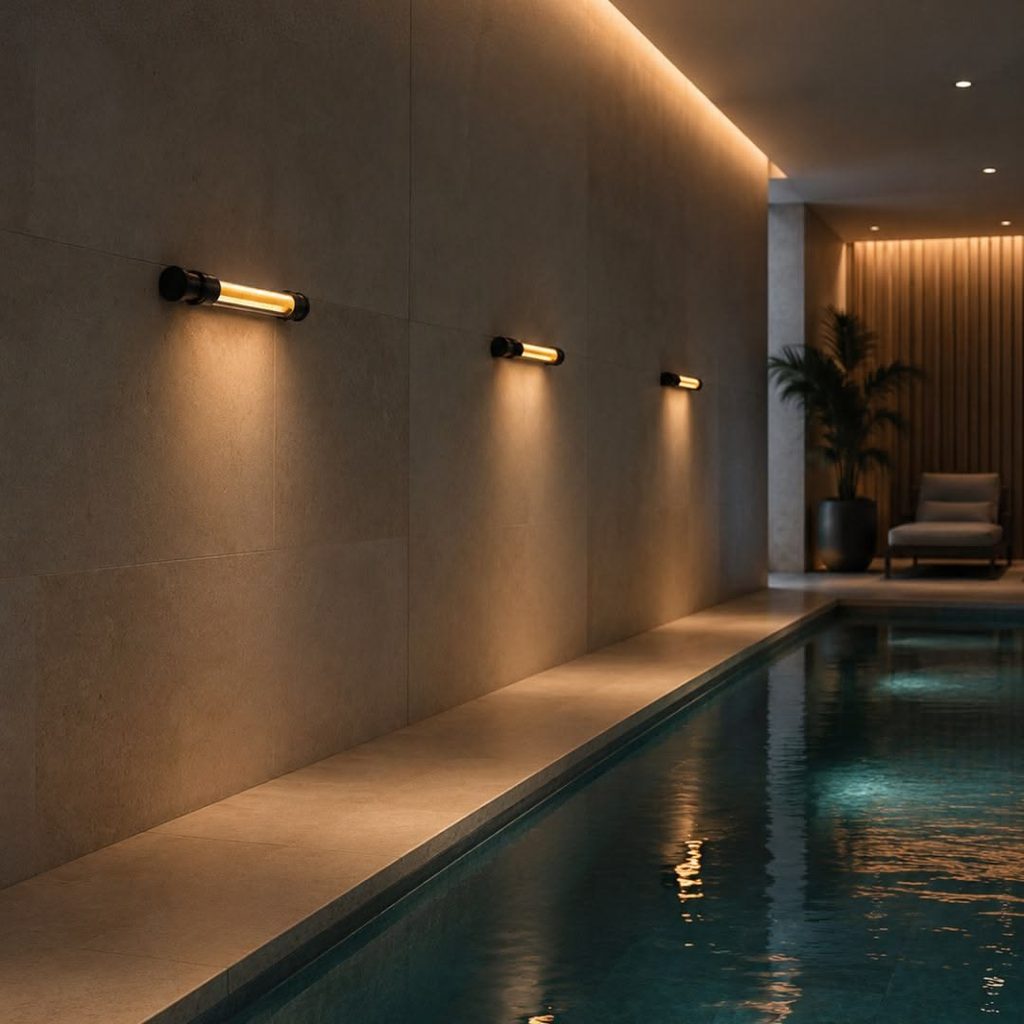
Pools, Terraces, and Outdoor Lounges
Outdoor leisure areas should be designed for the conditions in which they operate.
This includes appropriate luminaire protection, mounting details, electrical safety, glare control, and coordination with landscape and architectural features.
A resort’s exterior lighting should create a coherent experience while avoiding unnecessary brightness and spill beyond the intended area.
LIGHTING CONTROLS, ENERGY USE, AND MAINTENANCE
Hospitality lighting operates across many rooms and shared areas, often for long periods each day.
A technical sound lighting design should therefore consider how the system will be controlled, how much energy it uses, and how easily it can be maintained.
These decisions can influence both the initial project cost and the property’s ongoing operating requirements.
Dimming, Scenes, and Automation
Dimming lets staff adjust lighting to suit different activities and times of day.
Scene controls can store combinations of lighting settings, allowing a restaurant or meeting room to change between approved arrangements without manual adjustment of every fixture.
Digital lighting-control systems such as DALI can support group control, individual addressing, scene recall, and communication with compatible devices.
The right approach depends on the project requirements and the selected equipment.
The control design should be documented and commissioned so staff can operate it confidently.
Compatibility between luminaires, drivers, dimmers, and control systems must be checked before installation.
Energy Efficiency and Operational Use
Energy efficiency depends on the products selected, their output and distribution, operating hours, controls, and how effectively the lighting is matched to the space.
Dubai Electricity and Water Authority (DEWA) recommends efficient LED lighting, timers, motion detectors where applicable, and dimmers as practical ways to help manage energy use.
These measures should be selected according to the hotel’s operations rather than applied without considering occupancy and comfort.
Daylight-responsive controls may also be useful in spaces with substantial glazing, provided the system is designed and commissioned correctly.
Maintenance Access and Product Longevity
Drivers, control devices, and replaceable components should remain accessible through a defined maintenance method.
Custom chandeliers and concealed lighting systems can require particular attention because servicing them may be difficult after the ceilings and decorative finishes are complete.
The specification should consider manufacturer support, warranty conditions, replacement availability, cleaning requirements, and the expected operating environment.
A handover package containing product information, control instructions, and records of installed equipment can help facilities staff manage the lighting throughout the property’s life.
PLANNING HOSPITALITY LIGHTING PROJECTS IN UAE
A hotel or resort in Dubai or Abu Dhabi needs a lighting strategy that is visually coordinated, technically documented, and aligned with applicable local requirements.
These considerations should be addressed early enough to influence architecture, electrical planning, procurement, and construction.
The exact approvals and standards depend on the emirate, building type, project scope, and current requirements, so the project team should verify them rather than assume one process applies everywhere.
Dubai Project Coordination
For projects in Dubai, the design team should confirm the applicable Dubai Building Code, relevant DEWA requirements, and project-specific approval conditions.
Exterior lighting needs particular attention where requirements address shielding, controls, power, and unwanted light spill.
Electrical installation requirements should also be reviewed by the professionals responsible.
Abu Dhabi Project Coordination
For Abu Dhabi projects, the Department of Energy’s Electricity Wiring Regulations provide an important reference for low-voltage electrical installations.
The project team should consult the applicable regulations and verify any additional requirements for the development.
The lighting designer, electrical consultant, contractor, and other specialists should have clearly defined responsibilities for documentation, coordination, testing, and handover.
The Drawings and Procurement Schedule
The lighting design should be coordinated with reflected ceiling plans, electrical drawings, mechanical services, decorative ceilings, and other relevant documents.
Fixture schedules should identify products clearly and include the technical information needed for review, procurement, and installation.
Custom luminaires should be reviewed early enough to accommodate sample approval, manufacturing, delivery, and mounting requirements.
Changes to approved fixtures should be assessed before installation, since even a similar-looking substitute may produce a different lighting effect or require a different mounting arrangement.
Commissioning Before Opening
Before a hotel or resort begins operating, the installed system should be checked against the approved design.
This includes verifying fixture operations, controls, dimming performance, aiming, and any specified lighting scenes.
Relevant emergency and life-safety systems require their own approved testing and verification. Decorative lighting checks do not replace those procedures.
Commissioning helps make sure that the finished result is practical for guests and staff, not merely attractive in the design presentation.

FINAL THOUGHT
Hospitality lighting design is about creating a connected experience across the property.
The entrance should welcome guests, the lobby should communicate the hotel’s character, guest rooms should feel comfortable and adaptable, and restaurants, corridors, spas, and outdoor areas should support the activities taking place in them.
For luxury hotels and resorts in the UAE, the strongest results come from combining a clear design concept with accurate product specifications, suitable lighting controls, careful coordination, and attention to long-term maintenance.
Custom fixtures can provide a distinctive visual identity, but they still need to work as part of a complete technical system.
Likewise, energy-saving controls are useful when they support the property’s real operating needs without compromising guest comfort.
The best lighting schemes are planned early, reviewed carefully, and tested in the finished environment.
When those fundamentals are in place, lighting becomes much more than decoration: it helps express the property’s identity while supporting the everyday work of running a successful hospitality business.

Related Posts
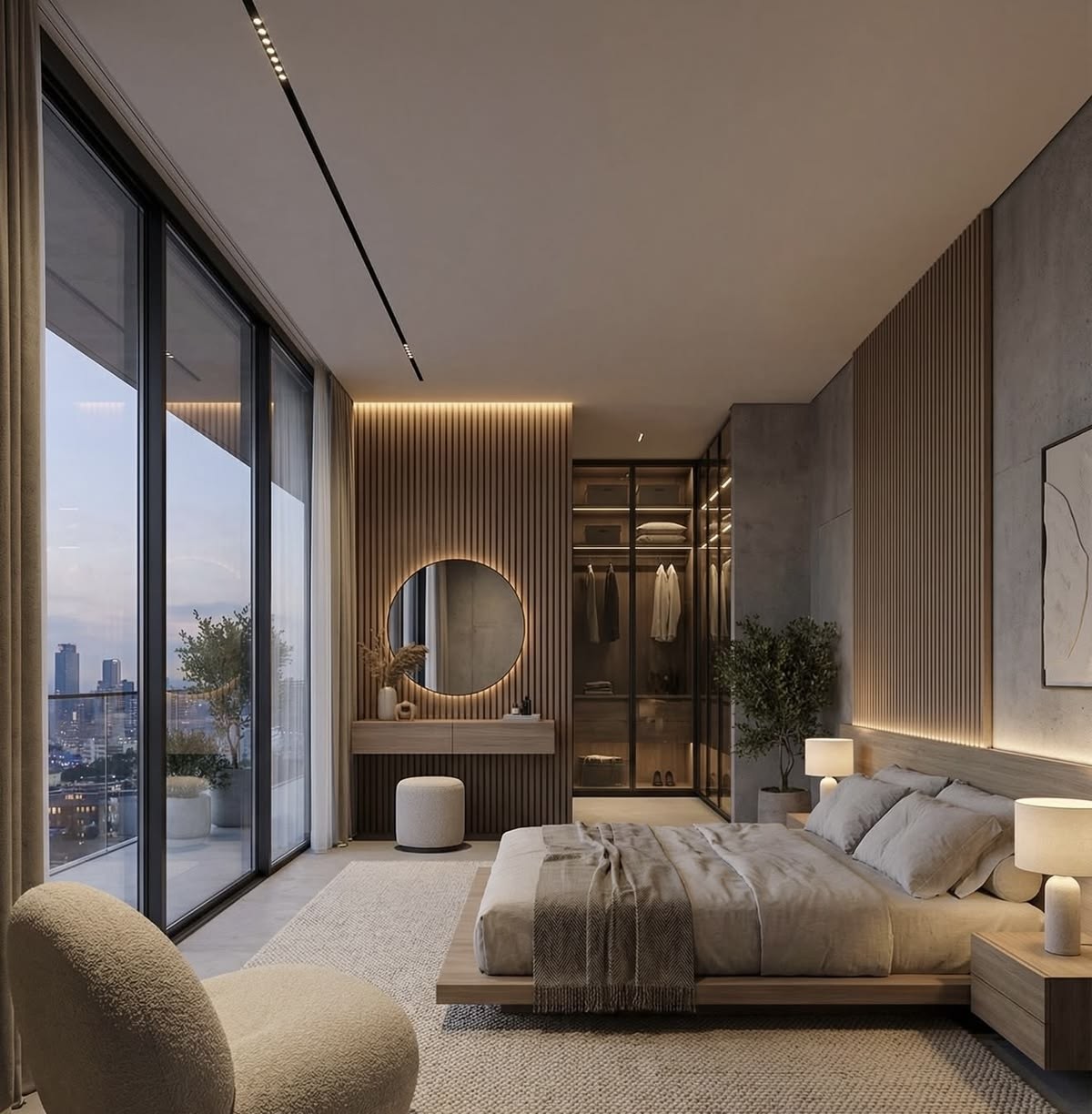
Hotel Lighting Design in UAE: for Hospitality Projects in Dubai and Abu Dhabi (2027)
Lighting Consultant In UAE: Services, Benefits, and Costs for Villas and Large Projects
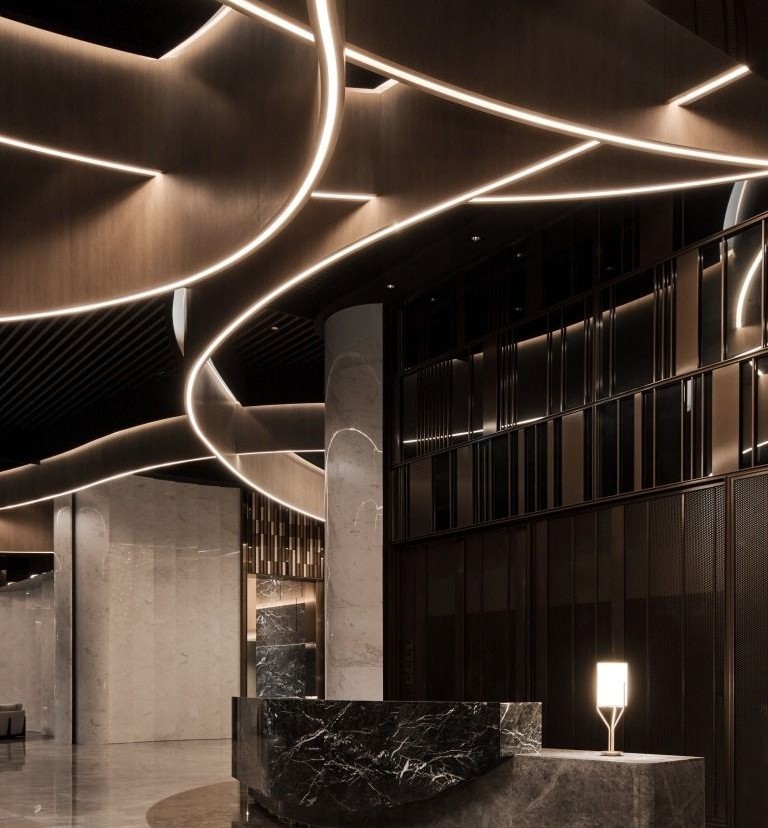
Hotel Lobby Lighting Design, Supply, and Installation in Dubai and Abu Dhabi
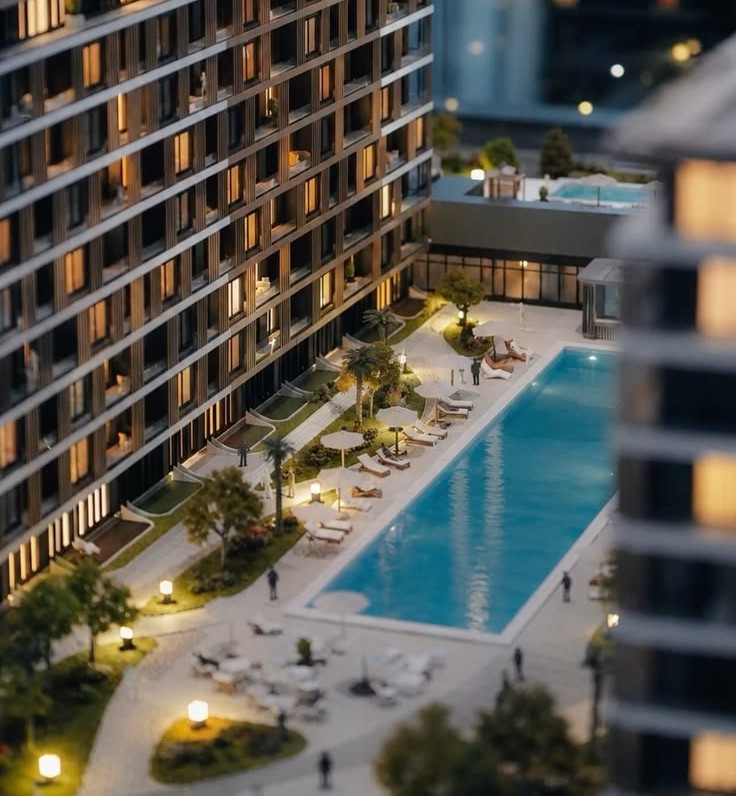
Lighting Design for Large Residential Projects: Villas, Apartments, and Residential Towers in UAE
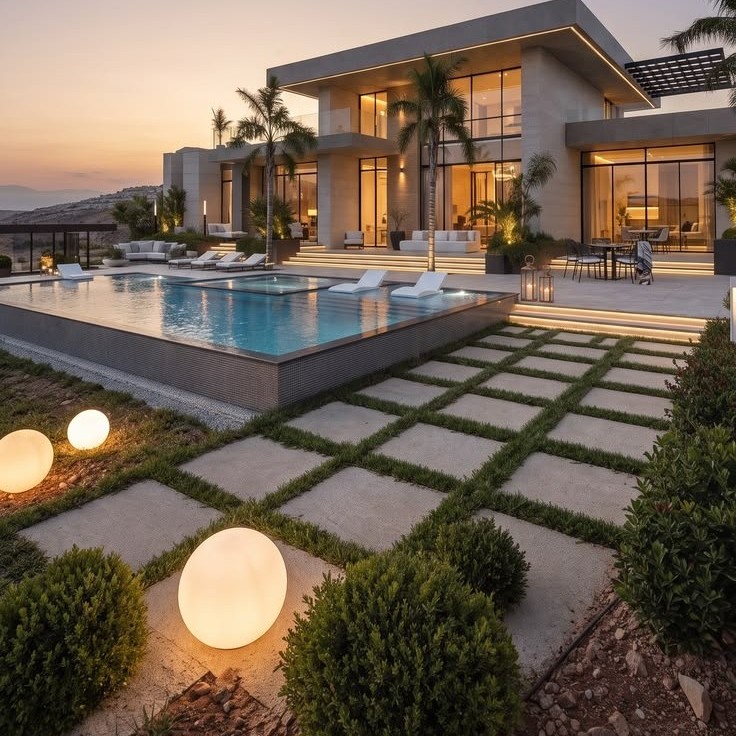
Lighting Design for Property Developers in Dubai: Residential and Commercial Projects
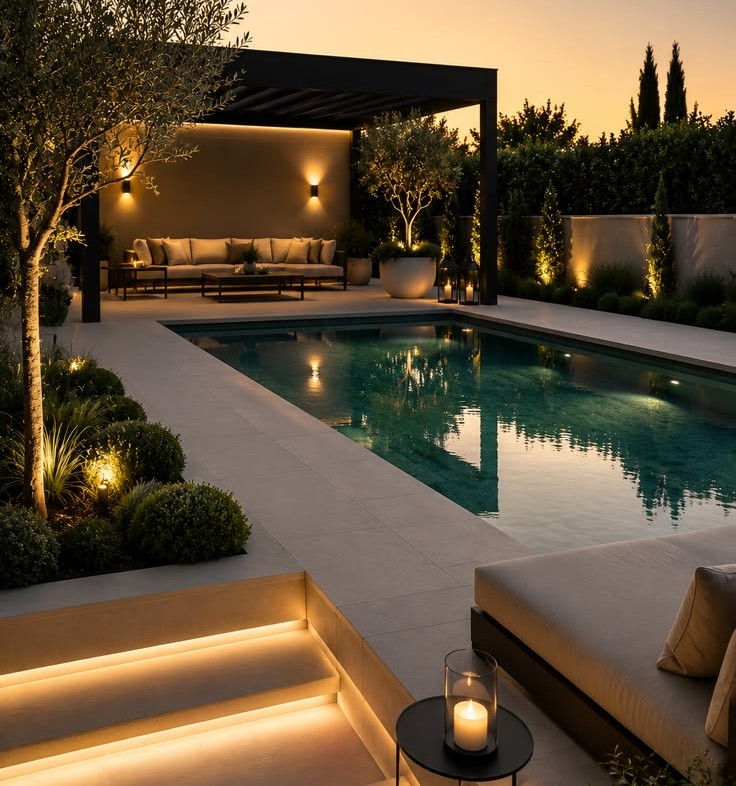
Outdoor Lighting Design for Villas, Pools, and Landscapes in Dubai and Abu Dhabi
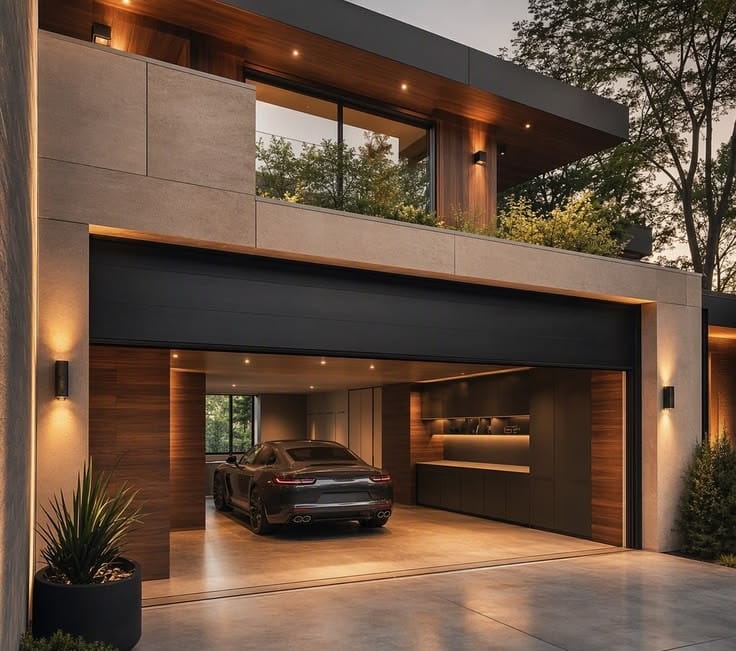
Villa Lighting Design in Dubai and Abu Dhabi: A Complete Guide in 2027

Staircase Light Design in UAE for Homes, Villas, & Large Malls
