Hotel Lobby Lighting Design, Supply, and Installation in Dubai and Abu Dhabi
Walk into a great hotel, and you can usually tell when the lighting has been thought through!
The lobby feels welcoming, the finishes look beautiful, and the guest room is comfortable without being flooded with light.
Getting that result takes more than buying attractive fixtures or chandeliers.
The lighting needs to suit the architecture, support the hotel’s daily operations, and work reliably across guest rooms, corridors, restaurants, public areas, and exterior spaces.
A professional hotel lobby lighting design brings these decisions together with 3D visualizations and lux calculations, especially for high-end hotels.
It connects the creative side of lighting with product selection, procurement, installation, and commissioning.
It is also a prominent element of hotel lighting design, which shares many of the sophistication and technical complexities found in lighting design for large residential projects.
In Dubai and Abu Dhabi, where hospitality projects can include luxury hotels, resorts, boutique properties, serviced apartments, and branded residences, this coordination is especially important.
Decorative chandeliers, concealed lighting, architectural luminaires, and smart control systems all need to work as part of one coordinated scheme.
A well-managed hotel project starts by understanding the hotel’s requirements, selecting suitable products, and planning how those products will be installed and maintained.
The result should be more than an impressive design presentation.
It should be a lighting system that performs as intended once the hotel opens.
The vibe of the hotel lobby design often reflects a villa lighting design in with its welcoming simplicity.

WHY HOTEL LOBBY LIGHTING DESIGN?
A well-designed lobby can have beautiful marble floors, custom furniture, impressive ceilings, and carefully selected artwork.
But if the lighting is poorly planned, those elements may not look their best.
Surfaces can appear flat, decorative details can disappear, and guests may struggle to see reception clearly.
Lighting influences how people perceive space. It can make a large lobby feel welcoming rather than empty, help a boutique hotel feel intimate, or give contemporary property a clean, distinctive appearance.
The Illuminating Engineering Society identifies hospitality lighting as an integrated system of layers, with individual lighting needs for different hotel areas.
They also recommended practice includes dedicated chapters on lobbies, elevator lobbies, corridors, emergency lighting, and other hospitality spaces.
MAIN HOTEL LOBBY LIGHTING DESIGN
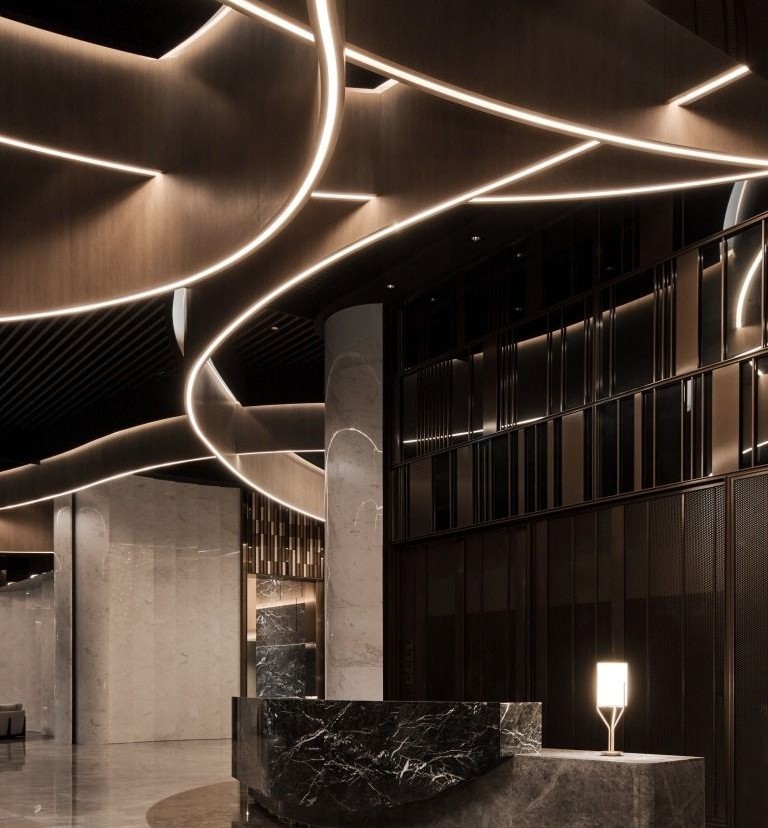
The main lobby establishes the hotel’s visual identity before the guest reaches the room.
It also needs to support practical tasks such as check-in, waiting, circulation, and staff activities.
The best lobby lighting balances decorative impact with comfortable illumination and clear wayfinding.
Layered Lighting for Reception Areas
A reception area may combine general lighting, focused illumination at the desk, and accent lighting for architectural features.
The lighting needs to support staff working with documents and on a computer screen without creating uncomfortable glare for guests.
At the same time, decorative and architectural lighting can establish the atmosphere of the property.
The different layers should be coordinated so that they contribute to one composition instead of competing for attention.
To achieve this, lighting designers use 3D simulations and visualizations to determine the right dimensions, fixture placement, and light distribution before installing any lighting in the lobby.
Chandeliers and Decorative Feature Fixtures
A chandelier can become a signature element in a double-height hotel lobby, while smaller decorative pendants may suit a more intimate reception or lounge.
The fixture should be considered in relation to the ceiling height, room dimensions, viewing angles, and surrounding architecture.
A large fitting also requires suitable structural support and a safe installation method.
The mounting details and maintenance access should be resolved early, particularly when the fixture is located above a staircase or high-traffic entrance.
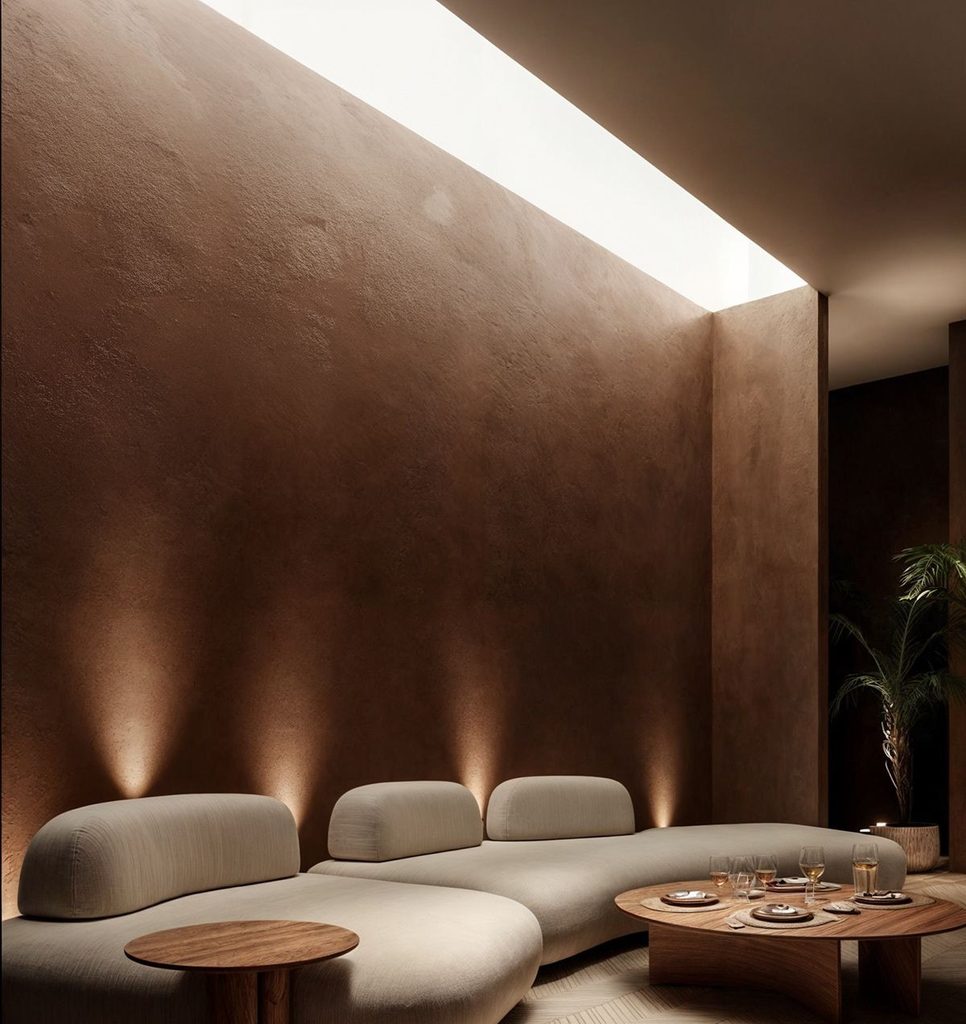
Feature Walls and Vertical Illumination
Lighting walls can help reveal materials and improve the perceived depth of the lobby.
Wallwashing may suit broad surfaces, while controlled spotlights can emphasize artwork or selected decorative details.
Product selection and fixture positioning should reflect the material and the intended effect.
A carefully illuminated wall can become a focal point without needing the highest brightness in the room.
Daylight and Evening Scenes
Lobby lighting often changes significantly between daytime and evening, especially where the space includes large, glazed entrances.
The design should consider how daylight interacts with the artificial lighting and whether separate control settings are useful for different operating conditions.
Any proposed dimming scenes should be achievable with the specified products and tested before the hotel opens.
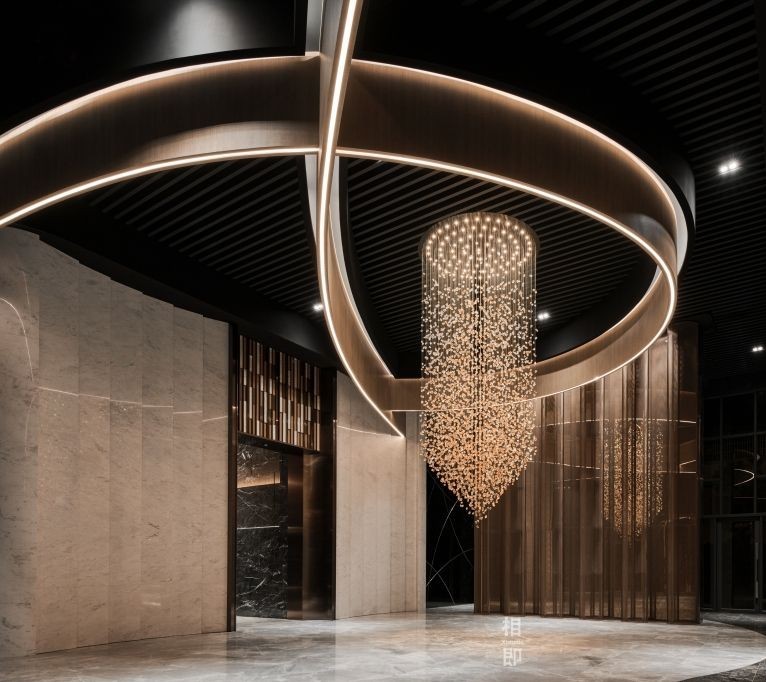
CUSTOM CHANDELIERS FOR LUXURY HOTEL LOBBIES
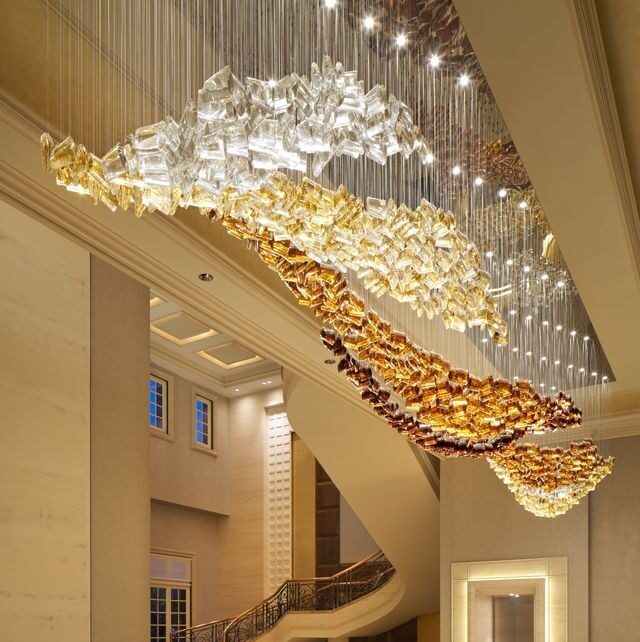
Walk into a luxury hotel lobby, and there’s a good chance your eyes will go straight to the chandelier.
It’s often the centerpiece that brings the entire interior together, creating a sense of elegance before guests even reach the reception desk.
For hotels looking to create a distinctive identity, custom chandeliers offer the freedom to design something that truly belongs to space.
From oversized crystal installations and sculptural metal designs to cascading glass pendants and contemporary geometric forms, every detail becomes a visual magnificence reflecting the hotel’s architecture, interior style, ceiling height, and brand identity.
As part of hotel lobby lighting design, building a custom chandelier involves much more than appearance alone, however.
Dimensions, materials, finishes, light distribution, color temperature, suspension systems, and dimming capabilities all influence how the chandelier looks and performs.
Custom lighting can also be designed around double-height stretch ceilings, grand staircases, reception areas, and other architectural features to create a balanced, striking result.
In Dubai and Abu Dhabi, where luxury hospitality interiors often make a strong architectural statement, a bespoke chandelier can become a signature feature that guests remember.
When combined with carefully planned ambient and accent lighting, the right design adds depth, highlights premium finishes, and creates an impressive welcome without overwhelming the space.

ELEVATOR LOBBIES AND PUBLIC CORRIDORS
Guests may pass through elevator lobbies and corridors quickly, but these spaces form an important part of the hotel’s overall experience.
Lighting should make doors, signs, circulation routes, and changes in direction easy to recognize without producing unnecessary brightness or visual monotony.
Elevator Lobby Lighting
Elevator lobbies often contain reflective metal, glass, stone, and decorative wall finishes.
These surfaces can create glare or strong reflections when fixtures are poorly positioned.
The designer should consider how the space looks from the elevator doors, corridor, and nearby seating or waiting areas.
Appropriate lighting can distinguish the lift area from the surrounding corridor while maintaining a consistent visual style across the property.
Public Corridors and Guest Corridors
Corridor lighting should provide comfortable and consistent visibility.
Fixture positions should be checked against room doors, signs, artwork, ceiling details, and access panels.
Evenly spaced fixtures can create a clear pattern, but spacing should be based on the selected luminaire’s distribution and the corridor’s dimensions rather than applied as a universal rule.
The layout should also allow practical access for cleaning and maintenance.
Emergency Lighting and Egress
Emergency lighting serves a separate life-safety purpose and must be addressed through the appropriate approved design.
Decorative corridor lighting should not be assumed to satisfy emergencies or egress requirements.
The project team should coordinate the relevant systems, documentation, and testing procedures with the professionals responsible.
LIGHTING DESIGN AND SUPPLY FOR HOTEL PROJECTS
A hotel lighting project often involves several parties:
the owner, architect, interior designer, lighting consultant, electrical engineer, supplier, contractor, and hotel operator.
When these parties work independently, important details can get lost between the design, product selection, and installation stages.
A coordinated service helps connect the original lighting concept with what is actually delivered on site.
Understanding the Project Brief
The first stage is to understand the property’s design concept, room types, operating requirements, budget, and construction schedule.
A boutique hotel may prioritize distinctive decorative fixtures and intimate lighting scenes.
A large business hotel may need repeatable guest room packages, practical controls, and consistent illumination across corridors and meeting rooms.
The brief should establish what the lighting needs to achieve before individual products are selected.
Developing the Lighting Concept
The lighting designer identifies the main visual features, functional requirements, and lighting layers needed in each space.
Ambient lighting provides general illumination, task lighting supports specific activities, and accent lighting emphasizes selected surfaces or architectural details.
Decorative fixtures can contribute to several layers, depending on their optical design and output.
The concept should establish how these elements work together instead of treating every luminaire as an independent choice.
Selecting and Specifying Products
Once the concept is established, the team selects luminaires that suit the intended application and technical requirements.
Relevant specifications may include luminous flux, wattage, color temperature, color rendering, beam distribution, glare control, dimming compatibility, dimensions, and mounting arrangements.
Manufacturer datasheets and photometric files help the designer evaluate actual product performance rather than relying on catalog photographs alone.
Supply, Installation, and Commissioning
A coordinated supply package links the approved fixture schedule to procurement and delivery.
Products need to arrive in the right quantities and with the documentation required for the project.
Installation then needs to follow the approved design, including the correct positions, supports, electrical connections, and controls.
Commissioning checks help establish that the installed system operates as intended.
For projects that combine design, supply, and installation under one contract, responsibilities can be easier to coordinate, provided the scope and accountability are clearly documented.
LIGHT SOURCES AND CONTROLS (HOTEL LIGHTING SYSTEMS)
Lighting products can look similar while producing very different results.
A recessed downlight, decorative pendant, and linear LED fixture may all provide white light, but their distribution, glare characteristics, and intended uses can be completely different.
Product selection should begin with the needs of the space rather than with a preferred fixture style.
LED Luminaires and Technical Specifications
LED lighting is widely used in hospitality projects because it offers a broad range of fixture types, optical distributions, color characteristics, and control options.
However, not every LED luminaire provides the same quality or performance.
The designer should review the actual product data, including output, efficacy, color rendering, glare, and compatibility with the intended control system.
For larger projects, using real manufacturer photometric files in lighting-design software can help assess how selected products are expected to perform.
Color Temperature and Color Rendering
Correlated color temperature, measured in kelvins (K), describes the apparent warmth or coolness of white light.
Lower values generally appear warmer, while higher values tend to look cooler.
The appropriate choice depends on the room’s purpose, design concept, materials, and surrounding lighting.
A restaurant may need a different atmosphere from a meeting room or service corridor.
Color rendering matters too. It influences how materials, fabrics, food, artwork, and skin tones appear under artificial light. Where appearance is important, the team should check manufacturer data and consider sample testing.
Dimming, Scenes, and Smart Controls
Dimming gives hotels more flexibility in how spaces operate throughout the day.
A restaurant may use different settings for breakfast and dinner, while a ballroom may need separate scenes for meetings, presentations, and receptions.
Digital control systems can also provide group control, scheduled operation, and integration with other building systems, depending on the selected technology.
Compatibility is critical. Luminaires, drivers, dimmers, and control equipment should be checked together to reduce the risk of flickering, limited dimming range, or unreliable operation.
Maintenance and Long-Term Product Availability
Hotels operate lighting systems for extended periods, so access to replacement products and components matters.
The procurement team should review warranty terms, driver accessibility, cleaning requirements, replacement availability, and manufacturer support before finalizing the specification.
A fixture that looks excellent but is difficult to maintain may create unnecessary operating costs later.

EXTERIOR AREAS (ARRIVAL LIGHTING AND HOTEL FACADES)
The guest experience begins before someone reaches the reception desk.
Exterior lighting helps identify the entrance, reveal the building’s architecture, and guide guests through drop-off zones and pedestrian routes.
For hotels in Dubai and Abu Dhabi, the design also needs to account for environmental exposure, glare, maintenance access, and applicable exterior-lighting requirements.
Entrance Drives and Drop-Off Zones
Arrival lighting needs to help drivers and pedestrians recognize the route, entrance, and surrounding features.
The design may combine architectural facade lighting with appropriate illumination for canopies, signage, pathways, and landscaped areas.
Brightness should be controlled so that the lighting remains comfortable for guests approaching by car or on foot.
The arrangement should also be reviewed from different viewing angles, not just from the position of each fixture.
Facade Lighting and Architectural Features
Facade lighting can highlight columns, textured walls, entrance portals, and other building features.
Wallwashing creates a relatively even appearance across the surface, while grazing light can reveal the relief and texture of materials such as stone or textured concrete.
These techniques require suitable optics and careful positioning.
The selected luminaire should be appropriate for the surface, mounting distance, and intended visual effect.
Landscape and Outdoor Leisure Areas
Hotels and resorts often include gardens, terraces, pools, outdoor restaurants, and recreation spaces.
Each needs a different balance of practical illumination and atmosphere through outdoor lighting design.
Pathways should support comfortable movement, while landscape accents can emphasize selected trees and architectural features.
Pool areas require suitable products and careful consideration of reflections, electrical safety, and environmental exposure.
Controls and Responsible Exterior Lighting
Exterior lighting should not automatically operate at full output throughout the night.
Suitable timers, photocells, occupancy sensors, and dimming controls may help match operation to actual use.
The Dubai Building Code includes provisions addressing exterior lighting power, shielding, controls, and unwanted light spill.
The design team should verify the applicable edition and project-specific requirements.

PUBLIC RESTROOMS AND BACK-OF-HOUSE LIGHTING
Public restrooms may be smaller than a hotel’s main public spaces, but lighting quality still matters.
Guests need to see clearly at mirrors and washbasins, while staff need practical conditions for cleaning and maintenance.
Back-of-house spaces, including storage areas, staff rooms, service corridors, and maintenance areas, have different priorities that should be addressed separately.
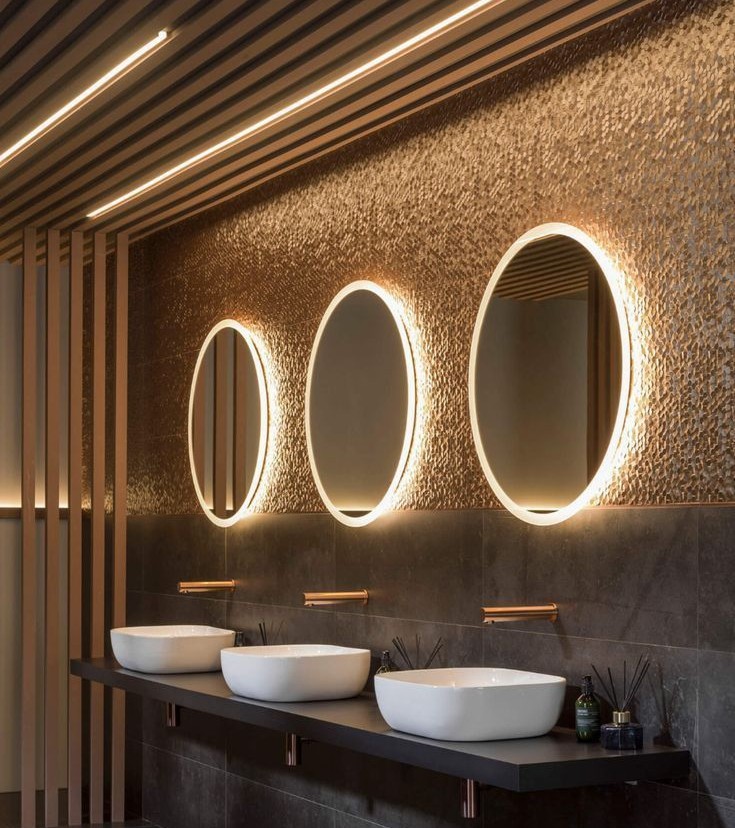
Lighting Around Mirrors and Washbasins
Mirror lighting should support a clear view of the face while minimizing harsh shadows and uncomfortable reflections.
The placement of fixtures, mirror dimensions, wall finishes, and the position of the user all influence the result. Color rendering can also be important where guests use the mirror for personal grooming.
Products must be suitable for the location and comply with the relevant electrical and environmental requirements.
Practical Lighting for Service Areas
Service corridors, storage rooms, kitchens, and maintenance areas need lighting suited to the work being performed.
The design may prioritize functional illumination, durability, simple controls, and ease of maintenance over decorative effects. The relevant criteria should be defined according to the actual application.
Coordinating Services and Maintenance Access
Lighting in public and service areas needs to be coordinated with ventilation, sprinklers, detectors, ceiling access panels, and other building services.
Fixture positions and access requirements should be resolved before ceilings are closed. This helps reduce the risk of moving fittings or damaging finished surfaces during installation.
BALLROOMS AND MULTIFUNCTION MEETING ROOMS
Hotels frequently use event spaces for different purposes throughout the week.
A ballroom may host a corporate conference in the morning and a wedding reception in the evening.
Lighting design and supply need to support this flexibility without making the system difficult to operate.
General and Presentation Lighting
Meeting rooms require suitable illumination for reading, communication, and work.
Presentation spaces must also consider screen reflections and the ability to reduce selected light sources during projection.
The layout should coordinate with furniture arrangements, audiovisual equipment, ceiling infrastructure, and any stage or presentation requirements.
Scene Control for Different Events
Ballrooms often require multiple lighting groups that can be controlled independently.
General illumination, decorative wall lighting, and stage lighting may need separate dimming or scene settings.
These functions should be tested using realistic event conditions before handover.
The control system should be intuitive for staff who may need to operate the room without technical assistance.
Decorative Fixtures and Procurement
Decorative chandeliers, pendants, and other feature fixtures can support the hotel’s identity, but their scale and light distribution should suit the space.
Bespoke products may require additional engineering, sample approval, production time, and installation coordination.
These activities should be included in the project procurement schedule.

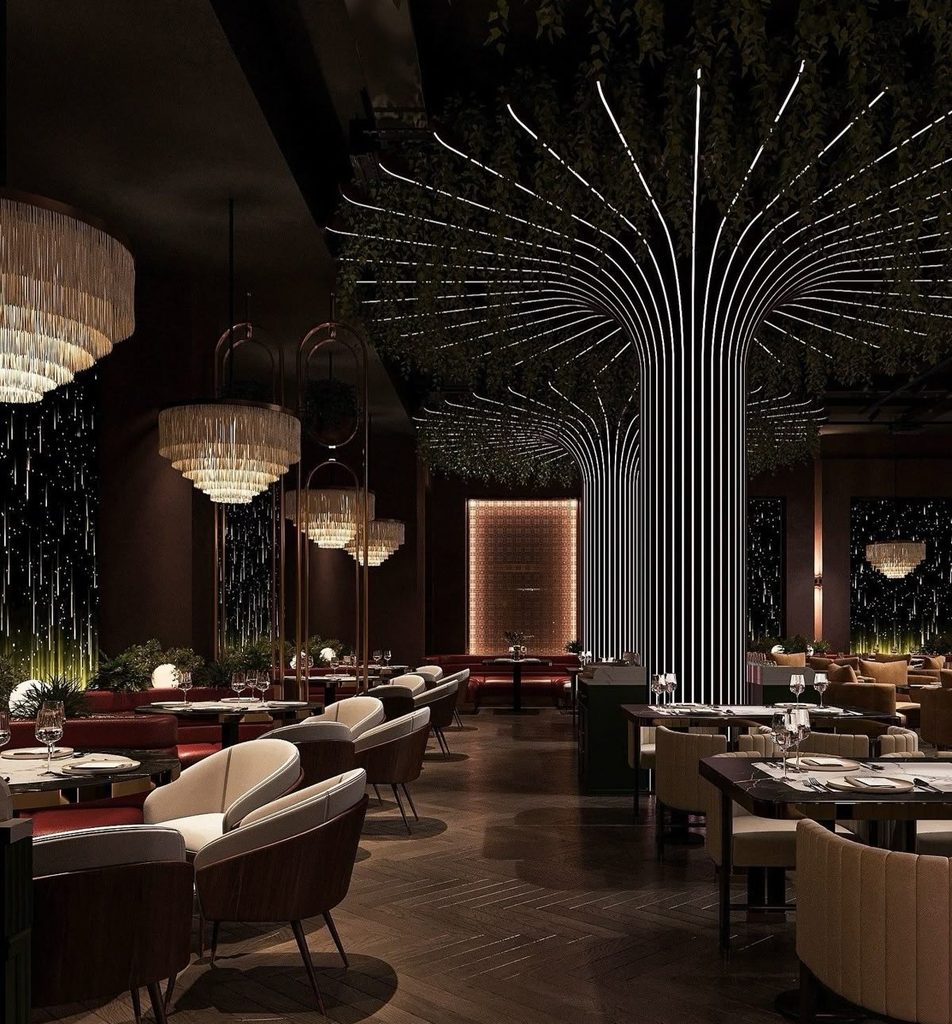
FOOD AND BEVERAGE SPACES: RESTAURANTS, BARS, AND LOUNGES
Restaurant lighting influences how guests experience the food, materials, furniture, and atmosphere. It needs to support both practical activities and the intended character of the venue.
A restaurant that feels relaxed at dinner may need a brighter, more functional setting during breakfast service.
Lighting for Restaurant Tables
The lighting over a table should support the dining experience without producing excessive brightness or glare for guests.
Pendant lights or carefully positioned downlights can create a focal point, while general lighting helps maintain comfortable visibility throughout the room.
The designer should consider how fixtures illuminate food, tableware, and faces, as well as how their position affects sightlines between guests.
Bars and Lounge Areas
Bars may use illuminated shelving, decorative pendants, accent lighting, and controlled contrast to establish a distinctive appearance.
Lounge areas often benefit from flexible lighting that allows staff to adjust the atmosphere according to the service period.
Product selection should also account for cleaning, maintenance, and the long operating hours commonly associated with hospitality venues.
Coordinating Lighting with Interior Finishes
The finishing of a wall, table, bar counter, or ceiling influences how the light appears. Glossy materials may create reflections, while darker surfaces can absorb more light than pale materials.
A sample or mock-up can help confirm the appearance of important finishes before the full package is ordered.
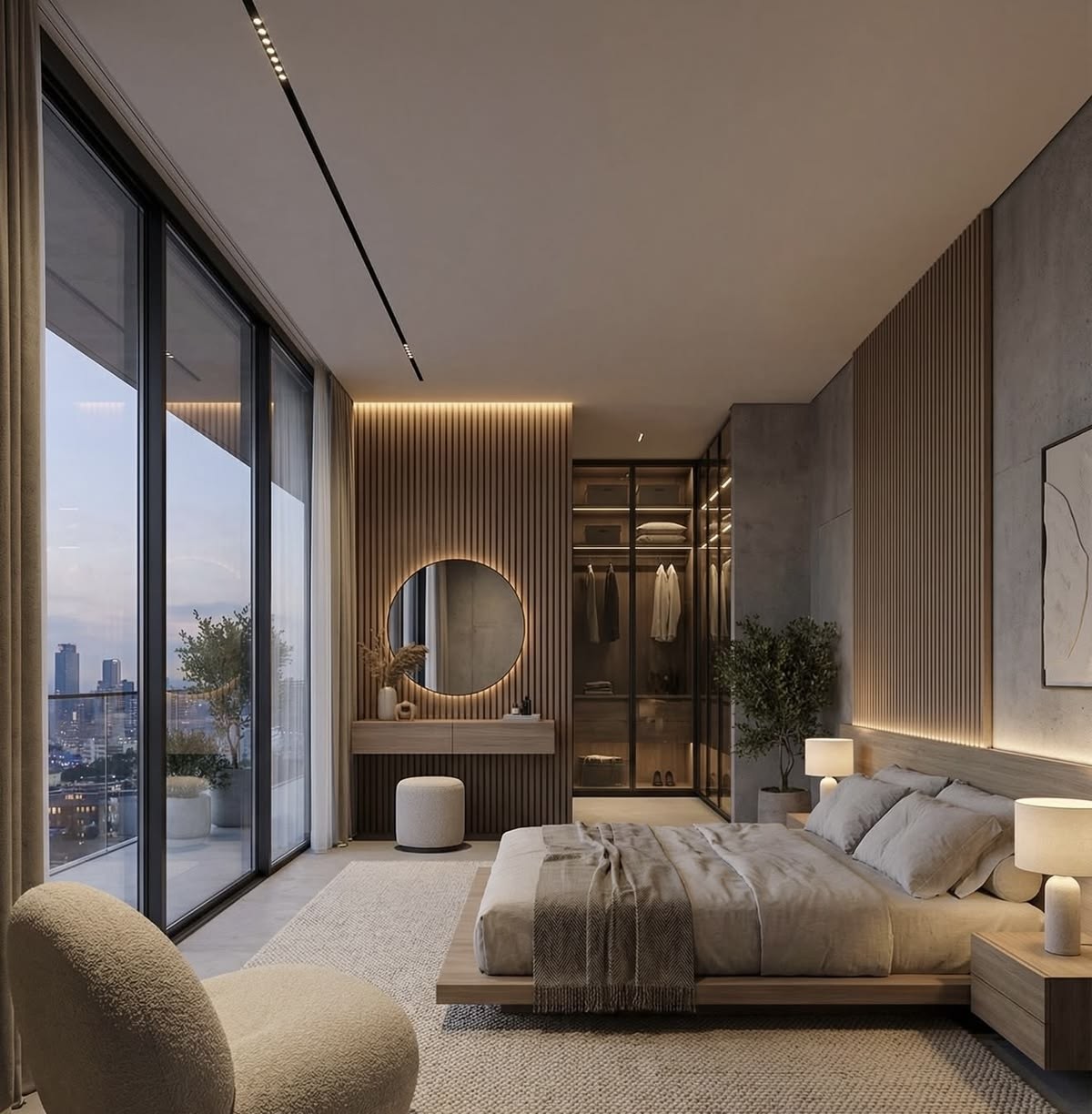
GUEST ROOMS NATURAL LIGHTING
A guest room needs to work for several activities, including relaxing, reading, working, dressing, and preparing for sleep.
Lighting should adapt to these activities while remaining intuitive. Guests should not need to figure out a complicated control system just to switch off the bedside lights.
General and Bedside Lighting
General lighting provides the room’s basic illumination, while bedside fixtures support reading and other activities around the bed.
The layout should consider the bed position, headboard design, furniture, and the likely direction of view.
Reading lights should be convenient to operate and positioned to reduce glare for the other person in the bed.
Decorative lighting should complement the interior without becoming the only source of functional light.
Desk and Wardrobe Lighting
Desk lighting should support reading and screen use while minimizing reflections.
Wardrobe and dressing areas may need additional light so guests can identify clothing and see colors accurately.
These functions may require separate fixtures or control groups, depending on the room’s layout.
The consultant should consider the selected products, their light distribution, and their compatibility with the room’s overall control system.
Personalized Controls and Room Scenes
Modern guest rooms may use separate controls, dimming, or preset scenes to let guests personalize the lighting.
Possible scenes might include a general room setting, reading, evening relaxation, and an all-off function.
The exact arrangement should reflect the hotel’s operating concept and the selected control technology.
Signify’s hospitality resources describe connected guest room systems that can integrate lighting with other room controls, helping hotels manage guest preferences and operations.
The effectiveness of any system depends on its design, compatibility, and commissioning.
GUEST BATHROOMS LIGHTING QUALITY
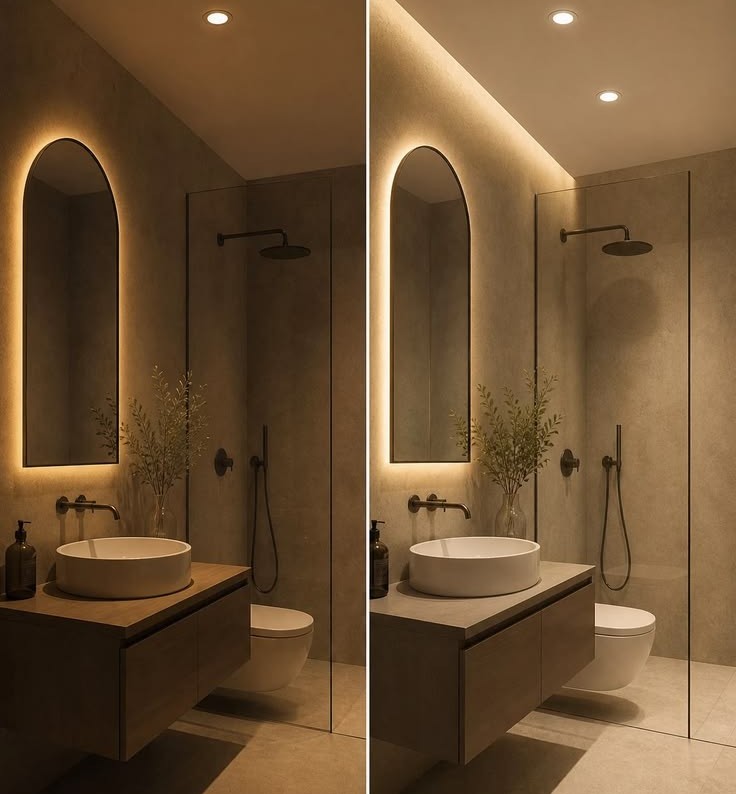
Guest bathrooms require a careful balance of appearance, practical illumination, and safety.
Fixtures need to suit the installation environment, and the layout should consider mirrors, showers, vanity areas, and reflective finishes.
Mirror Lighting and Facial Visibility
Mirror lighting should illuminate the face clearly without producing strong shadows or uncomfortable reflections.
The designer should consider the position of the light sources relative to the mirror and user.
Color rendering is also worth reviewing, particularly in hotels that emphasize high-quality finishes and guest comfort.
General and Shower-Area Lighting
General lighting should support movement and everyday use. Products near showers and other wet areas must be selected according to the applicable installation requirements and actual exposure conditions.
The appropriate protection rating and electrical arrangements depend on the location and the relevant rules, so these details should be confirmed by the professionals responsible.
Coordination With the Bathroom Fit-Out
Lighting points need to be coordinated with mirrors, cabinetry, ceiling details, ventilation, sprinklers where applicable, and other services.
Product dimensions and mounting requirements should be confirmed before final finishes are installed. This helps prevent avoidable adjustments during fit-out.
LIGHTING SUPPLY QUALITY AND PROCUREMENT
Lighting procurement is more complex than purchasing a list of fixtures. The products must match the approved design, arrive when needed, and include the relevant technical documents and accessories.
For hotel projects, a coordinated supply package can help reduce confusion between the design intent and the equipment delivered to site.
Preparing a Complete Fixture Schedule
The fixture schedule should identify the selected manufacturer, model, product code, quantity, and relevant technical specifications.
Depending on the project, the information may also include color temperature, color rendering, beam angle, dimming requirements, driver details, mounting accessories, and environmental ratings.
Clear identifiers help the supplier, contractor, and consultant match each product to its location in the lighting layout.
Reviewing Samples and Mock-Ups
For decorative fixtures and important interior finishes, samples can help verify the product’s appearance before procurement.
A mock-up room can also be useful for hotel guest rooms, allowing the team to review lighting levels, fixture placement, controls, and the relationship between the lighting and furniture.
Any required changes can then be addressed before the solution is repeated throughout the property.
Managing Lead Times and Substitutions
Standard fixtures and custom decorative products may have very different lead times. The procurement schedule should account for production, shipping, approval, and delivery to site.
If a specified product becomes unavailable, the proposed substitute should be checked for performance, dimensions, distribution, controls, and installation requirements.
A product that looks similar may not produce the same lighting result.
Substitutions should be reviewed and approved before installation.
Delivery, Installation, and Accountability
For large packages, the project team should coordinate delivery with the construction program and site storage conditions.
A combined design-and-supply arrangement can simplify communication, but the contract should still define responsibilities for product approvals, delivery, installation, testing, warranty, and after-sales support.
The objective is to ensure that the approved products reach the site in time and are installed as intended.
ENERGY EFFICIENCY, CONTROLS, AND HOTEL OPERATIONS
Hotels operate lighting across guest rooms, corridors, kitchens, public areas, and exterior spaces.
As a result, lighting performance should be considered alongside energy use, maintenance, and everyday operation.
An efficient system is not simply one with low wattage. It is one that provides the required lighting performance while avoiding unnecessary output and operation.
Selecting Efficient Products
LED products offer a broad range of efficiencies and distributions, but product performance varies.
The specification should consider how effectively the luminaire delivers useful light to the required surfaces.
The selected products should also be suitable for the operating conditions and maintenance arrangements of the hotel.
Using Sensors and Scheduled Controls
Occupancy sensors and timers may help reduce unnecessary operation in appropriate spaces, particularly where use varies throughout the day.
Daylight-responsive controls can also be useful where natural light affects the illumination of space.
The controls should be designed and commissioned so they respond appropriately to the building’s actual conditions.
DEWA recommends efficient LED lighting, timers, motion detectors where applicable, and dimmers as practical energy-management measures.
Planning for Maintenance and Replacement
A hotel lighting system should be practical to inspect and maintain. Drivers and other replaceable components need suitable access, and product documentation should be obtained for future reference.
For large projects, using coordinated product families where appropriate can simplify replacements, provided each selected product is suitable for its intended application.
Commissioning the Complete System
Commissioning should verify the operation of fixtures, controls, dimming, and programmed scenes. It can also identify installation deviations that need correction before the hotel opens.
The exact testing and handover scope depends on the contract, the control system, and any applicable electrical or safety requirements.
LIGHTING DESIGN AND SUPPLY FOR UAE HOTEL PROJECTS
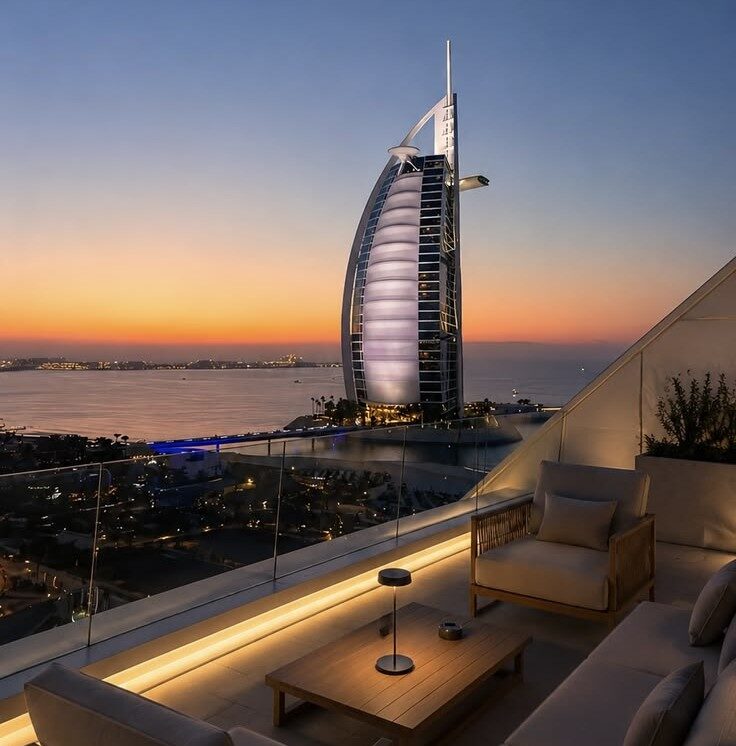
Dubai and Abu Dhabi hotel projects need lighting packages that combine design intent, product selection, technical documentation, and installation coordination.
The applicable requirements depend on the emirate, building type, project scope, and approvals, so the design team should verify them for each project rather than assume one process applies everywhere.
Dubai: Building and Electrical Coordination
For Dubai projects, the team should check the applicable Dubai Building Code, relevant DEWA requirements, and conditions attached to the development’s approval process.
The lighting layout and fixture schedule should be coordinated with architectural, reflected ceiling, electrical, and mechanical drawings.
Product choices and control arrangements should be reviewed against the technical requirements identified for the project.
A lighting package can support the wider approval process, but it does not automatically replace the required electrical design or official approvals.
Abu Dhabi: Electrical Installation Requirements
For Abu Dhabi projects, the Department of Energy’s Electricity Wiring Regulations provide an important reference for low-voltage electrical installations.
The responsible professionals should confirm which regulations, drawings, inspections, and testing requirements apply to the project.
Lighting design, supply, and installation responsibilities should be clearly allocated among the consultant, supplier, electrical contractor, and other relevant specialists.
Define the Complete Scope of Work
Before appointing a lighting design and supply provider, confirm the deliverables and responsibilities.
The scope may include design consultation, lighting calculations, fixture schedules, supply, delivery, installation coordination, commissioning, and handover.
Some projects may require separate appointments for electrical engineering, authority submissions, or specialist control-system integration.
A written scope helps avoid gaps between the lighting concept, procurement package, and finished installation.
FINAL THOUGHT
Lighting design and supply for hotel lobbies is a coordinated process that begins with understanding the guest experience and continues through product selection, procurement, installation, and commissioning.
The lobby needs to establish the hotel’s identity. Guest rooms need comfortable and intuitive lighting.
Corridors should support wayfinding, bathrooms must address practical and safety requirements, and restaurants and event spaces need enough flexibility to serve different activities.
For projects in Dubai and Abu Dhabi, these decisions should be supported by accurate product specifications, coordinated drawings, appropriate controls, and the local requirements that apply to the building.
A well-managed lighting package helps preserve the design intent while giving the project team a practical way to source, install, test, and maintain the system.
When design and supply are planned together, the result is more than a collection of fixtures.
It is a coordinated lighting system designed to support the hotel’s identity, guest experience, and day-to-day operation.


Related Posts
Hospitality Lighting in Dubai and Abu Dhabi for Luxury Hotels and Resorts