
DALI Lighting Systems in Dubai and Abu Dhabi: Supply, Installation, and Costs in 2027
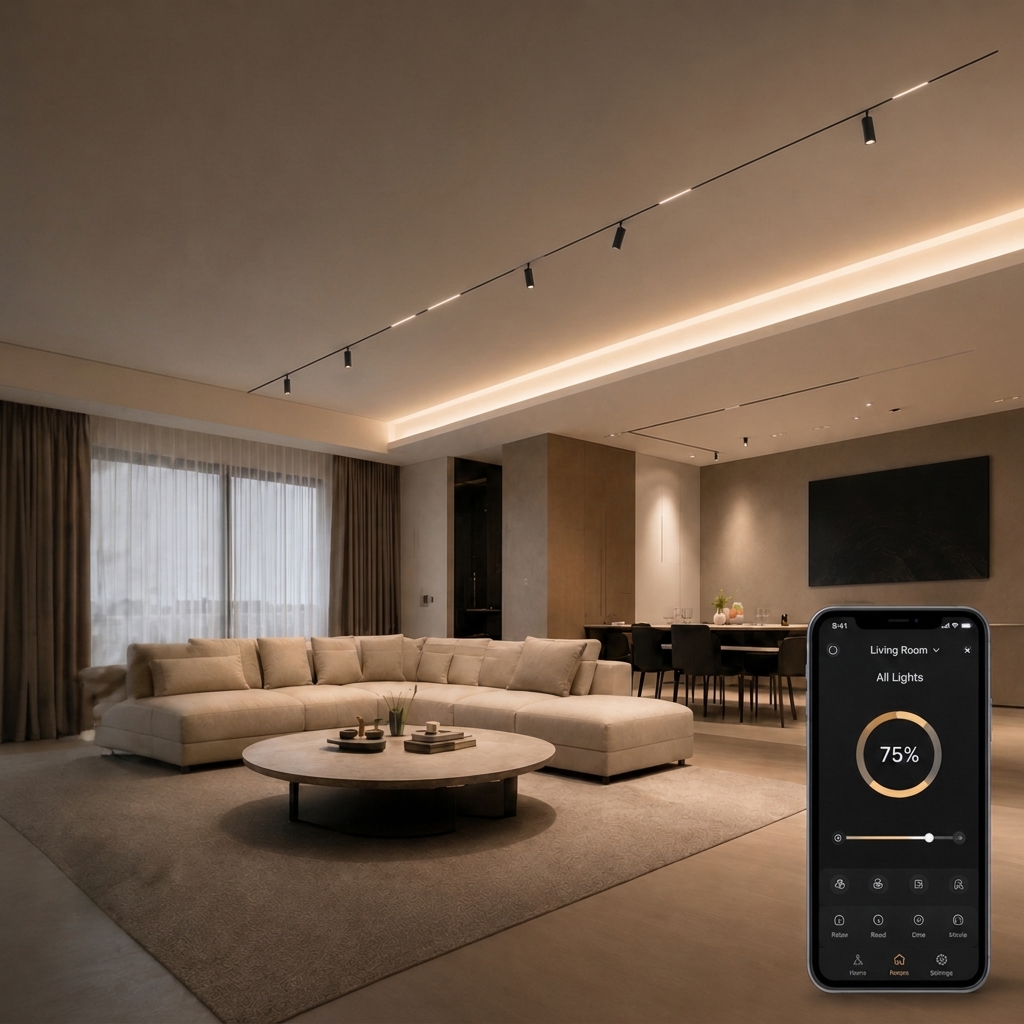
A villa can feel like a luxury hotel lobby when the lighting perfectly matches the atmosphere.
And yes, it’s absolutely possible. But how?
One way is through a well-designed lighting control system, such as DALI, which lets you adjust brightness and create different lighting scenes to suit every moment.
Instead of treating every light as a simple on-and-off fixture, the system allows the building operator to adjust brightness, organize lighting into groups, and create different scenes for different activities.
DALI lighting systems offer this type of control through a standardized digital protocol, which makes it a regular part of modern villa lighting design.
They can serve a wide range of applications, from luxury villas and offices to hotels, retail spaces, and large commercial developments.
For projects in Dubai and Abu Dhabi, selecting the right DALI system involves more than buying compatible LED lights.
DALI systems are often preferred for any plan of lighting design in large residential projects.
The design team needs to coordinate drivers, controllers, sensors, wiring, software, integration requirements, and commissioning.
DALI LIGHTING CONTROL IN DUBAI AND ABU DHABI
DALI stands for Digital Addressable Lighting Interface.
It is a standardized digital communication protocol that lets compatible lighting equipment exchange commands and information.
The system allows an operator to control individual fixtures, groups of lights, or an entire lighting zone.
It can also support dimming, scene recall, configuration, and queries about the status of compatible devices.
For example, an office can use separate lighting groups for workstations, meeting rooms, corridors, and reception areas.
A hotel can create different lighting scenes for guest rooms, restaurants, and public spaces.
What Makes DALI Different from Basic On-Off Switching?
A conventional switch generally controls whether a circuit receives power.
A DALI system adds digital control, allowing the system to communicate with compatible lighting drivers and other devices.
This communication makes it possible to adjust individual fixtures without installing a separate traditional dimmer for each one.
It also allows the designer to reorganize lighting groups through software instead of changing the physical wiring whenever the layout changes.
Another useful feature is two-way communication. Compatible equipment can respond to queries, report certain faults, and provide status information to the control system.
These capabilities make DALI particularly useful in buildings where lighting needs change throughout the day or where facility managers need centralized control.
Where Can DALI Lighting Systems Be Used?
DALI is suitable for many interiors and selected exterior lighting applications, provided the fixtures, drivers, controllers, and other components support the required functions.
Common applications include:
- Luxury villas: Create separate scenes for living rooms, bedrooms, kitchens, and entertainment areas.
- Offices: Adjust workstation lighting, meeting-room scenes, and corridor lighting.
- Hotels: Coordinate guest-room lighting, lobbies, restaurants, and shared spaces.
- Retail stores: Control general lighting and selected display-lighting zones.
- Commercial buildings: Manage multiple lighting areas and integrate compatible controls with building systems.
- Architectural projects: Coordinate suitable DALI equipment with other control technologies for facades and decorative wall lights.
A small villa may need a relatively straightforward arrangement, while a large office or hotel may require several DALI subnets, centralized management, and integration with other building systems.
DALI LIGHTING CONTROL SYSTEM (COMPONENTS, ADDRESSES, SCENES, ETC.)
A DALI lighting control system combines several components that communicate through a digital bus.
Each component has a specific role, and the system needs the right combination to operate reliably.
The DALI Alliance identifies three main product categories in DALI-2 systems: control gear, control devices, and bus power supplies. A complete installation may also include gateways, user interfaces, software, and integration equipment.
DALI LED Drivers and Control Gear
The LED driver supplies power to the LED light source and manages its output according to the commands it receives.
A DALI-compatible driver also communicates with the control system through its supported digital interface.
The driver matters because a fixture’s appearance does not tell you whether it supports DALI dimming.
Two visually identical lights may use different drivers, with one supporting DALI control and the other supporting only conventional switching or another dimming method.
Before purchasing fixtures, the project team should confirm the exact driver model and its supported DALI functions.
Addresses, Groups, and Lighting Scenes
A standard DALI subnet supports up to 64 addresses for control gear and 64 addresses for control devices.
These limits apply to the respective device categories, not simply to a total of 64 devices of every type.
The control gear can be organized into groups, allowing fixtures to operate together.
The system can also store scenes that recall predefined light levels and, where supported, color settings.
Imagine a hotel meeting room with general lighting, decorative pendants, and presentation lighting. A meeting scene might reduce the pendants, lower the general lighting, and leave suitable illumination near the presenter.
The operator can recall the scene instead of adjusting each fixture individually.
DALI Wiring
DALI communicates through a two-wire bus that carries its data and bus power.
The bus supports digital commands and feedback, while the LED drivers receive the electrical power needed to operate the lighting through their normal power connections.
The DALI bus has its own electrical requirements, including the appropriate bus power supply, wiring arrangement, and device limits.
The installer should follow the manufacturer’s documentation and applicable project requirements when designing and installing the network.
Correct planning at this stage helps the commissioning team identify devices, establish groups, configure scenes, and verify that all equipment responds as intended.
DIGITAL ADDRESSABLE LIGHTING INTERFACE AND DALI DIGITAL ADDRESSABLE LIGHTING INTERFACE
The word “DALI” appears on many lighting products, but the label alone does not establish that every device will provide identical functionality or interoperate with every other product.
The Digital Addressable Lighting Interface is specified through the international IEC 62386 standard.
The DALI Alliance manages the DALI-2 certification program, which includes independent verification of product test results.
DALI Versus DALI-2
DALI-2 builds on the DALI protocol and introduces a more comprehensive certification approach, including requirements for control devices that were not covered in the same way by the original DALI version.
The certification program improves confidence that products from different manufacturers meet the relevant requirements.
However, project teams still need to confirm that each device supports the functions the design requires.
For example, a product might support basic dimming but not the specific color-control functions, sensor behavior, or emergency-lighting features needed for a particular installation.
The best approach is to identify the required functions first and then check the product documentation before light installation.
How to Verify DALI-2 Products?
The DALI Alliance maintains a searchable database of certified products. Specifiers can use it to check whether a specific product appears as DALI-2 certified.
When reviewing a supplier’s quotation, request the manufacturer, exact product model, driver specification, certification information, and relevant technical documentation.
This is especially useful for projects that combine fixtures and drivers from different manufacturers. It helps the team make informed decisions before ordering equipment in quantity.
Why Interoperability Matters?
Interoperability becomes important when a project uses several product brands or plans to expand its lighting system later.
A system that relies heavily on undocumented compatibility assumptions may create problems during commissioning or future maintenance.
A coordinated specification reduces that risk by confirming which components communicate and which features the installed system supports.
For developers in Dubai and Abu Dhabi, product verification is an important part of procurement, not a task to leave until installation.
DALI INTERFACE AND DALI DIMMING SYSTEM
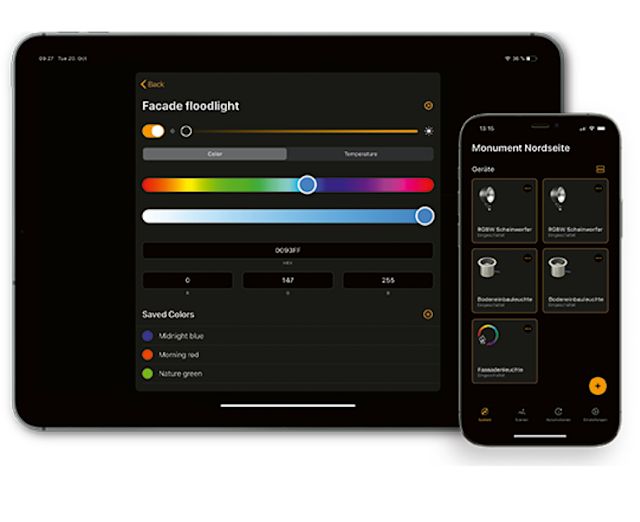
The DALI interface allows compatible equipment to receive digital commands and communicate information back to the system.
In a dimming application, it lets the controller send instructions that adjust the light output of compatible drivers.
This gives the building operator more flexibility than a system that only switches circuits on and off.
Digital Dimming and Light-Level Adjustment
DALI supports standardized digital control of light levels.
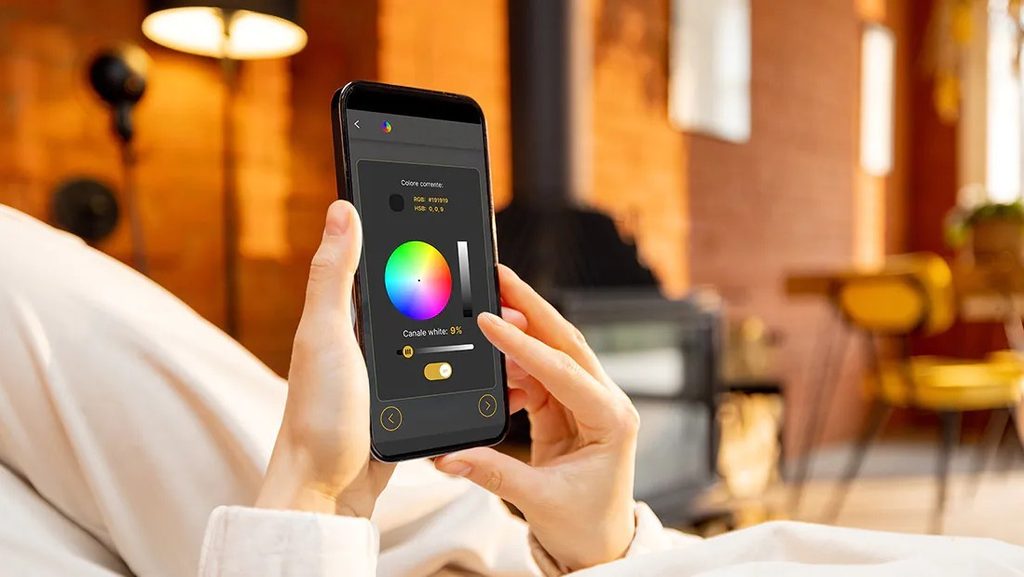
Depending on the driver and its supported functions, the system can adjust brightness, recall scenes, and manage compatible color settings.
This can help a property maintain more consistent lighting across different rooms and activities.
In a villa, the owner may prefer brighter lighting while preparing food and softer lighting during an evening gathering.
In an office, separate scenes can support normal work, presentations, cleaning, and other activities.
The actual results depend on the selected fixtures, driver performance, minimum dimming level, and system configuration.
Daylight and Occupancy Control
DALI-compatible control systems can work with suitable daylight and occupancy sensors.
A daylight sensor can help adjust artificial lighting when natural light provides part of the required illumination.
An occupancy sensor can help manage lighting in areas that do not require full output throughout the day.
For example, meeting rooms, storage areas, and selected circulation spaces may benefit from sensor-based control where the layout and operating requirements support it.
These functions can reduce unnecessary lighting operation, but they do not guarantee a fixed percentage of energy savings.
The result depends on the building, operating schedule, sensor settings, daylight conditions, and baseline architectural lighting design.
The Right Dimming Method
Not every LED fixture supports DALI dimming. Some use other methods, including phase-cut, 0-10 V, or 1-10 V control.
A DALI system should therefore specify compatible drivers and control equipment from the outset. If the project includes tunable-white or RGBW fixtures, confirm the required color-control functions and whether the selected driver supports them.
The aim is to select a system that delivers the requested functionality without unnecessary complexity.
DALI CONTROLLER AND DALI MASTER CONTROLLER
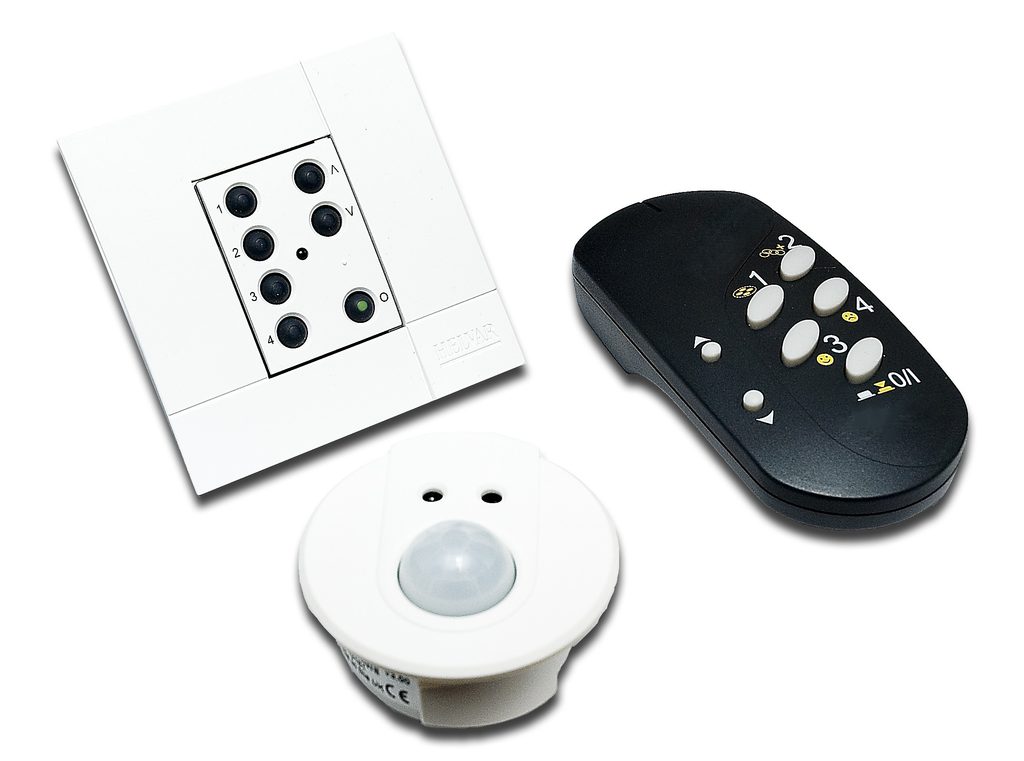
A DALI controller manages communication and sends commands that determine how compatible lighting devices behave.
The system may also include input devices such as switches, keypads, occupancy sensors, and daylight sensors.
Some product listings use terms such as “DALI master controller”.
However, the exact capabilities and system architecture depend on the manufacturer’s design and the applicable DALI requirements.
What Does the Controller Actually Manage?
An application controller processes available information and decides which commands to send to lighting equipment.
Depending on the system, it may use sensor readings, keypad commands, schedules, scene selections, or information from other building systems.
For a commercial office, the controller could coordinate daylight-responsive dimming and occupancy-based operation.
For a villa in Dubai or Abu Dhabi, it might manage lighting scenes and time-based settings across multiple rooms.
The controller should match the number of devices, required functions, integration needs, and expected future expansion.
Single-Bus and Multi-Bus Applications
A small installation may operate on one DALI subnet.
Larger projects may need multiple subnets connected through suitable control equipment or a wider management system.
Each subnet has its own address capacity. The design team should calculate the number of control gear and control devices, including planned future additions, before choosing the architecture.
A larger installation may also require centralized visualization, fault reporting, user permissions, and coordination with building management software.
What to Check Before Selecting a Controller?
Before purchasing a DALI controller or master controller, check:
- The number of DALI subnets and devices supported.
- Compatibility with the required DALI and DALI-2 functions.
- The availability of integrated or separate bus power supplies.
- Support for scenes, schedules, sensors, and dimming.
- Compatibility with other controllers and building systems.
- Software access, configuration tools, and future support.
The specification should also establish who will program the system and retain the final configuration files after handover.
DALI LIGHTING CONTROL PANEL (USER INTERFACE)
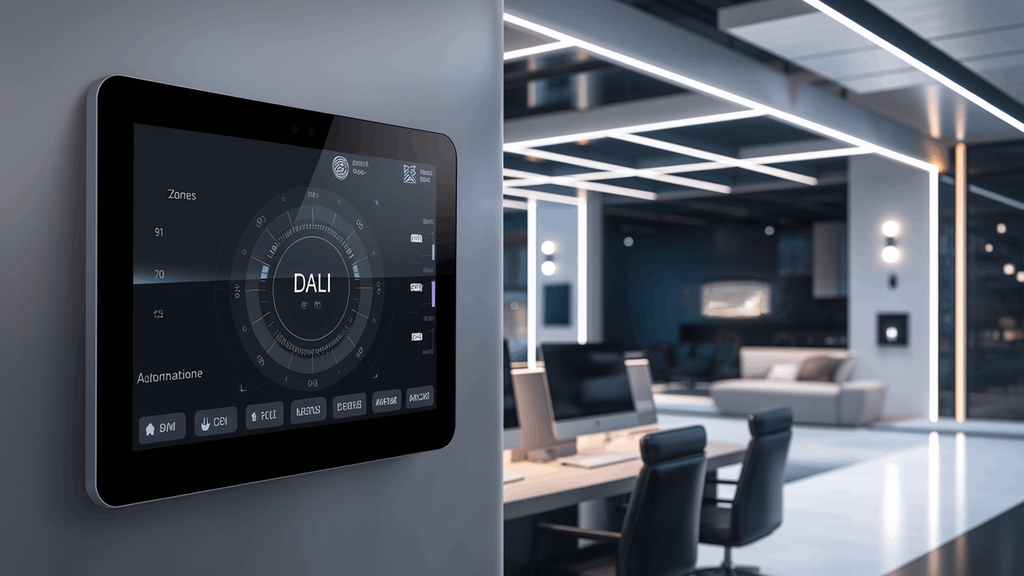
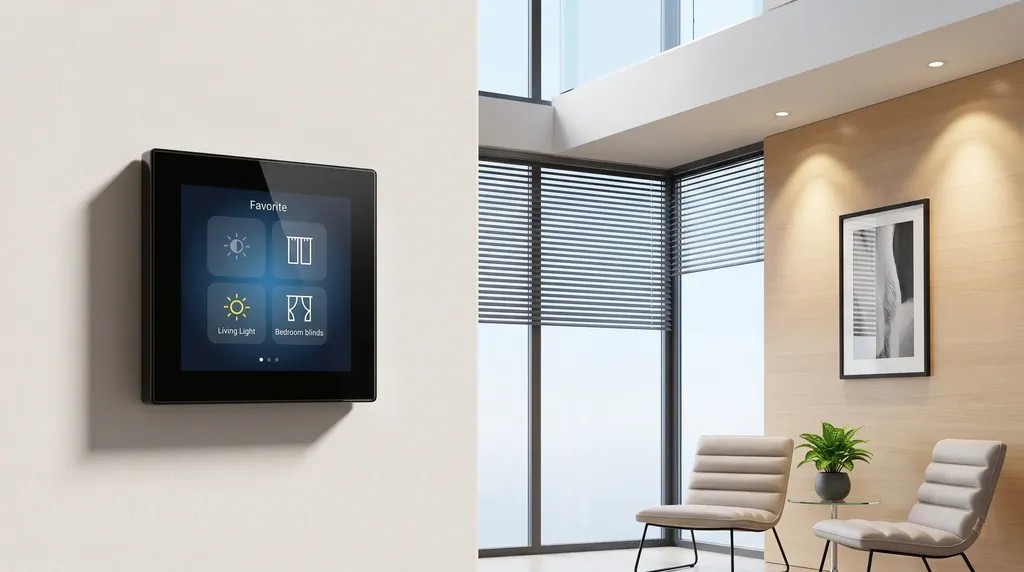
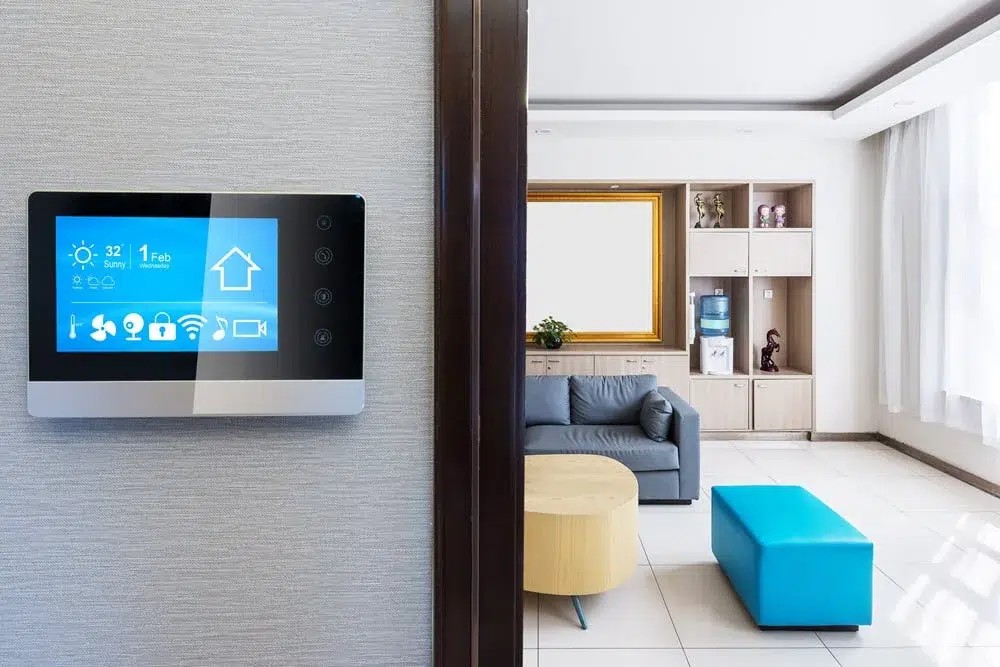
A DALI lighting control panel may refer to a wall-mounted keypad, a touchscreen interface, a cabinet containing control components, or a wider control arrangement.
The exact meaning depends on the product and project specification.
The goal is to make the system easy to use and maintain.
Wall Keypads and Touchscreen Panels
A wall keypad can provide straightforward control for a room or zone. Buttons may handle on/off functions, dimming, and predefined scenes.
A touchscreen can offer more extensive control across several areas, depending on the installed system.
It may show room names, scene options, lighting groups, or other supported functions.
For a hotel or office, the interface should reflect how occupants and staff use the building.
A complex interface can make everyday operation more difficult, even when the underlying controls are technically capable.
Control Cabinets and Integration Equipment
The installation may include controllers, gateways, bus power supplies, protection devices, and other components housed in suitable enclosures.
The equipment layout needs to provide appropriate access for servicing, clear circuit identification, and adequate space for any required expansion.
The design team should establish which components belong in control cabinets and which belong near fixtures or in other suitable locations. This avoids confusion during procurement and installation.
Integration With Building Management Systems
Some projects need lighting control to communicate with a wider building management system (BMS) or an automation platform.
A compatible gateway or integration interface may allow the systems to exchange supported commands and information.
The exact integration depends on the selected platforms, communication protocols, and licensed functionality.
The team should define these requirements before procurement and testing. Merely stating “BMS integration” in a quotation does not explain which functions the completed system will support.
DALI EMERGENCY LIGHTING
Emergency lighting needs its own careful planning because it serves a safety-critical purpose.
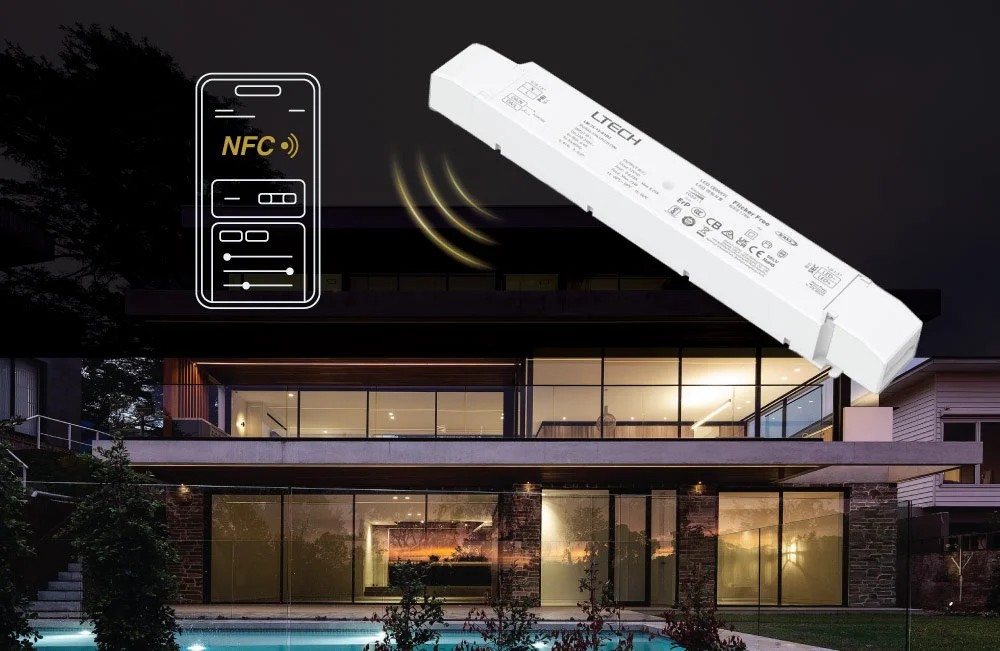
A DALI-compatible emergency lighting system can support monitoring and automated testing of suitable emergency control gear.
The system can communicate with compatible emergency devices, allowing the building operator to access test results and fault information through the supported control platform.
Function Tests and Duration Tests
Emergency lighting systems commonly require function tests and duration tests in accordance with applicable regulations and equipment requirements.
A function test checks that the emergency-lighting equipment operates as intended.
A duration test checks whether the equipment can provide its required emergency operation period.
DALI-compatible emergency control gear can support automated testing and reporting when the system includes suitable products and software.
This can help facility managers organize maintenance activities and identify problems that need attention.
What DALI Does Not Replace?
A DALI network does not replace the need to comply with applicable emergency-lighting regulations, approved designs, battery requirements, and testing procedures.
The project team must select equipment that meets the required function and duration, verify the supported emergency-lighting features, and coordinate the system with the relevant safety and authority requirements.
For buildings in Dubai and Abu Dhabi, the lighting consultant or contractor responsible should confirm the applicable local requirements before finalizing the design.
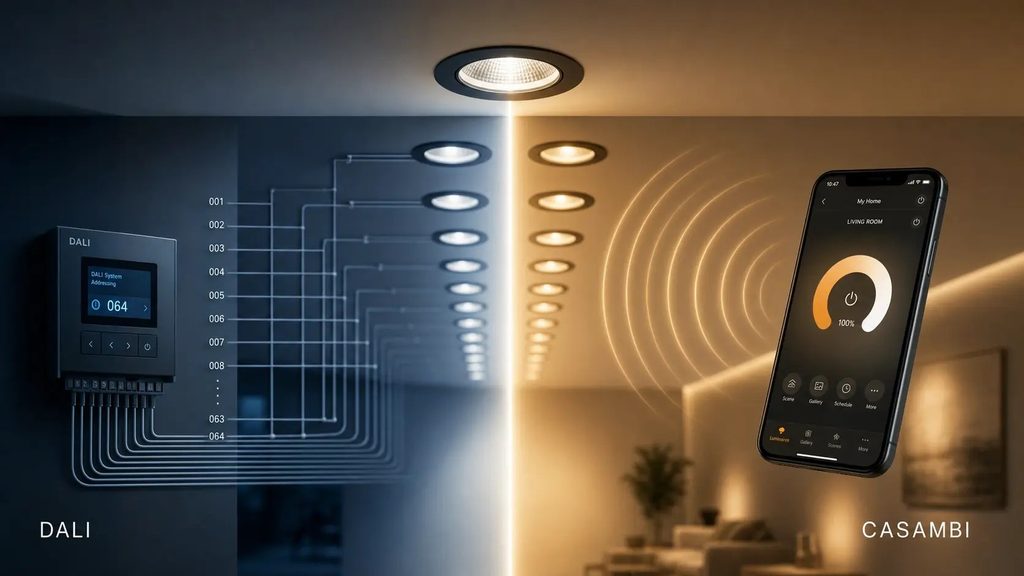
CASAMBI DALI CONTROLLER, ZIGBEE DALI CONTROLLER, AND BLUETOOTH DALI CONTROLLER
Not every lighting project needs a completely wireless system.
However, wireless integration can provide another way to control compatible DALI equipment, especially where the project needs flexible user interfaces or integration with an existing wireless ecosystem.
The DALI Alliance publishes specifications for gateways that connect wired DALI systems with supported Bluetooth and Zigbee ecosystems.
These gateways translate communication between the systems rather than making their protocols identical.
Casambi DALI Controller and Gateway Options
Casambi offers products that can connect its wireless control ecosystem with DALI equipment.
Depending on the selected product, a Casambi DALI controller may control compatible DALI drivers, work with suitable sensors, or bridge communication between a DALI network and a Casambi network.
Different models provide different functions.
For example, some devices are powered directly from the DALI bus, while others provide standalone DALI control with an integrated power supply.
Before specifying a Casambi product, check its data sheet, wiring diagrams, firmware requirements, supported driver types, and network configuration.
Zigbee DALI Controller Applications
A Zigbee-to-DALI gateway connects compatible Zigbee wireless controls with wired DALI equipment.
This arrangement can help a project use a supported wireless ecosystem while retaining DALI control of suitable drivers.
However, the gateway must support the required functions, and the project should specify how the devices will communicate and be commissioned.
The term “Zigbee DALI controller” describes a product category rather than one universal device. Confirm the manufacturer’s exact implementation before buying equipment.
Bluetooth DALI Controller Applications
Bluetooth-based gateways can offer similar bridging functions, depending on the selected ecosystem and product.
Some applications suit smaller installations where the project needs wireless user control without a more extensive centralized management platform. Larger projects may need additional planning for network coverage, commissioning, device grouping, and ongoing support.
Wireless integration should follow the same principle as wired system design: choose the desired functions first, then select devices that have documented compatibility.
DALI COMPATIBLE LIGHTS
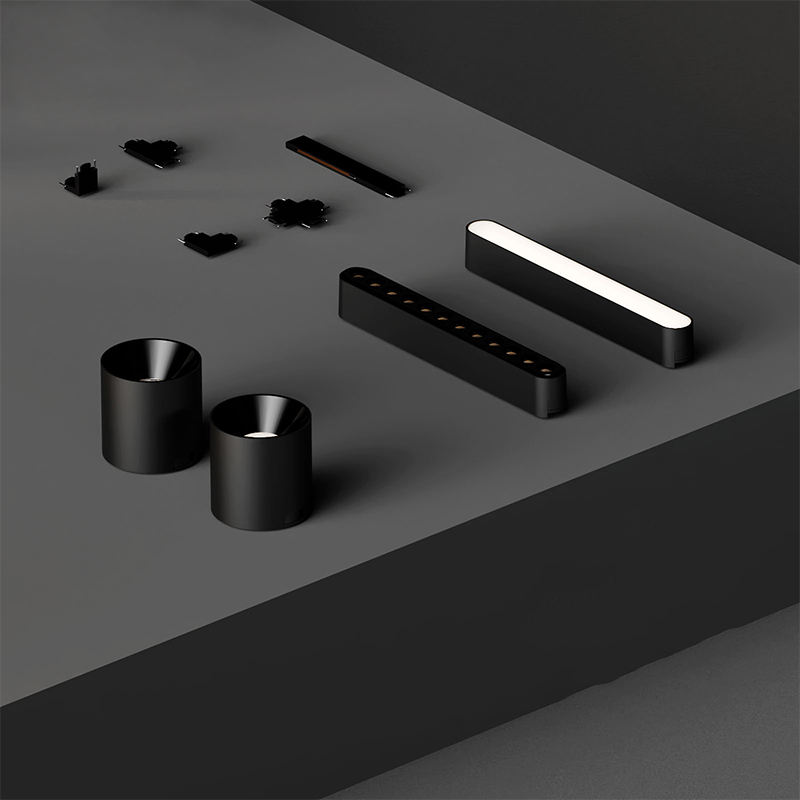
DALI compatibility depends on the relevant electronic components and functions, not just on the appearance of the fixture.
A luminaire may support DALI when it contains a suitable DALI driver or provides the correct interface for an external driver.
The supplier should identify the actual configuration rather than relying on a general product description.
Check the Driver and Certification
Ask for the precise driver model and its technical documentation.
Confirm the supported DALI version, dimming behavior, color-control capabilities, and any relevant limitations.
Where the project specification requires DALI-2-certified equipment, verify the exact model in the DALI Alliance’s official product database.
Do not assume that two fixtures with the same shape or LED output support the same control functions. The driver and other electronic components can differ between product variants.
Check Fixture Performance
Control compatibility is only one part of product selection. The designer should also evaluate light output, beam angle, color temperature, color rendering, glare, fixture dimensions, and environmental protection where applicable.
For outdoor applications, the equipment must suit the actual exposure conditions.
For custom chandeliers and decorative fixtures, the team should also confirm the driver’s location and future access for maintenance.
Confirm the Entire System
A compatible driver does not automatically mean that every control function will work exactly as expected with every controller.
The project team should confirm the compatibility of drivers, controllers, sensors, gateways, keypads, and software before procurement.
A clear product schedule helps the supplier deliver the correct models and gives the installer a reliable reference during commissioning.
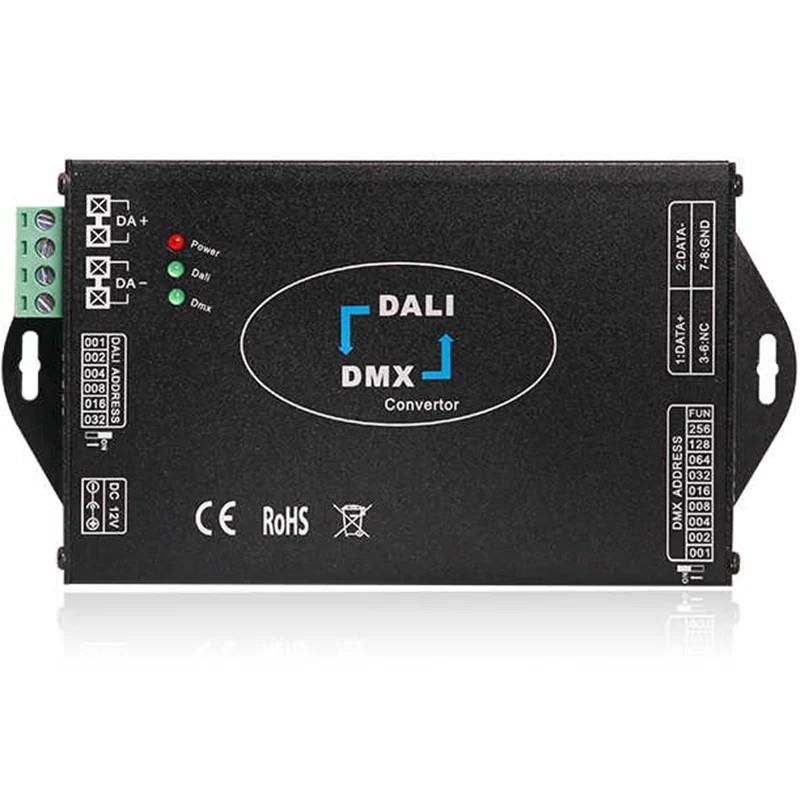
DALI DMX CONTROLLER
DALI and DMX serve different roles, although a project may use both.
DALI commonly handles building lighting control, including fixture addressing, dimming, scene control, and supported status reporting. DMX is widely used for dynamic lighting applications that require detailed control of color and lighting effects.
Where DALI and DMX Can Work Together?
A hotel, entertainment venue, or architectural facade may require conventional building lighting control as well as dynamic RGBW effects.
In such a project, compatible controllers or gateways can connect the relevant systems, depending on the selected equipment and design requirements.
For example, DALI may control ordinary downlights and selected interior fixtures, while a suitable DMX system manages a facade installation with more detailed color effects.
What to Confirm Before Installation?
A “DALI DMX controller” can refer to different types of equipment, such as a dual-protocol controller or a gateway between DALI and DMX.
The project team should verify the supported channels, fixture types, control behavior, protocol mapping, software, and commissioning requirements.
It should also decide which system acts as the main interface for operators. This reduces confusion and makes the finished installation easier to operate and maintain.
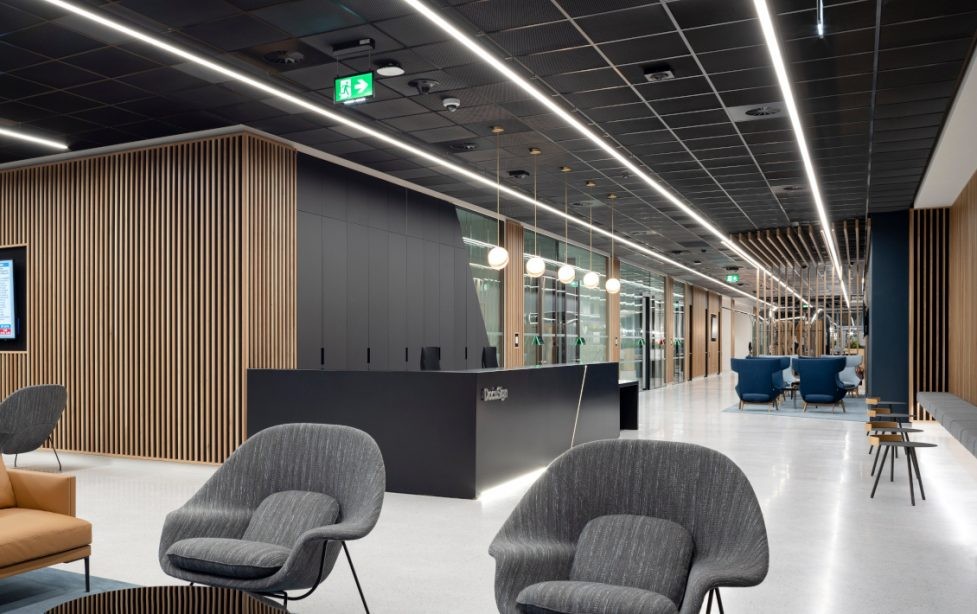
DALI LIGHTING SYSTEMS PRICE IN DUBAI AND ABU DHABI
There is no single price for every DALI controller or complete system.
This cost is often included as a line item in the overall quotation. For a mid-sized villa lighting project, it can range from AED 1,000 to AED 5,000.
The DALI controller is often included as a line item in the overall quotation, with prices typically ranging from AED 500 to AED 2,000, depending on the model and its features.
Equipment costs depend on the product type, supported functions, number of devices, manufacturer, and required integration.
A basic controller for a small installation has a different scope from a centralized management system serving several floors of an office building or hotel.
The Quotation Items
The price of a DALI lighting control system may depend on:
- Controller capacity: The number of subnets, devices, and control functions supported.
- Lighting drivers: The quantity and specifications of compatible DALI drivers.
- Sensors and keypads: The number and type of input devices required.
- Control panels: The selected user interfaces and their integration requirements.
- Wireless gateways: The need for Bluetooth, Zigbee, or other supported communication links.
- Programming and commissioning: The time required to address devices, configure groups, test scenes, and verify the installation.
- Integration: Connections to BMS, KNX, DMX, or other specified platforms.
- Technical support: Documentation, training, maintenance, and future configuration changes.
Why Cheap Equipment May Not Mean a Cheaper Project?
A low-cost controller may not support the capacity, integration, or functions that the project requires.
Additional gateways, components, or programming may then increase the overall cost.
A more suitable approach is to request an itemized quotation based on the actual lighting design and functional requirements.
The quotation should distinguish between hardware, installation, software, programming, commissioning, and after-sales support.
This makes proposals easier to compare and reduces the risk of unexpected costs during construction.
Because prices and product availability change, obtain current supplier quotations for projects rather than relying on generic online price estimates.
DALI LIGHTING SYSTEMS SUPPLY AND INSTALLATION IN DUBAI AND ABU DHABI
A successful DALI installation starts with coordination.
The lighting consultant, supplier, electrical contractor, controls integrator, and client need to agree on the system requirements before ordering equipment.
In a new villa, this coordination can take place alongside the lighting layout and electrical drawings. In a hotel or office renovation, the team may also need to assess existing wiring, drivers, and control equipment.
Step 1: Review the Drawings and Project Brief
The team begins by reviewing the lighting layout, fixture schedule, control requirements, and the intended operation of each room or zone.
This stage identifies the number of DALI devices, proposed subnets, required scenes, and any integration needs.
Step 2: Specify Equipment and Confirm Compatibility
The supplier prepares the equipment schedule, including compatible fixtures, drivers, controllers, sensors, bus power supplies, keypads, and gateways.
The team checks product documentation and resolves compatibility questions before placing the order.
Step 3: Coordinate Wiring and Installation
The electrical contractor installs the required power and control wiring according to the approved drawings and the equipment manufacturers’ instructions.
The installation team should identify each circuit and bus clearly.
It should also ensure that the installation allows access to relevant drivers, controllers, gateways, and other serviceable components.
Step 4: Address Devices and Configure Scenes
During commissioning, the integrator identifies devices, assigns addresses where required, creates groups, configures scenes, and sets up the control interfaces.
The team should test ordinary switching and dimming, supported sensor functions, wireless integrations, and other specified features.
Step 5: Test, Document, and Hand Over
The final stage confirms that the installed system operates according to the approved requirements.
The project team should receive relevant drawings, device lists, configuration backups, operating instructions, warranty information, and maintenance documentation.
A structured handover helps building managers maintain the system and make informed changes in the future.
FINAL THOUGHT
DALI lighting control gives property owners and developers a flexible way to manage compatible lighting equipment.
It supports individual and group control, dimming, scenes, and communication with suitable devices, making it useful for everything from luxury villas to hotels and large commercial buildings.
But the success of a DALI project depends on more than the protocol itself.
The team must specify compatible equipment, plan the control architecture, coordinate the wiring, configure the system properly, and test the results before handover.
For projects in Dubai and Abu Dhabi, the best time to address these requirements is during the design and construction stages.
Early coordination gives the team more room to resolve technical details before ceilings close and finishes are complete.

Related Posts
Custom Chandeliers in Dubai and Abu Dhabi: For Villas, Hotels, and Luxury Spaces in 2027
Backlit Stretch Ceiling Installation for Villas in Dubai and Abu Dhabi

Ceiling Light Installation Service for Villas, Hotels, and Residential Projects in the UAE
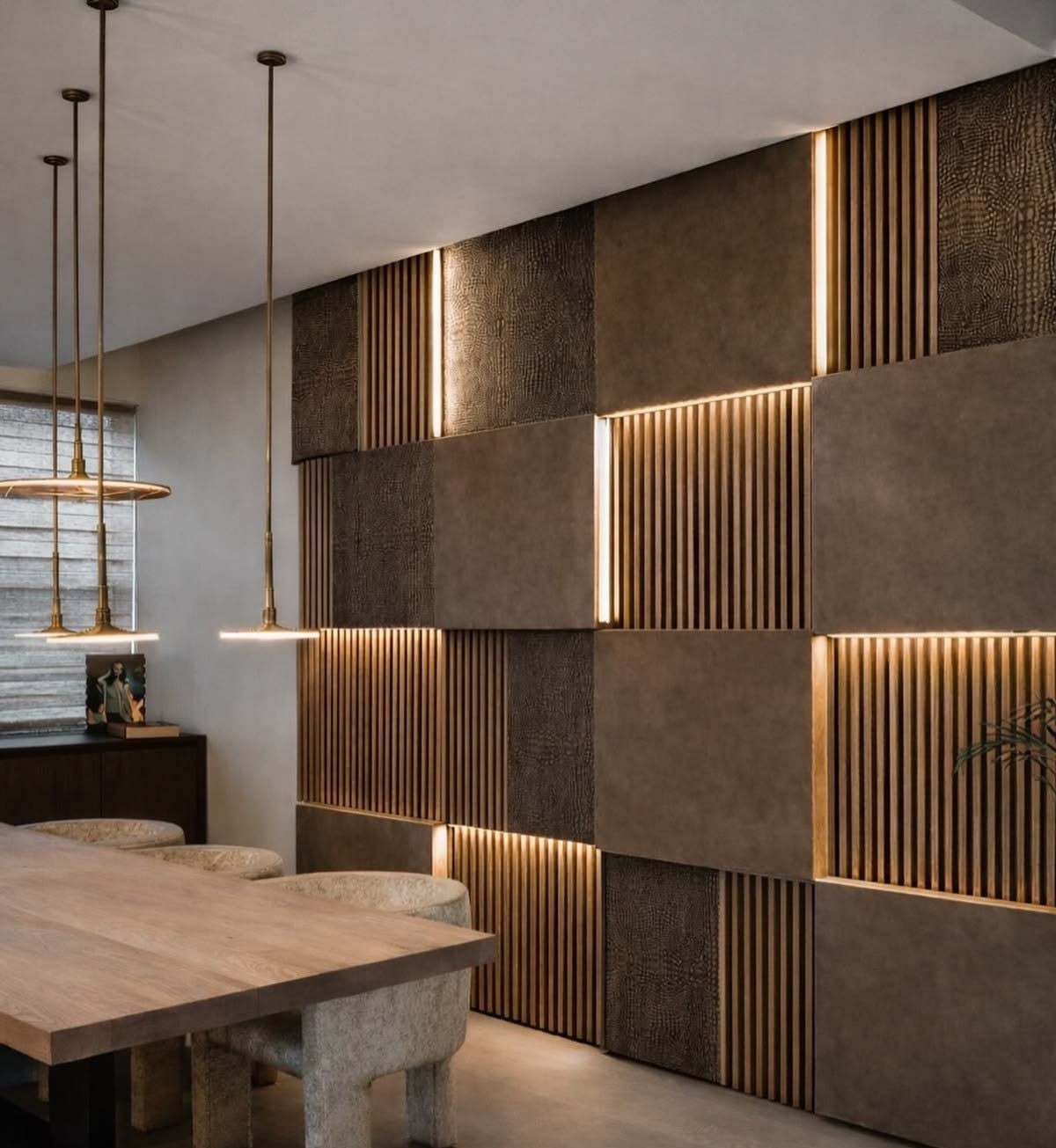
Decorative LED Panel Light: A Complete Buying Guide in UAE
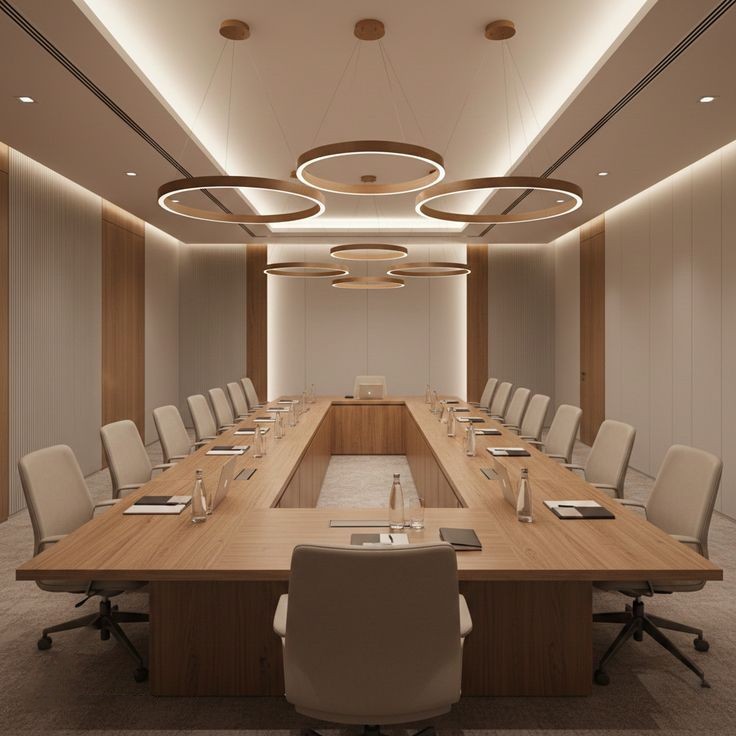
LED Office Light Fixtures for Corporate Offices and Businesses in Dubai and Abu Dhabi
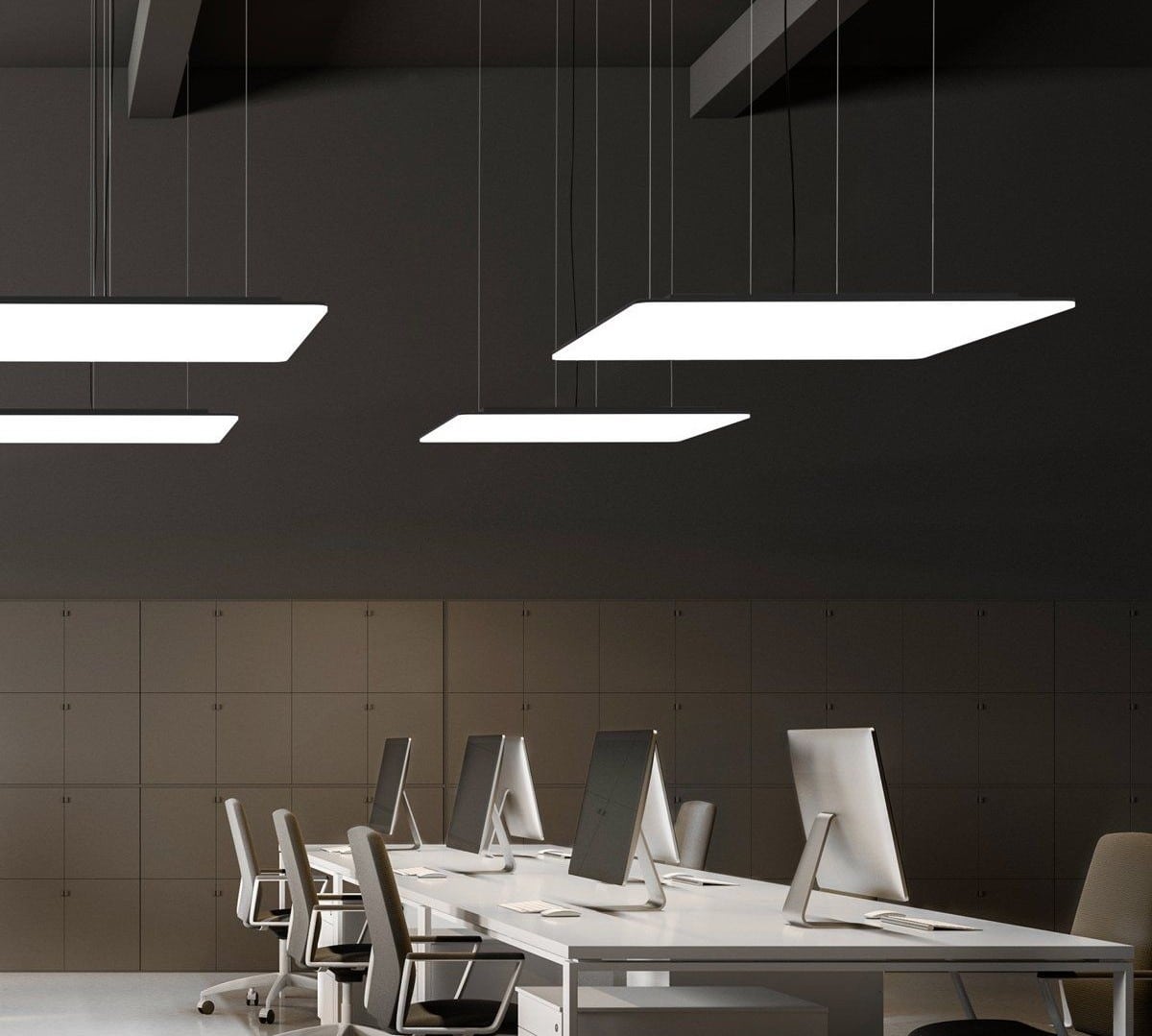
Square Led Ceiling Light Fixture in UAE: A Complete Buying Guide in 2027
