

Ceiling Light Installation Service for Villas, Hotels, and Residential Projects in the UAE
A ceiling light might look like a small finishing detail, isn’t it?
However, it can make a surprisingly big difference to how a room looks and works.
A beautiful chandelier can become the centrepiece of a villa entrance, while poorly positioned downlights can leave a living room full of glare and awkward shadows.
Even an expensive stretch ceiling can disappoint if it is installed incorrectly or chosen without considering the ceiling structure.
That is why a professional ceiling light installation service in UAE is needed for any villa lighting design project in Dubai or Abu Dhabi.
It often involves more than connecting wires and fixing a fitting to the ceiling.
In fact, it requires the right equipment, suitable mounting methods, electrical checks, coordination with other building services, and an understanding of how the finished lighting will feel in the space.
For villa owners, hotel operators, developers, and property managers, getting these details right is particularly important.
Lighting often needs to work alongside decorative ceilings, air-conditioning systems, smart controls, interior finishes, and architectural features.
A great lighting installation helps bring these elements together while reducing the likelihood of avoidable changes after the ceiling has been completed.
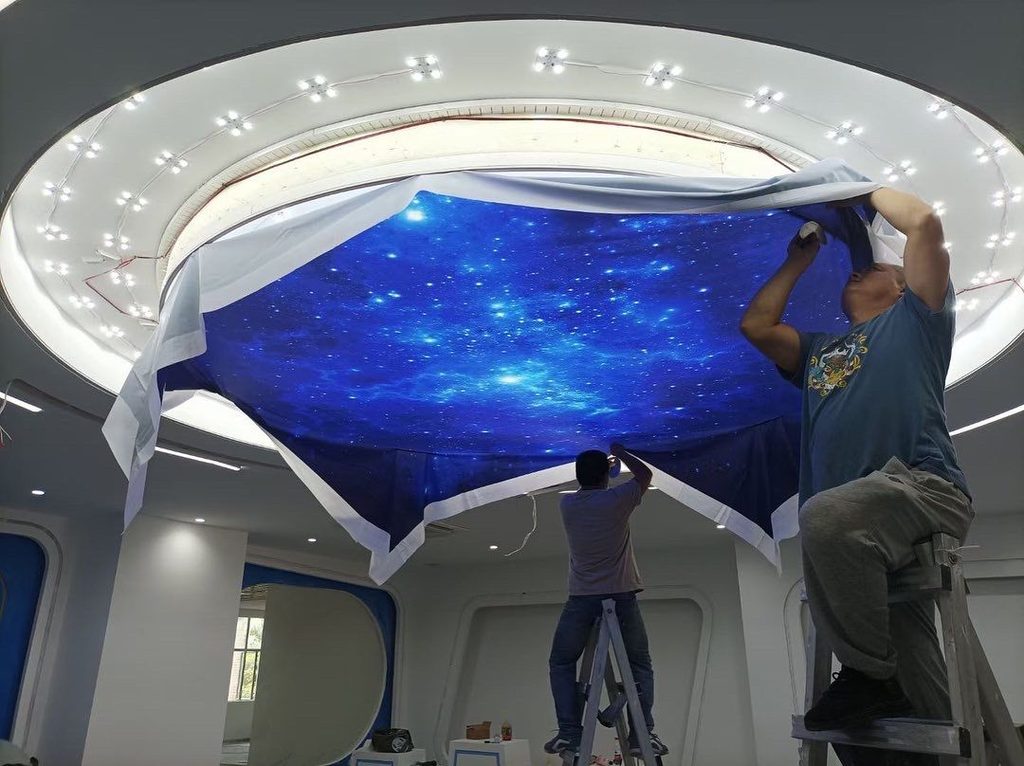
CEILING LIGHT INSTALLATION SERVICE IN UAE
A dependable installation service begins by understanding the property and the work required.
Replacing one existing ceiling light is very different from installing dozens of recessed downlights in a new villa or coordinating decorative fixtures throughout a hotel.
The first step should be a “site assessment”, of course.
The installer needs to understand the ceiling type, the existing electrical connections, the weight and dimensions of the selected fixtures, and whether new wiring or support arrangements are required.
Site Assessment and Technical Checks
Before installation begins, the contractor should confirm whether the existing electrical point is suitable for the new fitting.
This includes checking the condition of the wiring, the available mounting arrangements, and the circuit requirements for the proposed fixture.
For larger projects, the assessment may also involve reviewing lighting layouts, reflected ceiling plans, architectural drawings, and electrical drawings.
These documents help the installation team understand the intended fixture positions and identify possible conflicts before work starts.
A site assessment is especially important when installing heavy chandeliers, recessed fixtures in false ceilings, or lighting systems with separate drivers and control equipment.
Fixture Mounting and Electrical Connection
Once the requirements are confirmed, the installation team can prepare the mounting point, check that the support method is suitable, connect the fitting, and secure it according to the manufacturer’s instructions.
The work should use appropriate electrical connections, grounding where required, and mounting hardware suited to the fixture and ceiling construction.
A decorative ceiling board should never be assumed to provide adequate structural support for a heavy light fitting.
Testing And Final Handover
Installation should end with testing, not simply switching the light on once and leaving the property.
The installer should check that the fitting operates correctly, is securely mounted, and works with its intended switches, dimmers, drivers, or smart controls.
Any defects or unexpected behaviour should be investigated before the work is signed off.
For multi-room projects, a clear handover is equally useful too.
Fixture schedules, control descriptions, product documentation, and records of changes can help homeowners, facilities teams, and future maintenance contractors understand what has been installed.
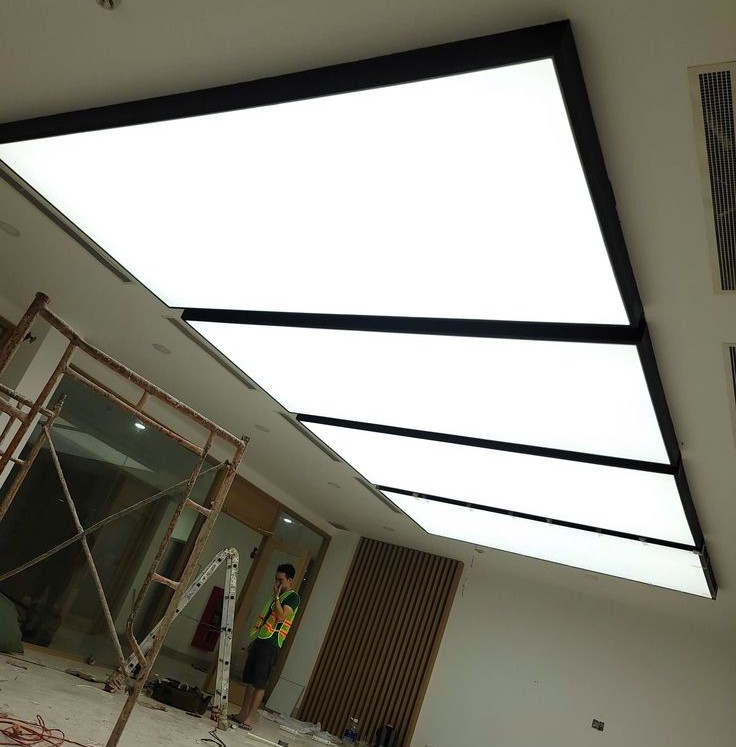
CEILING SYSTEMS, FIXTURES AND ACCESSORIES
One reason ceiling light installation requires careful planning is that ceilings are not all built the same way.
A fitting that works perfectly in a conventional concrete ceiling may need a different mounting arrangement in a gypsum false ceiling or a suspended ceiling grid.
The installation method must suit both the luminaire and the building construction.
Recessed Downlights and Spotlights
Recessed downlights are widely used in contemporary villas, apartments, hotel rooms, corridors, and commercial interiors in Dubai.
They sit within the ceiling plane and create a relatively clean appearance.
However, the installation involves more than cutting a circular opening.
The installer must confirm the required cut-out dimensions, ceiling clearance, mounting method, and space needed for the driver or other electrical components.
Heat management and any manufacturer-specified insulation clearances also need to be respected.
Where several downlights are installed together, consistent spacing and alignment matter. Poor positioning can create uneven patches of brightness, unwanted shadows, or excessive light in certain areas.
Surface-Mounted Ceiling Lights and LED Panels
Surface-mounted fixtures are useful where recessed installation is unsuitable or when the design calls for a visible fitting.
They can be installed in many villas, apartments, offices, service areas, and hotel back-of-house spaces.
Decorative LED panel lights and linear luminaires may be used in locations that benefit from broad, relatively uniform illumination.
In suspended ceilings, the installer must verify that the fixture is compatible with the ceiling system and that suitable supports or safety attachments are provided where necessary.
Let’s be practical a bit. In many residential spaces, there could be a special circle or square led ceiling light fixture that requires careful attention.
The correct product depends on the room’s purpose, ceiling construction, required light distribution, and appearance.
Pendant Lights and Chandeliers
Pendant lights and chandeliers often become prominent architectural features in villa entrances, dining areas, living rooms, hotel reception areas, and restaurants.
Their installation can involve greater structural and logistical challenges than those associated with standard downlights.
The installer needs to consider the fixture’s weight, suspension method, ceiling height, access for assembly, and the manufacturer’s mounting requirements.
In double-height spaces, the team may also need suitable access equipment and a method for lifting and positioning the fixture safely.
For large or heavy chandeliers, the support must transfer the load to an appropriate structural element or engineered support system.
Attaching the fixture only to unsupported decorative ceiling material is not an acceptable substitute.
Cove Lighting and LED Strip Systems
Cove lighting uses concealed light sources to illuminate a ceiling edge, recess, or architectural detail.
The result can be a softer visual effect than a ceiling filled with exposed light sources.
Good installation requires attention to more than the LED strip itself.
The installer must consider the aluminium profile or mounting surface, the position of the light source, the appearance of visible dots or uneven brightness, driver access, cable routing, and heat management.
Longer runs and dimmable systems may also require additional planning to maintain consistent operation.
The driver and control equipment should remain accessible for inspection or replacement.
False Ceilings and Decorative Ceiling Integration
Gypsum ceilings, suspended ceilings, stretch ceilings, and decorative ceiling systems each impose different installation conditions.
Before cutting openings or closing a ceiling, the project team should confirm fixture dimensions, support requirements, cable routes, access panels, and the positions of other building services.
A small coordination error can lead to a damaged finish or expensive rework.
For a villa or hotel with a detailed ceiling design, lighting installation should therefore be coordinated with the ceiling contractor, interior designer, electrical contractor, and relevant mechanical and fire-safety teams.
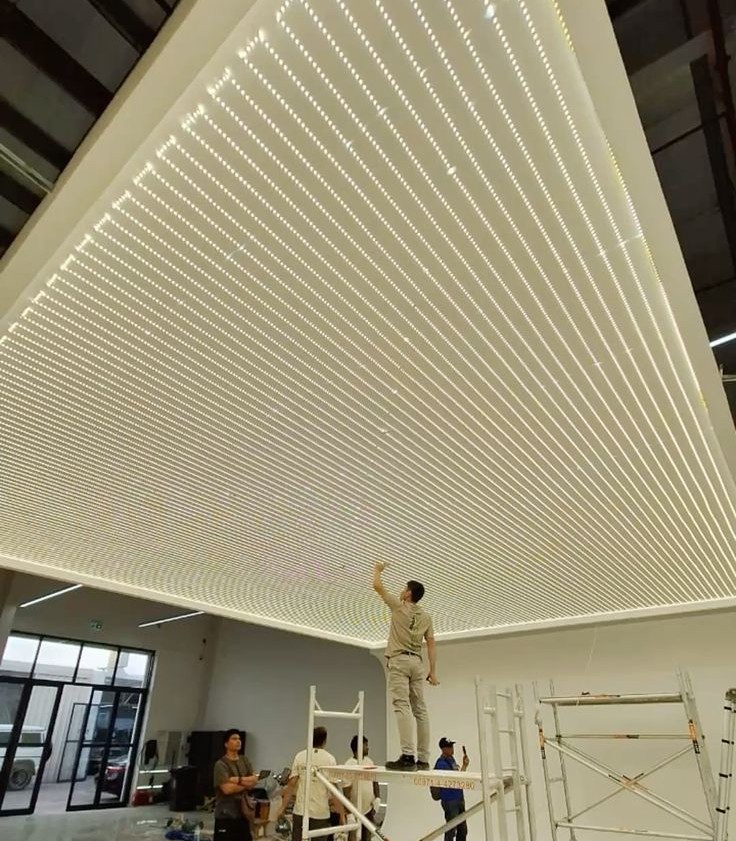
WHY PROFESSIONAL CEILING LIGHT INSTALLATION MATTERS?
Lighting fixtures are electrical products, and their installation needs to be treated accordingly.
An incorrect connection, unsuitable mounting arrangement, overloaded circuit, or poorly selected control can cause more than an unattractive finish.
It may create an electrical or physical safety risk.
Professional installation helps reduce these risks when the work is carried out by appropriately qualified personnel and follows the applicable electrical requirements and the manufacturer’s instructions.
Electrical Safety and Wiring Quality
The installer should isolate the relevant circuit before working and confirm that it is safe to proceed.
Electrical connections, protective devices, cable selection, and grounding arrangements must be suitable for the installation.
The exact requirements depend on the property, the electrical system, the fixture, and the relevant local regulations. In Dubai, electrical work needs to be assessed against the applicable DEWA requirements and Dubai Building Code.
In Abu Dhabi, the Department of Energy’s Electricity Wiring Regulations provide the regulatory framework for low-voltage electrical installations.
Projects in other emirates should follow the requirements of the relevant authority.
It is important not to treat a generic claim such as “UAE compliant” as proof that every detail has been checked.
The project team should know which rules apply and should be able to explain how the installation will meet them.
Correct Structural Support
A light fixture must stay securely attached throughout its service life. This is particularly important for chandeliers, suspended decorative fittings, and lights installed in areas with high ceilings.
The appropriate fixing method depends on the ceiling material, the fitting’s weight, the manufacturer’s installation requirements, and the support available above the ceiling.
Where the ceiling structure is not suitable, additional support may need to be designed and installed before the decorative finish is completed.
This is one reason the installation should be discussed early during construction rather than left until the final decorating stage.
Better Light Quality and Everyday Comfort
A light fitting can be electrically sound and still produce an unsatisfactory result.
A downlight with an unsuitable beam angle may create harsh patches of brightness. Too many exposed light sources can make a room uncomfortable to look at.
Poor positioning can cast shadows across work surfaces, while inconsistent colour appearance can make adjacent fixtures look mismatched.
Lighting quality depends on both the amount of light reaching the relevant surfaces and the way the light is delivered.
The International Commission on Illumination’s guidance for indoor workplaces, for example, considers illuminance alongside visual comfort, glare, and colour rendering.
Residential lighting guidance addresses the specific needs of domestic environments.
For a villa, hotel, or residential development, the practical objective is not simply to install more lights.
It is to install the right lights in the right places, with suitable controls and a clear understanding of how the spaces will be used.

WHAT TYPES OF LIGHTING CAN BE INSTALLED?
A comprehensive ceiling light installation service may cover several kinds of fixtures, each with its own technical and visual requirements.
General And Ambient Lighting
General lighting provides the basic illumination for moving around and using a room. Depending on the space, it might come from downlights, ceiling-mounted luminaires, suspended fixtures, or LED panels.
The layout should account for room dimensions, ceiling height, furniture placement, surface finishes, and the activities taking place.
A large open-plan living area, for example, may need a different arrangement from a narrow corridor or a compact guest bedroom.
For substantial projects, a lighting calculation can help evaluate whether the proposed luminaires are likely to provide suitable illumination.
The calculation should use reliable product data rather than assuming that every fitting with the same wattage will produce the same result.
Decorative And Feature Lighting
Decorative lighting can draw attention to a staircase, dining table, entrance, architectural feature, or artwork.
The fixture’s visual impact is important, but so are its mounting height, suspension, dimensions, and relationship to the surrounding architecture.
A decorative pendant above a dining table should be positioned with the table and occupants in mind.
A chandelier in a high-ceiling entrance requires consideration of viewing angles, clearance, maintenance access, and the visual proportions of the space.
These decisions are easiest to resolve before the final installation.
Smart And Dimmable Lighting
Smart lighting systems can allow occupants or hotel staff to adjust scenes, brightness, and selected lighting groups.
Dimming can also help a space serve different purposes throughout the day.
Compatibility must be checked carefully. Not every LED luminaire works with every dimmer, driver, automation system, or control protocol.
An incompatible combination can result in flickering, limited dimming range, buzzing, or unreliable operation.
The product specifications and control documentation should therefore be reviewed before purchasing or installing the equipment.
For integrated systems, the installer should coordinate with the electrical or automation specialist and test the complete setup rather than testing the fixture in isolation.
Outdoor And Covered-Area Ceiling Lighting
Covered terraces, entrance canopies, balconies, and other exterior ceiling areas need fixtures suited to the actual environmental conditions.
Product selection should consider the relevant ingress-protection rating, exposure to water and dust, temperature conditions, and the installation location.
A product suitable for a dry indoor living room should not automatically be assumed suitable for an exposed outdoor area.
For exterior ceiling lights, the installer should also check the sealing and mounting details and ensure that cables, connections, and accessories are appropriate for the environment.
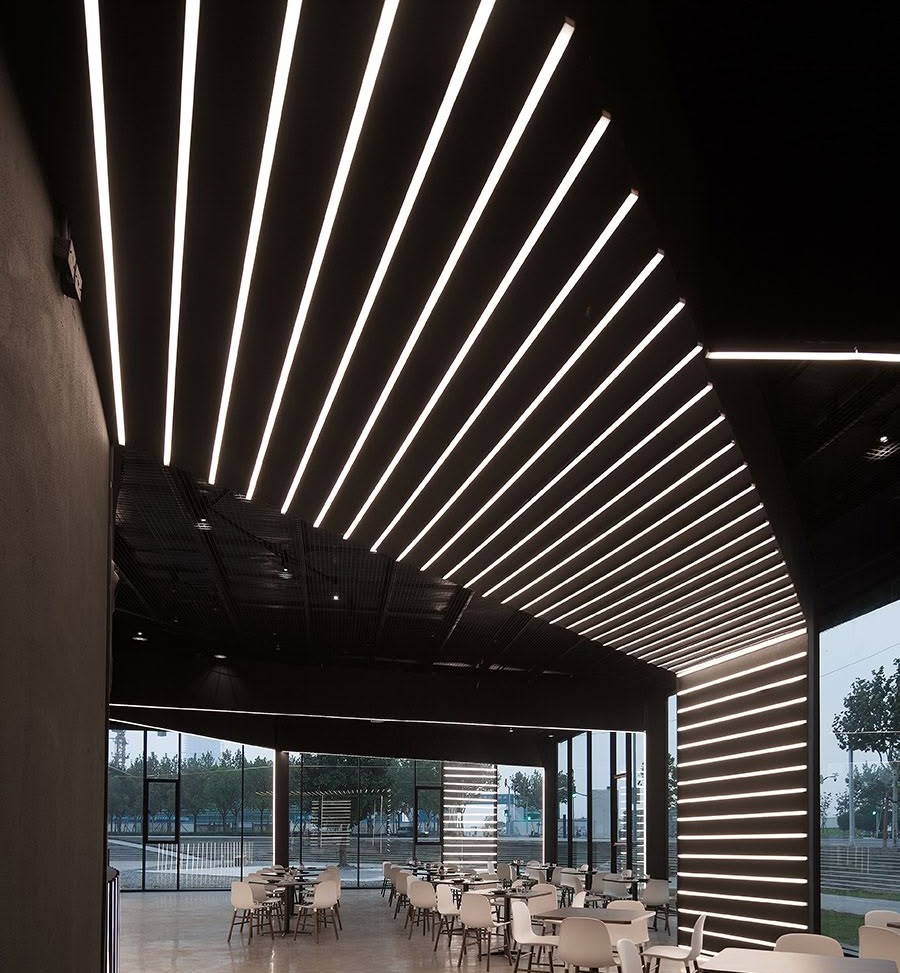
CEILING LIGHT INSTALLATION FOR VILLAS, HOTELS AND RESIDENTIAL PROJECTS IN UAE
The basic installation principles remain similar across different buildings, but the scale, daily use, maintenance needs, and coordination requirements can vary considerably.
Villa Ceiling Light Installation
In a villa, lighting is often expected to serve practical needs while complementing the interior architecture.
The entrance, living room, kitchen, bedrooms, bathrooms, corridors, staircases, and outdoor areas will rarely need exactly the same lighting approach.
The living room may combine general lighting with decorative pendants, wall lighting, and concealed cove lighting.
A kitchen may need carefully positioned light over work surfaces, while bedrooms often benefit from flexible lighting that supports both everyday use and a more relaxed evening atmosphere.
Bathrooms require appropriate product selection for the installation zone and environmental conditions.
Staircases and corridors need clear, consistent illumination that supports safe movement without excessive glare.
A professional installer should work from an agreed lighting layout where one exists.
The positions of downlights, pendants, switches, drivers, and controls should be checked against the actual furniture plan and ceiling design before openings are made.
For a villa under construction, the best time to resolve these details is before the ceiling is closed and painted.
During renovation, the assessment should also account for existing wiring, concealed services, and the condition of the ceiling.
Hotel Ceiling Light Installation
Hotels combine guest-facing spaces with areas that require reliable operational lighting.
Reception areas, corridors, restaurants, guest rooms, conference rooms, service areas, and back-of-house spaces each have different priorities.
A hotel lobby lighting design might involve the installation of a statement chandelier supported by carefully coordinated architectural and accent lighting.
Guest rooms need intuitive controls and comfortable lighting for multiple activities.
Corridors require a consistent arrangement, while restaurants may benefit from lighting scenes that can be adjusted for different service periods.
Hotels also need to consider maintenance access and operational disruption.
A fitting that looks excellent but requires extensive work to reach a driver or replace a component may create avoidable maintenance difficulties.
Where a project includes emergency lighting or other life-safety systems, these must be handled as part of the approved specialist design.
Decorative ceiling lighting is not a substitute for required emergency or fire-safety provisions.
The installation team must coordinate with the relevant electrical and fire-safety professionals.
Residential Towers and Multi-Unit Developments
When it comes to celing lighting design for large residential projects or developments, consistency and repeatability become particularly important.
A developer may need the same fixture types installed across many apartments, common areas, corridors, lobbies, and amenity spaces.
An agreed fixture schedule, standard installation details, and clearly documented quality checks can make the work easier to inspect and maintain.
A sample apartment or mock-up can help the project team confirm fixture placement, brightness, colour appearance, and ceiling detailing before the same approach is repeated throughout the building.
Changes made after installation has started can affect procurement, wiring positions, ceiling openings, and programme coordination.
Early approval of the lighting design and technical information helps reduce that risk.
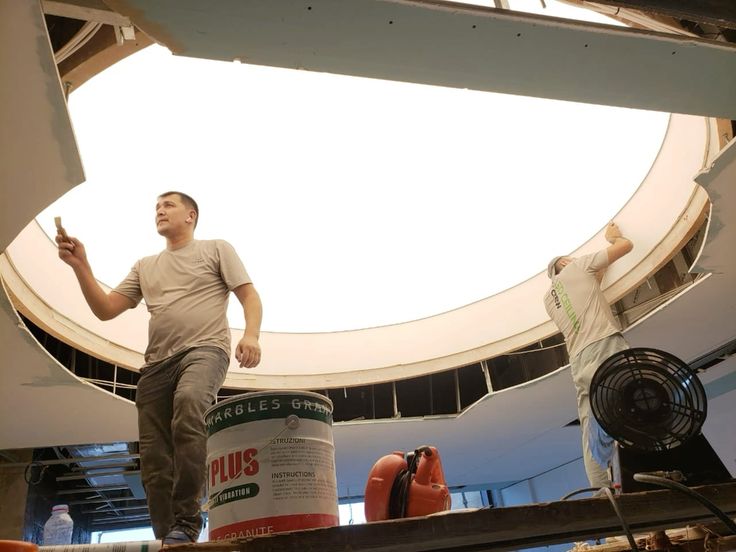
THE CEILING LIGHT INSTALLATION PROCESS
A clear installation process helps homeowners and project teams understand what will happen on site, which decisions need approval, and when other contractors must be involved.
1. Consultation And Site Inspection
The first stage establishes the scope of work. That’s something we realise very good.
The installer reviews the property’s requirements, the available drawings, existing electrical points, ceiling construction, fixture list, and any access restrictions.
For an existing property, this stage may identify wiring or mounting conditions that need attention before the new fittings are installed.
2. Lighting Layout and Load Planning
For a larger project, the proposed fixture positions should be reviewed against the architectural and reflected ceiling plans.
Electrical requirements, controls, drivers, and switching arrangements also need to be considered.
Lighting-design software such as DIALux evo can help professionals plan with actual luminaires, use photometric data, calculate lighting performance, and document the results.
It is useful for checking the design before installation, but its output still depends on the accuracy of the product data and project inputs.
A realistic 3D rendering can help communicate the intended appearance. It should not be mistaken for a substitute for photometric calculations or electrical design.
3. Product Selection and Approval
Before ordering fixtures, confirm the exact model, dimensions, wattage, light output, colour temperature, colour rendering, beam characteristics, dimming compatibility, and environmental rating where relevant.
The specification should also include mounting details and installation instructions.
Product substitutions should be reviewed instead of assuming a different fitting will perform identically because it has similar dimensions or wattage.
For multi-unit residential or hotel projects, a consistent approved product list can also support future maintenance and replacement.
4. First-Fix Electrical Work
When a building is under construction or undergoing a substantial renovation, wiring and connection points generally need to be coordinated before the ceiling finishes are completed.
This is the stage to resolve cable routes, junction boxes, driver locations, switching arrangements, and structural support for heavier fittings.
Any required access panels should be coordinated with the ceiling design.
Work should be performed by appropriately qualified electrical personnel and in accordance with the relevant project approvals and safety requirements.
5. Fixture Installation and Alignment
Once the ceiling and surrounding finishes are ready, the installation team can fit the approved luminaires.
Openings should match the product requirements, fixtures should be mounted securely, and visible fittings should be aligned consistently.
Pendants and chandeliers should be installed at the agreed heights, with clearances checked against furniture and circulation areas.
The team should also take care to protect finished surfaces and follow the manufacturer’s instructions for assembly and connection.
6. Testing And Project Handover
At completion, the installer should verify operation, controls, and visible installation quality.
Any issues such as flickering, inconsistent colour appearance, loose mounting, or incorrect switching should be resolved before handover.
For larger projects, the final documentation should identify the installed fixtures and controls and record any approved changes from the original plan. This makes future maintenance more straightforward.
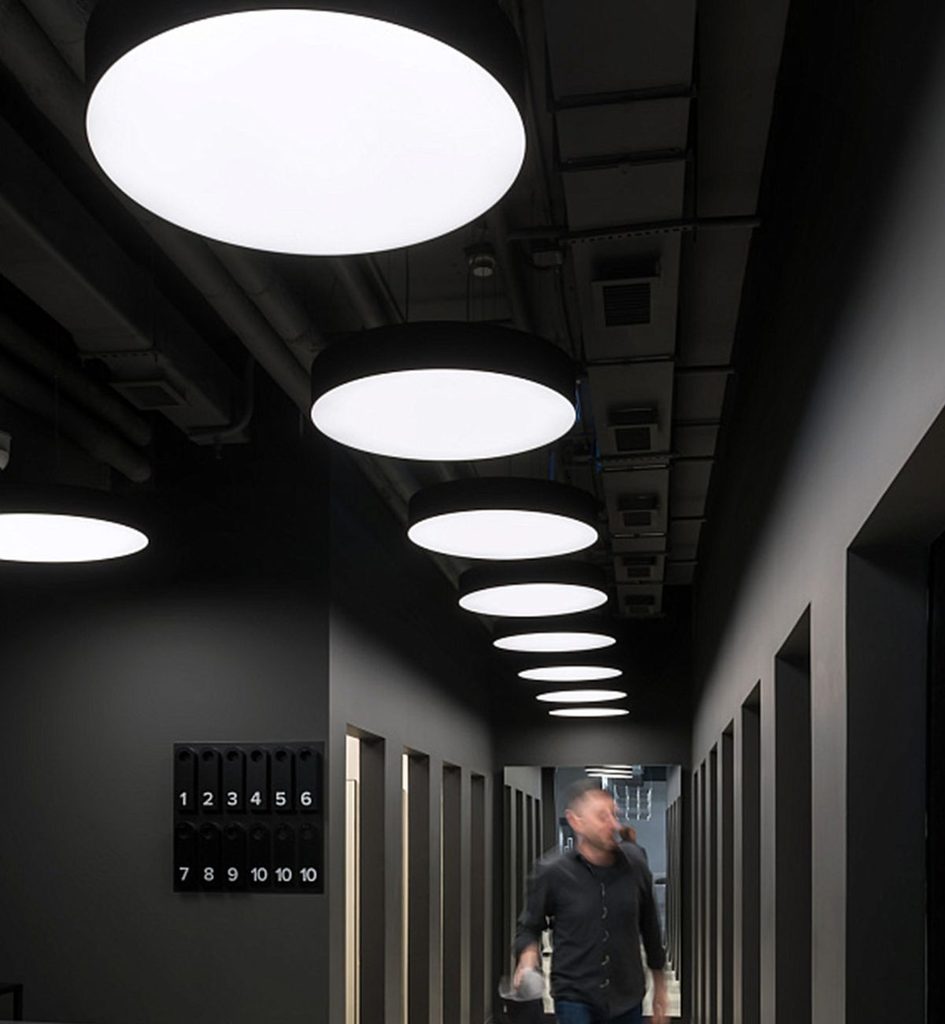
LIGHTING WITH CEILINGS AND OTHER BUILDING SERVICES
One of the most avoidable causes of rework is treating the ceiling and lighting installation as separate tasks.
Ceiling layouts often need to accommodate air-conditioning ducts and diffusers, sprinkler heads, smoke detectors, access panels, cable routes, and other building services.
A downlight placed without checking these elements may clash with equipment above the ceiling or disrupt the intended visual arrangement.
Coordination Before Ceiling Closure
The reflected ceiling plan should be reviewed by the relevant project team before openings are cut.
The fixture locations, dimensions, mounting depth, driver positions, and support requirements should be checked against the available space.
This is particularly important for recessed fixtures, concealed LED strips, heavy suspended fittings, and decorative ceilings with narrow coves or complex geometric patterns.
The coordination process should also preserve access to equipment that may require inspection or replacement.
Hiding a driver above a sealed ceiling without a practical access method can turn a simple repair into a disruptive job.
Protecting The Finished Design
Architectural details are easier to preserve when installers understand the intended appearance.
Symmetrical layouts should be checked against the room geometry, while accent lights should be positioned with the relevant wall, artwork, material, or feature in mind.
The goal is not merely to prevent physical clashes. It is to ensure that the finished ceiling looks deliberate and that the lighting performs as intended.
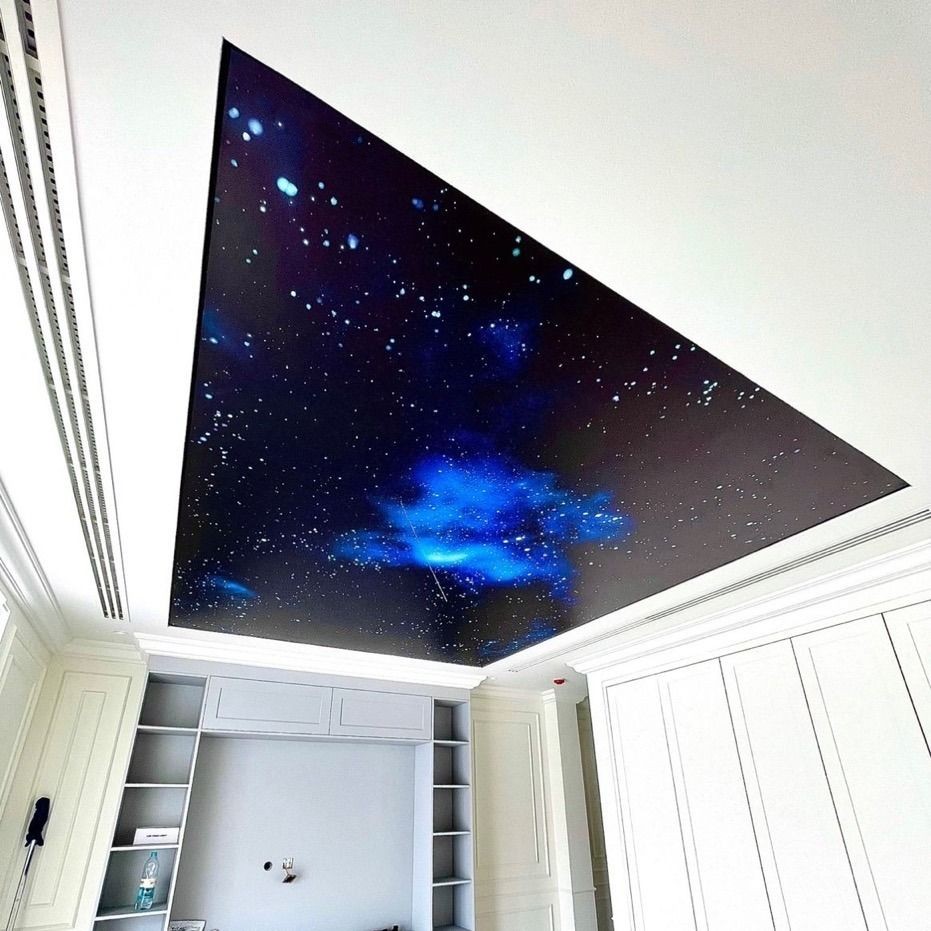
TESTING, HANDOVER AND LONG-TERM MAINTENANCE
Installation quality should be judged by the finished result and the condition of the system, not just by whether the lights switch on.
Electrical And Functional Testing
Appropriate tests should be completed by qualified personnel using suitable procedures and equipment.
Fixtures with dimmers or smart controls should be tested across their intended operating modes.
If the project uses several lighting groups or scenes, the relevant switches and controls should be checked by a lighting consultant to confirm that they operate the correct fixtures.
Testing should follow the scope of work and the applicable electrical requirements rather than relying on a single informal check.
Visual Inspection and Final Adjustments
After the electrical checks, a lighting team should inspect the visible finish.
Depending on the work and applicable requirements, this may involve a call for a specialized DIALux lighting design service to create a 2D layout for optimal lights placement.
Ceiling fixtures should be aligned, pendants should hang at the agreed height, and recessed fittings should sit properly in their openings.
Where adjustable spotlights are installed, their direction should be set according to the lighting plan.
The team should also check for obvious differences in colour appearance, unwanted glare, and uneven illumination.
Maintenance Planning
Maintenance requirements should be considered during product selection.
Drivers, lamps where replaceable, control devices, and complete luminaires may eventually require service or replacement.
For hotels and residential developments, retaining product datasheets, model numbers, warranty information, and installation records can save time later.
Access to replacement components should also be considered when selecting products for projects with many identical fittings.
Regular inspection and cleaning should follow the manufacturer’s instructions and be appropriate for the environment.
Any electrical fault should be investigated by qualified personnel rather than addressed through improvised repairs.

WHAT AFFECTS CEILING LIGHT INSTALLATION COSTS IN UAE?
There is no single installation price that suits every villa or property.
The final quotation depends on the fixture type, ceiling construction, site conditions, electrical work, access requirements, and scale of the project. Often, it ranges between 2000-6000 AED.
Fixture Type and Installation Complexity
A straightforward replacement using an existing suitable point is generally a different job from installing a large chandelier, creating new lighting points, or fitting concealed LED strips into a decorative ceiling.
The quote should distinguish between standard mounting and any additional work such as new wiring, structural support, control upgrades, removal of existing fixtures, or ceiling repairs.
Ceiling Height and Site Access
High ceilings, stairwells, double-height entrances, and large lobbies can require specialist access equipment and more time for safe installation.
The site conditions also matter.
Occupied properties, hotel operating schedules, restricted working hours, and the need to protect completed interiors can affect the work programme and cost.
Project Size and Scope
A single fitting is priced differently from a complete villa or a multi-unit development.
Larger projects may involve planning, coordination, product approvals, staged installation, testing, and documentation beyond the physical fitting of each light.
When comparing quotations, check whether the price includes all required materials, wiring changes, mounting hardware, testing, removal of old fixtures, ceiling making-good, and final handover.
A clear scope makes it easier to compare bids fairly and reduces the chance of unexpected charges.
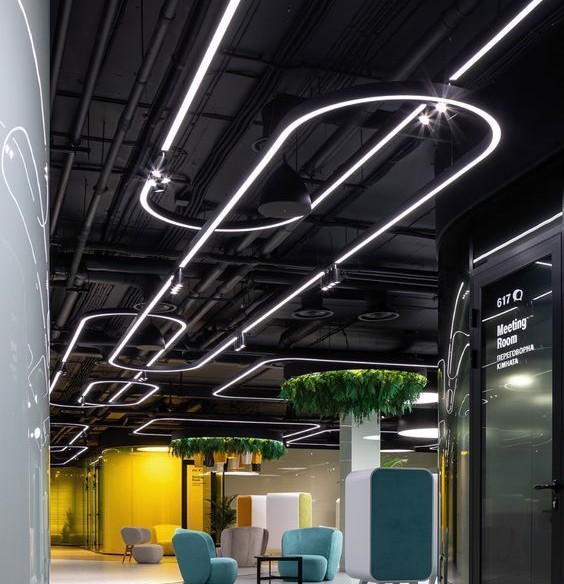
HOW TO CHOOSE THE RIGHT CEILING LIGHT INSTALLATION COMPANY IN UAE?
The lowest quotation does not always represent the best value, particularly when the work involves expensive fixtures, decorative ceilings, or a large building project.
Check Qualifications and Local Requirements
Ask who will carry out the electrical work and whether the contractor and personnel meet the applicable requirements for the emirate and project.
For work requiring formal approvals or inspection, clarify who is responsible for those arrangements.
A contractor should be able to explain the installation method, the checks that will be performed, and the documentation that will be provided.
Review Product and Installation Knowledge
An experienced installation team should understand more than basic wiring.
The team should be familiar with the mounting, dimensions, drivers, controls, and technical requirements of the specified fixtures.
For a larger project, ask how the installation will be coordinated with the ceiling and other building services and how any changes to the approved lighting layout will be handled.
Request A Detailed Written Quotation
The quotation should identify the scope, materials, exclusions, programme, testing, handover, and warranty arrangements.
It should also explain how additional work will be priced if concealed conditions or existing wiring problems are discovered.
For luxury villas, hotels, and residential developments, this level of clarity helps everyone understand what is being delivered.
For homeowners, developers, and hospitality operators in the UAE, a good ceiling light installation service combines secure mounting, safe electrical work, coordinated planning, suitable products, and careful final testing.
The result should not only look right on the day of handover but also be practical to use and maintain over time.
FINAL THOUGHT
Ceiling lighting is easy to notice when it is beautiful, but the work behind a good installation is often invisible.
Secure mounting, compatible controls, carefully positioned fixtures, accessible drivers, and properly coordinated wiring all contribute to a result that looks clean and works reliably.
For a villa, that may mean a chandelier that sits perfectly in the entrance and downlights that create comfortable illumination throughout the home.
For a hotel or residential development, it means a consistent installation that can be operated, maintained, and inspected without unnecessary disruption.
The best approach is to plan the lighting early, select products based on their real technical requirements, and use qualified professionals who understand both the electrical work and the finished architectural design.
Done properly, ceiling light installation is not just the last step in finishing a room. It is part of making the entire space work as intended.


Related Posts
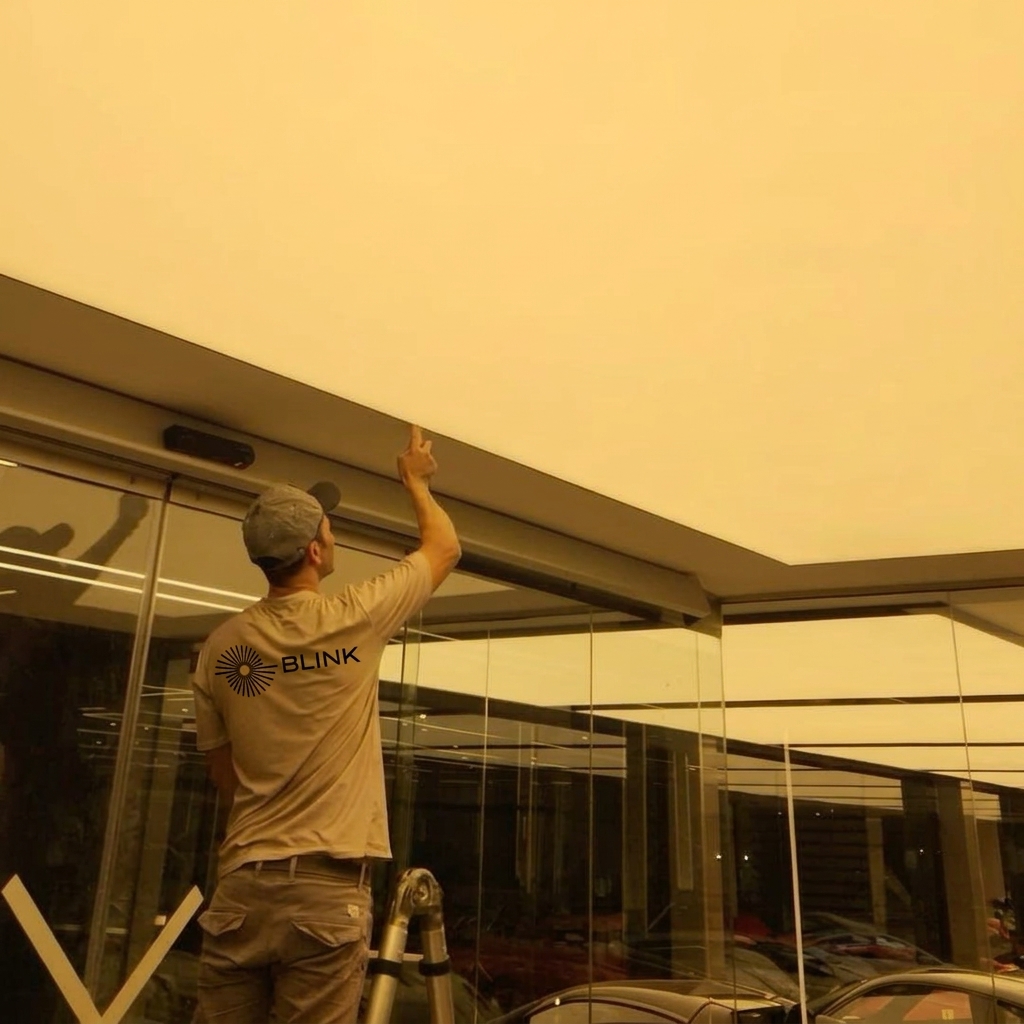
Backlit Stretch Ceiling Installation for Villas in Dubai and Abu Dhabi
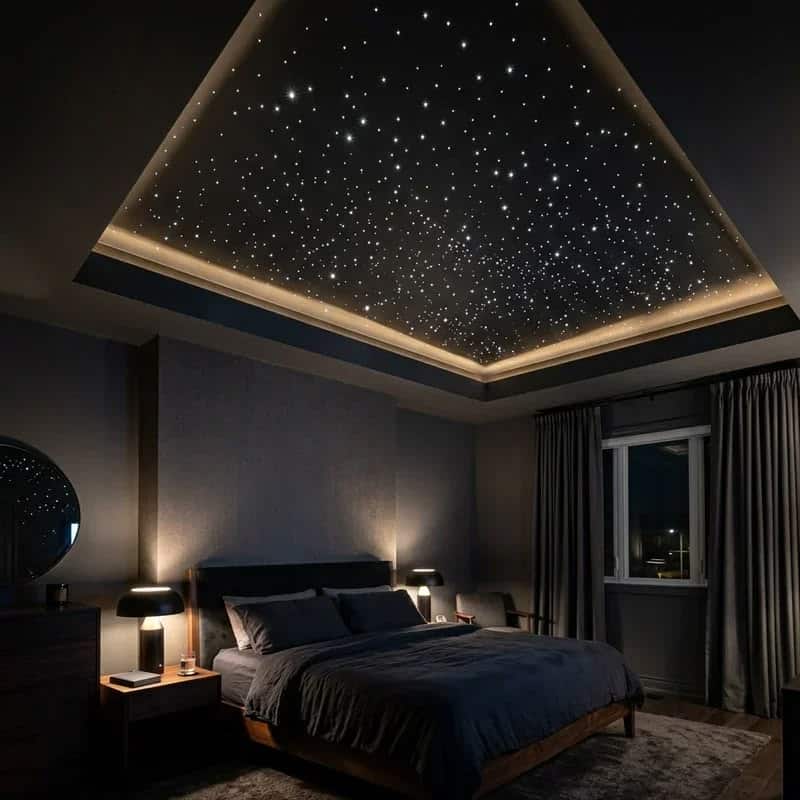
Stretch Ceiling for Luxury Villas in Dubai and Abu Dhabi
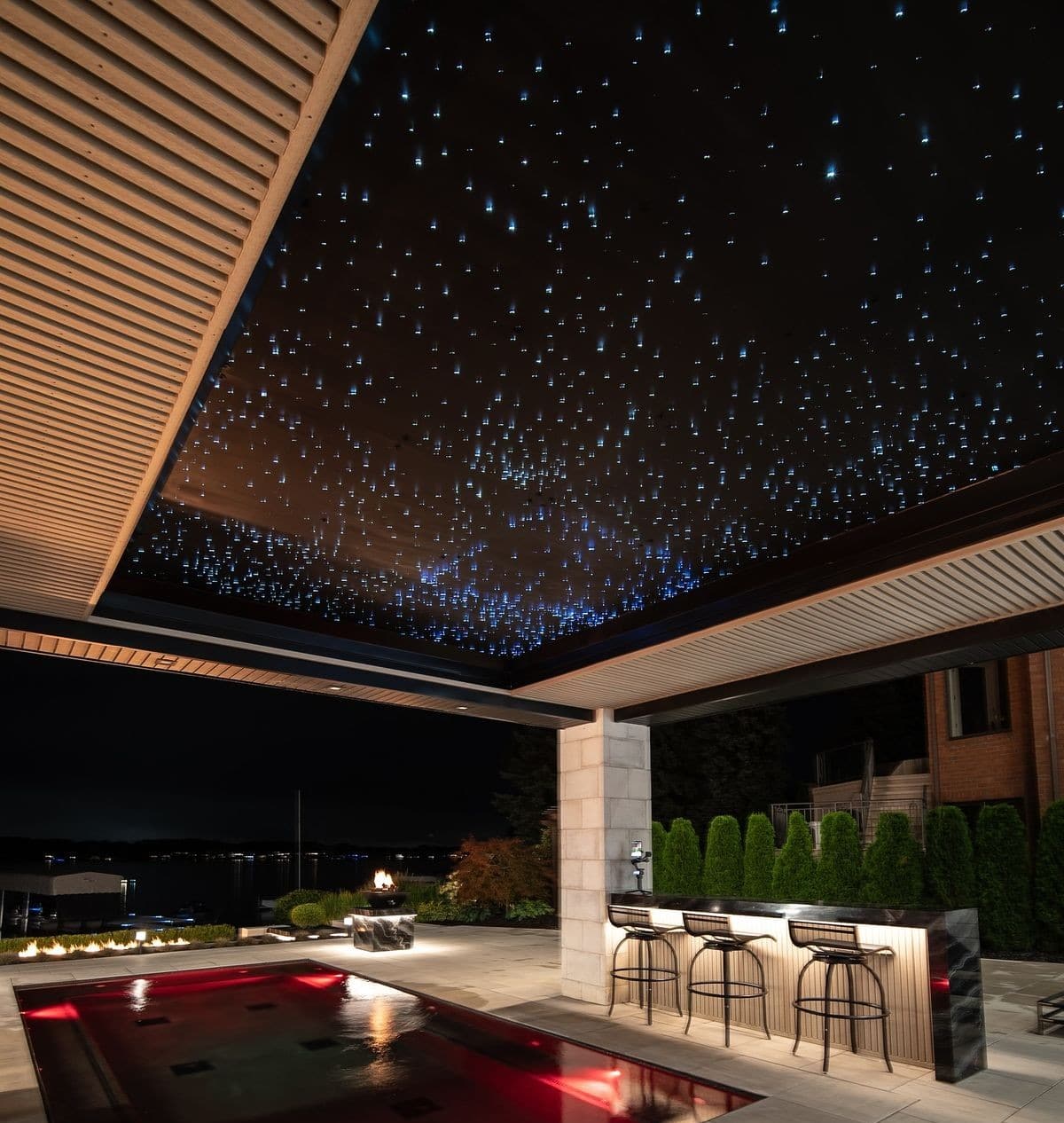
Stretch Ceiling in UAE: Backlit, Glossy, Mirror, Matte, and Custom Designs
