
Tower Lighting in Dubai and Abu Dhabi: Design, Supply, and Cost in 2027
Lighting a 30-, 50-, or 80-story building or tower isn’t about just installing powerful LED fixtures.
It’s far more complicated than this.
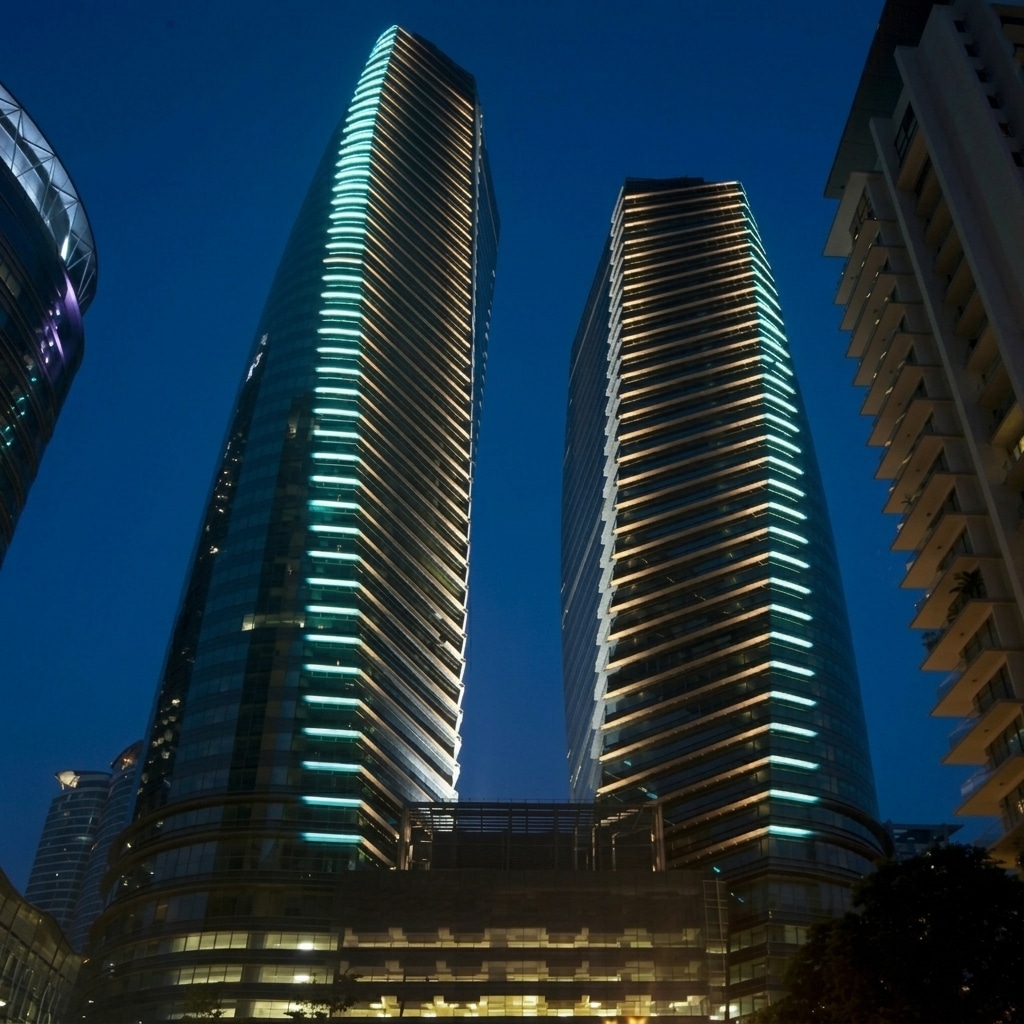
Carefully placed light reveals its shape, emphasizes its architectural details, and gives it a distinctive presence across the city skyline.
In some projects, the lighting remains subtle and elegant.
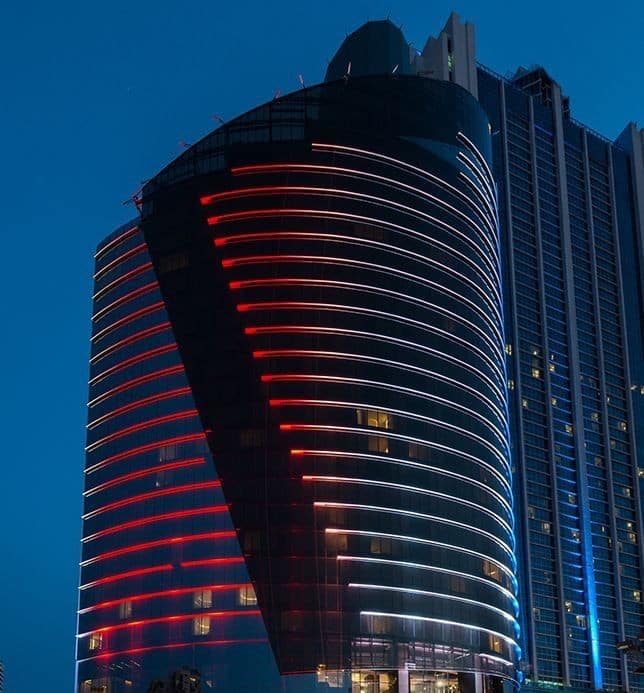
In others, programmable LEDs turn the skyscraper facade lighting into a dynamic display for national celebrations, corporate events, and special occasions.
Designers must understand the architecture, select the right optics, coordinate electrical infrastructure, and control light spill into neighboring buildings and the night sky.
For developers, CEOs, and property owners in Dubai and Abu Dhabi, professional tower lighting brings these elements together.
The result should enhance the building’s identity while meeting its functional, technical, environmental, and operational requirements.
SKYSCRAPER AND TOWER LIGHTING IN DUBAI AND ABU DHABI
The most effective tower lighting schemes begin with a simple question: what makes this building recognizable?
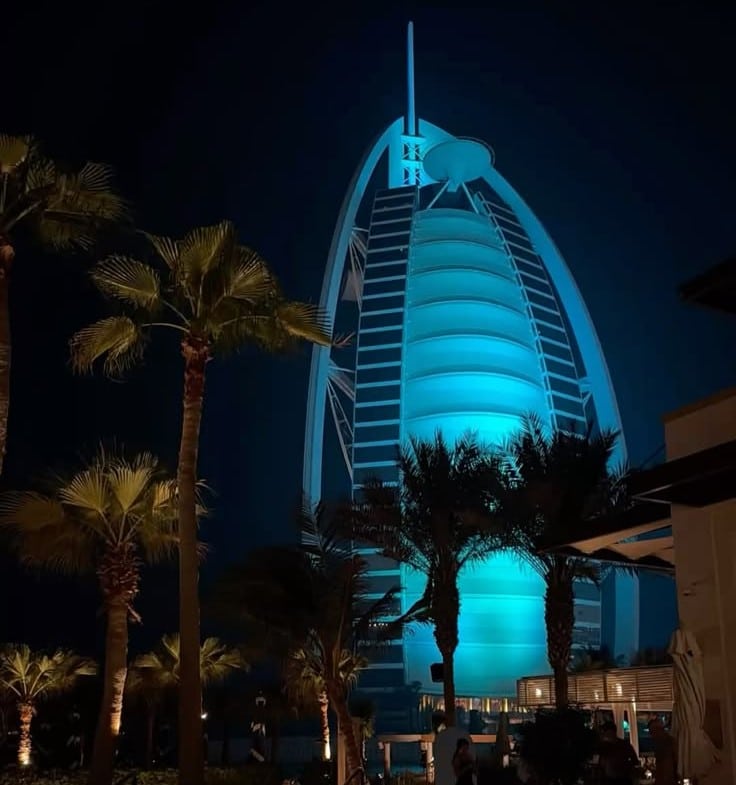
Some towers have distinctive crowns, curved profiles, recessed balconies, or geometric facades, which require a distinct facade lighting design.
Others rely on a strong vertical rhythm, glass curtain walls, or an unusual relationship between the tower and its podium.
A lighting designer studies these features before deciding which parts to illuminate.
The goal is not necessarily to make the entire building equally bright.
Instead, the design should create a visual hierarchy that helps people understand the building’s shape from the street and from a distance.
Architectural lighting design specialists use techniques such as wallwashing, grazing, linear lighting, and focused accent illumination to create these effects.
The Illuminating Engineering Society (IES) identifies building facades, monuments, landscaping, and public spaces as important areas within outdoor nighttime lighting design, where visual performance and environmental considerations must work together.
The Building’s Geometry
A lighting designer reviews architectural elevations, facade materials, structural details, window arrangements, and the building’s surrounding environment.
For a tower with strong vertical lines, narrow-beam fixtures or integrated linear LEDs may emphasize its height.
For a building with a distinctive crown, lighting the upper architectural details may create a recognizable silhouette without illuminating every floor.
Glass facades require special attention. Reflections, transparent surfaces, interior lighting, and the placement of external fixtures can affect the final appearance.
The designer must evaluate how the facade behaves at night rather than assuming that a fixture will produce the same result on every surface.
What Deserves Attention?
Some buildings benefit from a restrained scheme that highlights only the crown, corners, or selected architectural features.
Others call for a more comprehensive system that connects the facade with the entrance, podium, landscaping, and public areas.
This decision affects the lighting concept, fixture quantity, electrical infrastructure, controls, and installation cost.
The design team should establish the desired nighttime appearance before selecting products.
That approach makes it easier to compare equipment based on actual performance instead of choosing fixtures simply because they produce impressive brightness or colorful effects.
ARCHITECTURAL FACADE LIGHTING FOR SKYSCRAPERS
Facade lighting gives a tower its nighttime identity. Different techniques produce different visual effects, and the architecture should guide the selection.
Wallwashing and Grazing
Wallwashing distributes light relatively evenly across a surface. Designers often use it on broad, flat facades where they want a consistent appearance and a clear view of the material.
Grazing places the light close to a surface and directs it at a shallow angle.
It emphasizes texture, grooves, relief, and other architectural details by creating stronger highlights and shadows.
For a tower clad in textured stone or architectural concrete, grazing may reveal details that disappear under uniform illumination.
A smooth glass or metal facade may need a different approach to manage reflections and avoid excessive brightness.
Linear Lighting and Architectural Accents
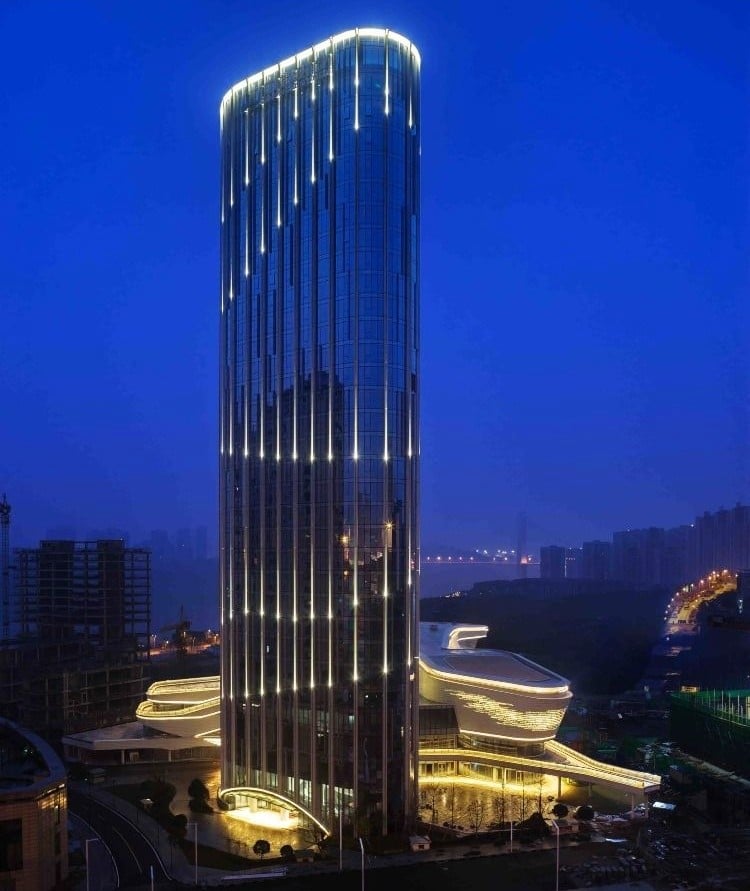
Linear LED fixtures can emphasize vertical edges, horizontal bands, recessed details, and changes in the building’s geometry.
Designers can integrate them into selected facade elements so the light follows the architecture rather than looking like an added decoration.
Accent lighting targets specific features, such as columns, entrance structures, fins, arches, or the building’s crown.
The best placement depends on viewing distances, fixture optics, mounting details, and the facade material.
A design that looks convincing in a close-up rendering may appear too bright or uneven when viewed from across a boulevard or waterfront.
Crown, Podium, and Entrance Lighting
The crown often provides the tower’s strongest visual landmark. Selective illumination can make the upper section easier to recognize while preserving darker areas across the main facade.
The podium plays a different role.
It connects the tower to people at street level and may contain retail, hotel entrances, lobbies, parking access, and landscaped public spaces.
A complete lighting concept should consider all three scales: the skyline, the building itself, and the experience of visitors approaching the entrance.
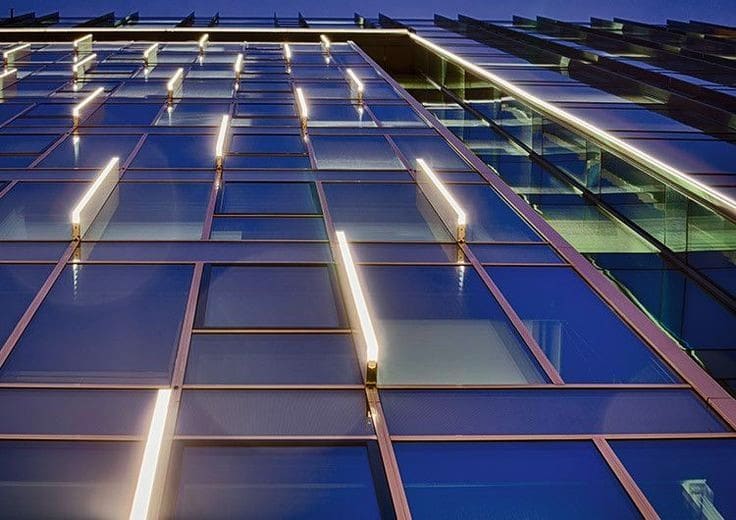
LED TOWER LIGHTING: FIXTURES, OPTICS, AND COLOR CONTROL
LED technology gives designers a wide range of options for high-rise architectural lighting.
Available products include linear wallwashers, grazing fixtures, narrow-beam spotlights, compact accent luminaires, and RGBW systems that can produce different colors.
However, the LED label alone tells a developer very little about a fixture’s suitability for a particular tower.
Select the Right Optical Performance
The designer should evaluate light output, beam distribution, glare, color quality, mounting position, and the distance between the fixture and the illuminated surface.
A narrow beam may suit a particular architectural detail, while a wider distribution may work better for a broad wall.
The selected optics should deliver the intended effect with as little wasted light as practical.
Photometric files, such as IES or LDT files where available, help designers model how fixtures distribute light.
Software such as DIALux can support calculations and simulations before installation.
Hence, tower lighting requires DIALux lighting design Service to construct the foundations of the lighting project.
Static White or Dynamic RGBW?
Not every tower needs color-changing lighting (or RGB).
A fixed warm or neutral white scheme may offer the right appearance for a corporate headquarters, hotel, or residential tower.
Dynamic RGBW lighting provides additional flexibility. It allows the building operator to create color scenes for events, national celebrations, promotional activities, and other occasions.
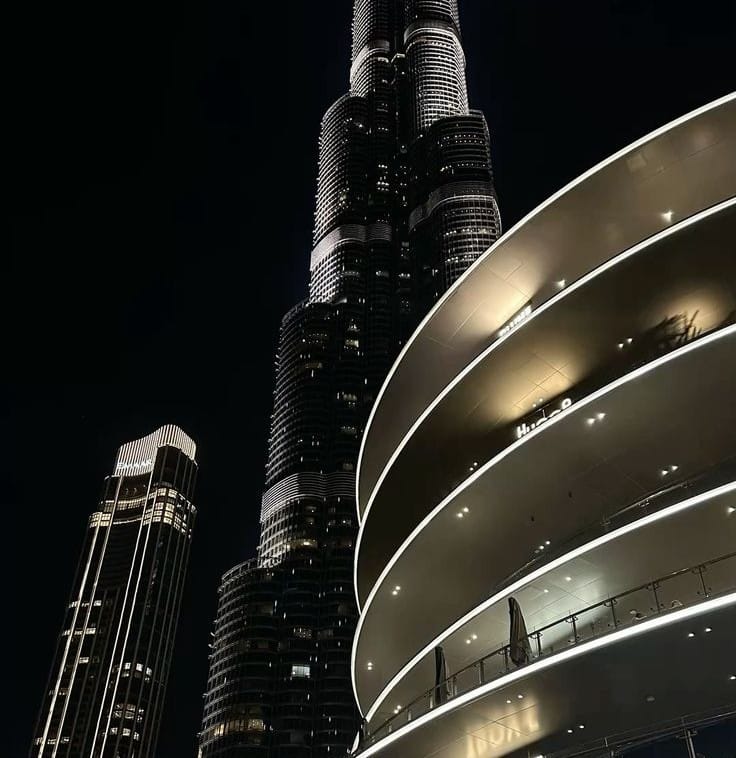
In November 2024, Emaar announced a major facade lighting upgrade for Burj Khalifa featuring dynamic RGBW technology.
The project demonstrates how a lighting system can support changing visual content while contributing to the identity of an architectural landmark.
Dynamic lighting also introduces additional requirements. Designers must coordinate compatible fixtures, drivers, controllers, network infrastructure, programming, and content management.
Choose Products for the Actual Environment
Exterior tower fixtures face demanding operating conditions.
Designers and specifiers should examine ambient-temperature limits, ingress protection, corrosion resistance, UV exposure, mounting requirements, and surge protection where appropriate.
A fixture that works well indoors may not suit a facade exposed to heat, dust, wind-driven rain, or coastal conditions.
The project specification should also address driver accessibility, replacement parts, warranty terms, and the expected maintenance approach.
These details can become particularly important when the building requires specialized equipment to access its facade.
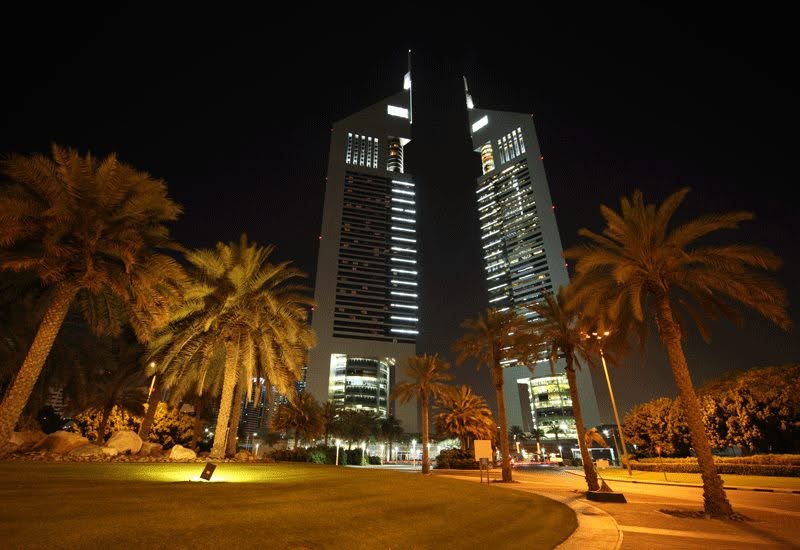
TOWER LIGHTING PROJECTS IN DUBAI AND ABU DHABI: REAL EXAMPLES
Completed projects offer useful lessons because they show how lighting designers respond to real architecture rather than designing around generic fixture layouts.
Jumeirah Emirates Towers in Dubai
Jumeirah Emirates Towers provides an example of a facade lighting upgrade that balances visual identity with energy considerations.
Signify documents a project that incorporated LED facade luminaires, including GiantEco, iGrazer, and MagicTube products.
The installation placed fixtures along the facade and used connected lighting technology to support more precise control.
The broader lesson is that upgrading an existing tower involves more than replacing old lamps with LEDs.
The design team must consider the existing mounting arrangements, electrical infrastructure, control strategy, and desired nighttime appearance.
A well-planned upgrade can preserve the building’s character while introducing more modern lighting technology.
DAMAC Heights and Al Kazim Towers
The DAMAC Heights lighting proposal in Dubai uses the idea of a beacon to reinforce the tower’s presence on the waterfront.
The design illuminates the upper mechanical floors and roof louvers from within, creating a subtle glow at the top, while linear lighting emphasizes the building’s sides.
Al Kazim Towers offers a different approach.
The facade lighting focuses primarily on the architectural crowns, using light and shadow to emphasize their distinctive forms rather than treating the entire building as one uniformly illuminated surface.
Both examples demonstrate why a lighting concept should respond to architectural character.
Even buildings of similar scale may benefit from very different lighting strategies.
Capital Gate in Abu Dhabi
Capital Gate presents a particularly interesting challenge because of its unusual leaning form and engineered facade structure.
A lighting consultant describes an integrated approach that reveals the tower’s distinctive geometry while avoiding visible equipment and unwanted penetration of the exterior envelope.
The project also includes lighting for the hotel’s public areas and landscaping.
This kind of integration matters in complex buildings.
The lighting system must work with the architecture and construction details, not compete with them.
The lesson is clear: Lighting design for property developers involves earlier design team to coordinates lighting with the facade system.
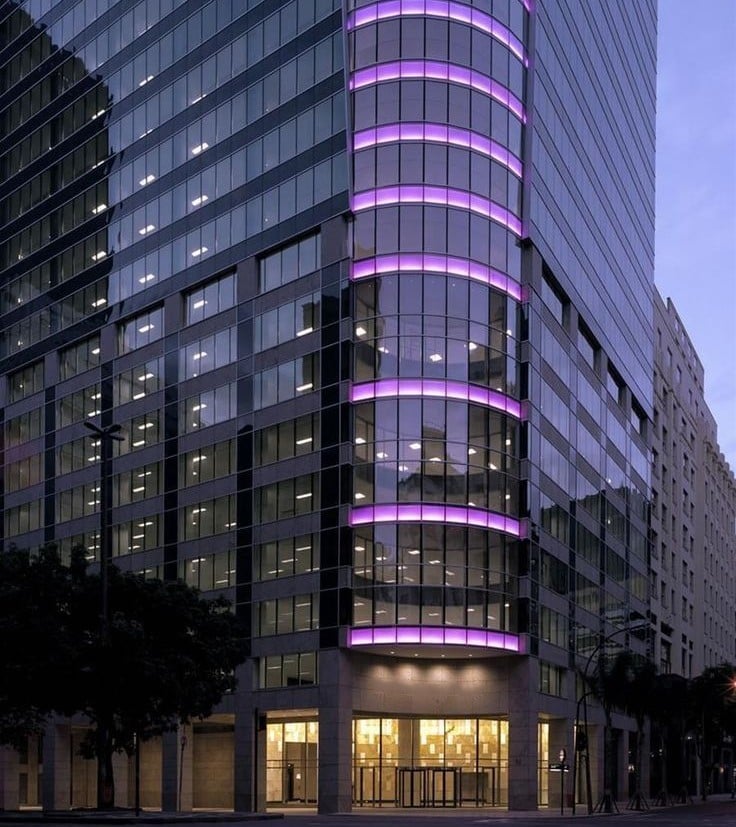
TOWER LIGHTING DESIGN AND ENERGY USE
Modern architectural lighting can involve hundreds or thousands of fixtures across multiple floors and facade zones.
Controls help the building operator manage those fixtures as a coordinated system.
Define Lighting Zones
A tower may divide its lighting into several independently controlled areas, such as the crown, vertical facade edges, podium, entrance, and landscape.
This structure gives operators more control over daily operation and special events.
They can illuminate the entire facade when appropriate or use a reduced scene when the building needs a quieter appearance.
Choose the Right Control System
The control architecture depends on the fixtures and the effects the design requires.
DALI lighting systems can support suitable dimming and control applications.
Dynamic color-changing or pixel-based facade systems may require dedicated protocols and controllers, such as DMX or Art-Net, depending on the chosen equipment.
Designers should confirm compatibility across luminaires, drivers, gateways, controllers, and management software before specifying the system.
A mismatch between components can lead to limited functionality, inconsistent dimming, or expensive changes during commissioning.
Plan Schedules and Operating Scenes
A lighting control system should do more than switch the building on at sunset.
It should support practical schedules, dimming levels, event scenes, and operating modes that reflect the building’s needs.
A residential tower, hotel, corporate headquarters, and landmark entertainment venue may require different schedules and levels of flexibility.
Automatic control can also reduce unnecessary operation during daylight hours and support more responsible energy use.
These considerations align with outdoor lighting design guidance from the IES and DarkSky International, which emphasizes useful, targeted, controlled lighting.
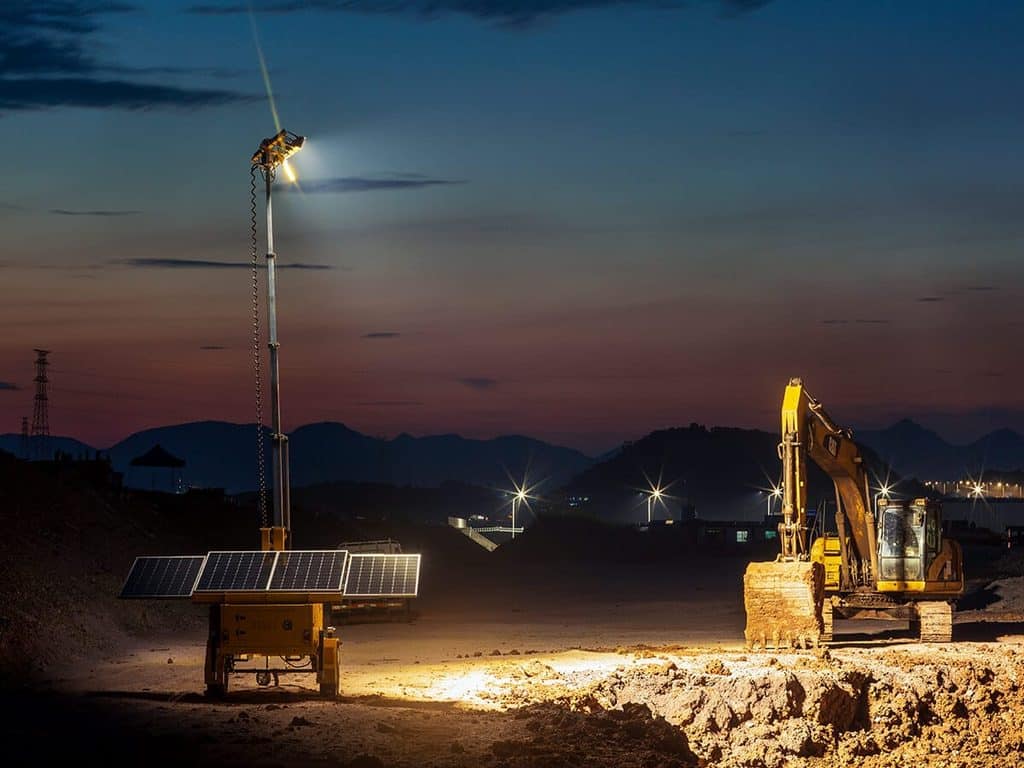
LIGHTING TOWER AND CONSTRUCTION LIGHT TOWER
“Lighting tower,” “light tower,” and “construction light tower”, refer to mobile equipment used to illuminate temporary work areas.
A construction light tower typically uses a raised mast with powerful luminaires.
Contractors deploy this equipment on work sites, road projects, infrastructure jobs, and other locations that need temporary illumination.
These machines serve a different purpose from permanent architectural facade lighting of towers.
A mobile tower can illuminate a construction zone while crews work, but it does not replace a designed system of facade-mounted fixtures, controls, and electrical infrastructure.
LED Light Tower, Solar Light Tower, Light Tower Generator, and Light Tower and Generator
Mobile worksite lighting comes in several configurations. An LED light tower uses LED luminaires to illuminate a temporary work area.
A solar light tower may use photovoltaic panels and battery storage where the equipment configuration supports that arrangement.
A light tower generator combines lighting with a power source, often using an engine-driven generator or a hybrid system.
Some models use battery storage to reduce engine operation under suitable conditions.
Product selection depends on light output, working hours, portability, power requirements, noise, fuel consumption, maintenance, and the conditions at the work site.
These details matter to construction managers procuring temporary lighting. They do not describe the design requirements for permanent skyscraper facade lighting.
Allmand Light Tower and Magnum Light Tower
Allmand manufactures mobile lighting towers for construction, mining, oil and gas, and rental applications.
Its product range includes LED equipment and hybrid models that combine engine power with battery storage.
Generac Mobile also offers light towers designed for industrial and temporary lighting applications, including LED, hybrid, and other mobile power configurations.
“Magnum light tower” belongs to the broader category of mobile worksite lighting and equipment searches.
Anyone procuring these products should compare the manufacturer’s exact model specifications rather than relying on the product category name alone.
For a permanent tower facade project in Dubai or Abu Dhabi, the procurement team should instead prepare a luminaire schedule covering the required architectural fixtures, mounting systems, drivers, control equipment, and electrical accessories.
This distinction helps developers avoid mixing temporary construction lighting budgets with permanent architectural lighting costs.

STACK LIGHT, SIGNAL TOWER LIGHT, AND AUER SIGNAL TOWER LIGHT
A stack light or signal tower light typically communicates equipment status through colored light modules.
Manufacturers use these devices in factories, automation systems, logistics facilities, and building services applications.
Auer Signal offers modular and preconfigured signal towers that support different colors, signaling functions, and mounting arrangements.
PATLITE offers a similar category of industrial signal towers, including configurable LED systems.
An Auer signal tower light therefore serves a different purpose from a facade lighting system.
It tells an operator that a machine or process has a particular status, rather than illuminating a building’s architecture.
The distinction matters when researching lighting products online.
A supplier that specializes in industrial stack lights may not provide the architectural luminaires, photometric planning, or installation services required for a high-rise facade.
MAKITA TOWER LIGHT, TOWER FLOOR LAMP, AND EIFFEL TOWER LAMP
Some lighting-related words lead to products that have little to do with architectural facade illumination.
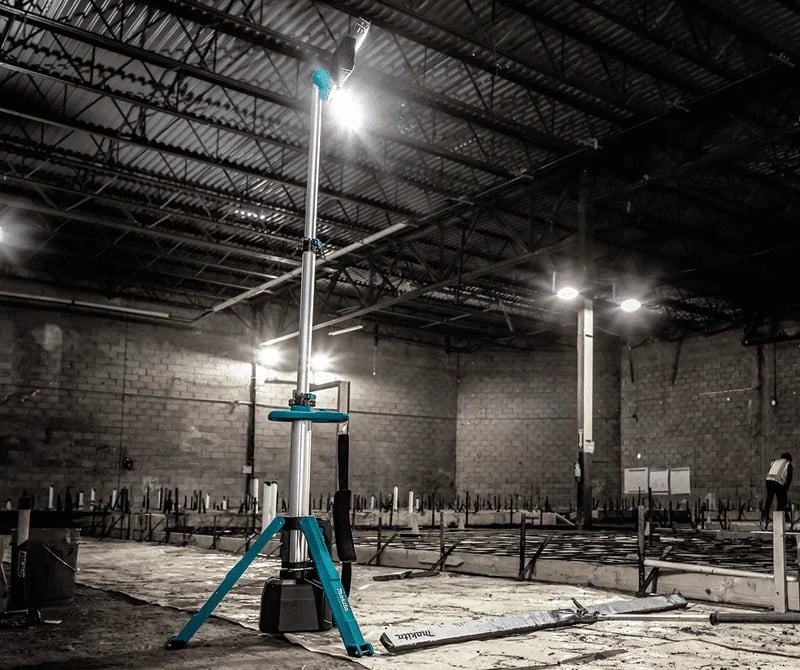
For example, Makita’s August 2026 product announcement describes a cordless multi-directional tower work light designed for worksite illumination.
The product extends upward and uses adjustable light heads, making it suitable for temporary task lighting rather than permanently illuminating a skyscraper.
A tower floor lamp generally refers to a freestanding interior lamp with a tall form.
An Eiffel Tower lamp may refer to a decorative lamp or a fixture inspired by the landmark’s shape.
These terms belong to separate product categories. They can be useful when researching portable work lights or decorative interior lighting, but they should not determine the product specifications for a permanent tower facade project.
For developers and building owners, the primary requirements remain architectural performance, fixture durability, optical control, installation access, electrical coordination, and long-term serviceability.
Design, Supply, and Installation Should Work Together
A complete tower lighting proposal should explain the design intent and identify the equipment and services needed to deliver it.
The scope may include architectural lighting concepts, photometric calculations, fixture schedules, technical submittals, mock-ups, electrical coordination, mounting details, programming, aiming, testing, commissioning, and handover documentation.
For an existing building, the proposal should also identify what can remain in place and what requires replacement or modification.
This helps the client understand the difference between a fixture replacement, a partial facade upgrade, and a complete redesign.
TOWER LIGHTING REGULATIONS, LIGHT POLLUTION, AND MAINTENANCE
A successful lighting project must meet the relevant local requirements as well as the owner’s design objectives.
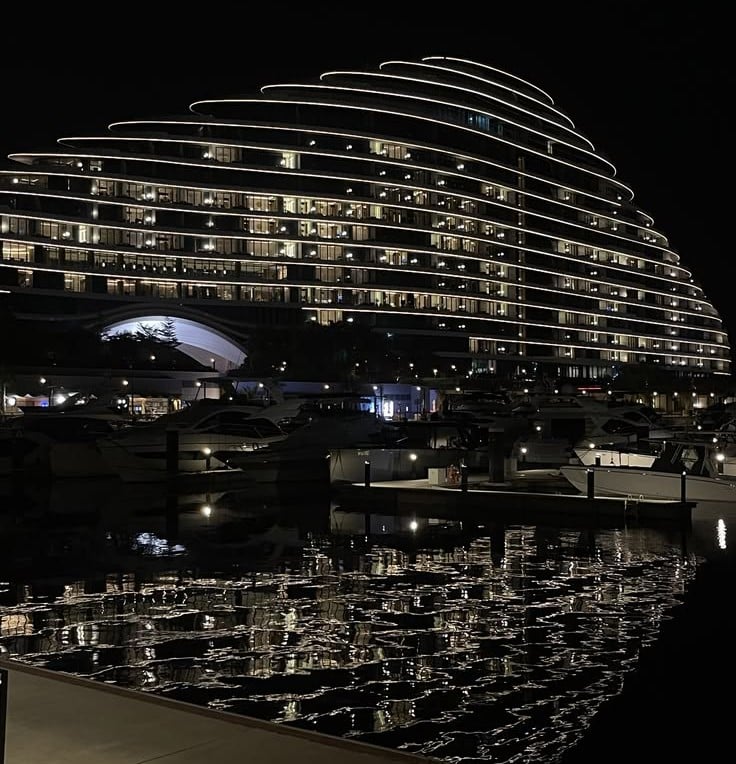
Dubai’s 2021 Building Code addresses exterior lighting power, pollution, and controls in Section E.5.8.
The published requirements include exterior lighting power limits, measures to prevent architectural accent lighting from illuminating the night sky, a limit on light spill from wallwashing, and automatic controls that allow exterior lighting to remain off during daylight hours.
The exact requirements for a project depend on its location, use, approvals, and applicable code provisions.
Developers should confirm the current requirements with the relevant authority and design team before finalizing the specification.
Projects in Abu Dhabi should likewise verify the applicable local authority requirements rather than assuming that every approval process matches Dubai.
Reduce Glare and Unwanted Light Spill
A well-designed facade should look clear and balanced without causing unnecessary glare for residents, drivers, neighboring properties, or people in nearby public spaces.
Designers can control these issues through fixture optics, shielding, aiming, dimming, and careful selection of illuminated surfaces.
The Five Principles for Responsible Outdoor Lighting from DarkSky International and the IES recommend lighting that serves a clear purpose, directs light where needed, uses no more brightness than necessary, operates only when needed, and favors warmer colors where practical.
These principles are particularly useful when a tower stands near residential buildings, public waterfronts, or areas where excessive lighting could disturb occupants or the surrounding environment.
Make Maintenance Part of the Design
Tower lighting systems need a practical maintenance plan.
Outdoor fixtures face environmental exposure, and electronic components may eventually require servicing or replacement.
The team should document fixture locations, model numbers, control zones, circuit arrangements, drivers, and replacement procedures. It should also confirm how technicians can access each fixture safely.
A suitable maintenance strategy can reduce the time required to diagnose faults, identify spare parts, and restore the intended appearance of the building.
COST OF TOWER LIGHTING IN DUBAI AND ABU DHABI
Published price guides from UAE facade-lighting providers offer an initial reference, although these figures represent vendor estimates rather than an official tariff or an independently audited market average.
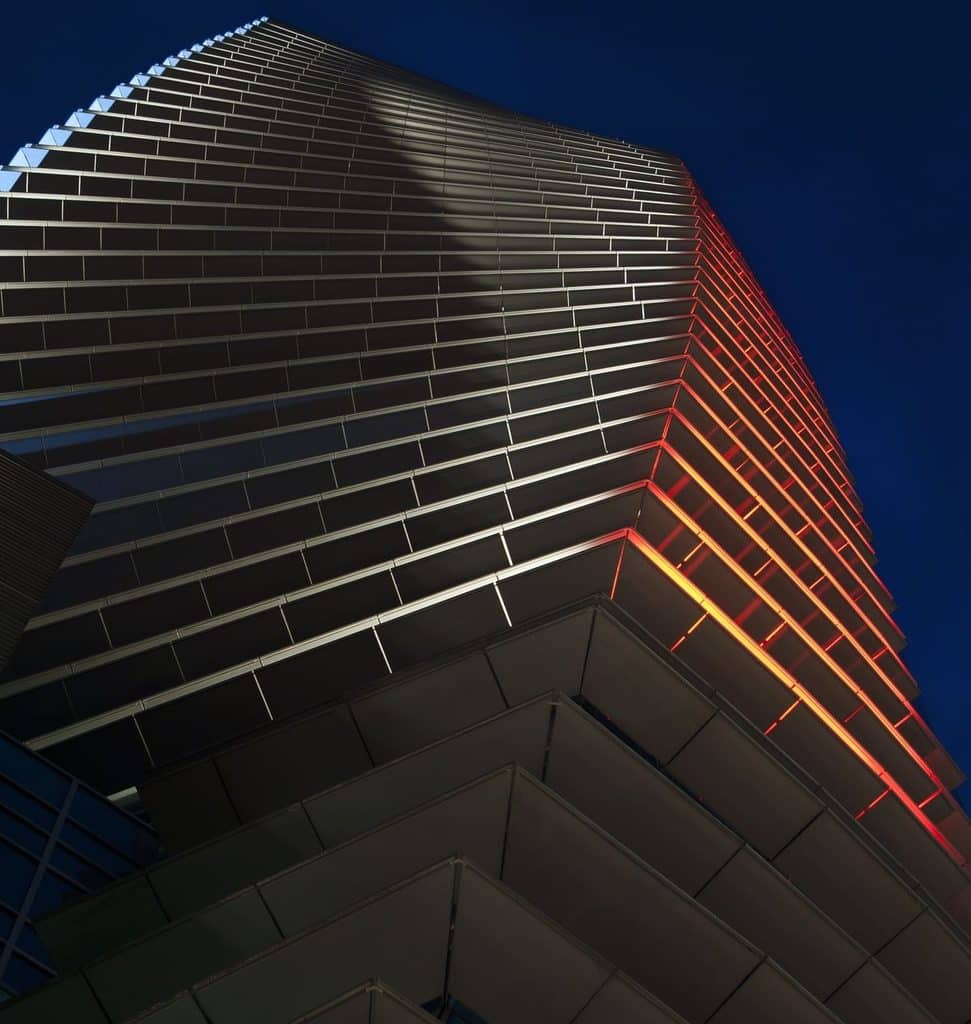
A high-rise facade lighting project can cost approximately AED 90,000 to AED 500,000 or more. Larger landmark buildings and media-facade projects may cost AED 300,000 to AED 2 million or more, depending on the project’s size, design complexity, equipment, and installation requirements.
Some UAE suppliers also quote prices per linear meter. Indicative rates may range from AED 800 to AED 1,500 for basic wallwashing, AED 1,500 to AED 3,000 for architectural accent lighting, and AED 5,000 to AED 15,000 or more for premium media or pixel-facade systems.
These estimates can vary depending on the project scope and specifications, so confirm what each quotation includes before comparing prices.
So, there is no single price for tower lighting.
Indeed, a basic static-white scheme that highlights only a crown or selected architectural details can require a very different budget from a large RGBW installation with individually controlled LED pixels and programmed media content.
The project’s actual scope determines its cost.
A reliable quotation should separate design and engineering, fixture supply, mounting equipment, cabling, controls, installation access, commissioning, and any applicable consultant or approval costs.
Building Height and Access Requirements
Height has a significant effect on installation and maintenance.
A fixture installed near ground level may require straightforward access, while a fixture near the top of a tower may require a building maintenance unit, specialist rope access, or another approved access method.
The project team must coordinate safe access, working areas, mounting arrangements, lifting requirements, and electrical installation procedures.
Those decisions can affect both installation costs and future maintenance expenses.
Access provisions deserve attention during the design stage.
A system that looks affordable when considering only the fixtures may become expensive to service if technicians need complicated access arrangements every time a component fails.
Fixture Selection and Control Complexity
Fixture cost varies with optical performance, output, color capability, construction, environmental protection, control compatibility, and the manufacturer’s specifications.
A static-white system may have different equipment and programming requirements from a dynamic RGBW installation.
A pixel-controlled facade adds further considerations, including controllers, network infrastructure, content programming, and testing.
The developer should also evaluate the expected operating schedule and maintenance approach. A lower initial price may not represent the best overall value if the equipment proves difficult to service or replace.
FINAL THOUGHT
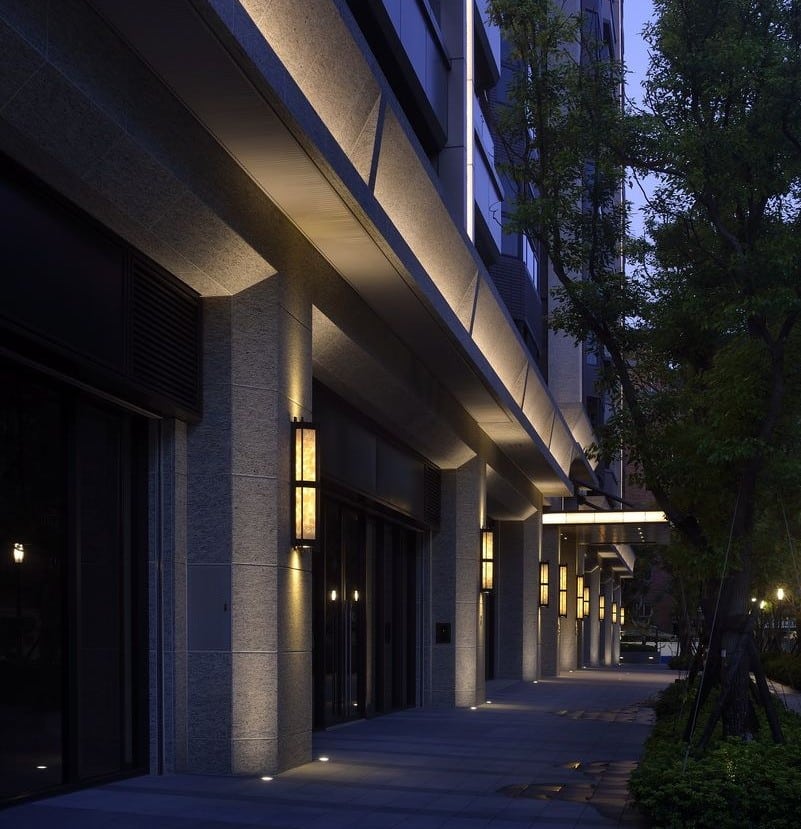
Skyscraper and tower lighting can do more than make a building visible at night. It can reveal the architecture, establish a recognizable identity, improve the entrance experience, and create a stronger relationship between the building and its surroundings.
The strongest projects start with the design rather than the fixture catalog.
They identify the architectural features worth highlighting, select equipment based on documented performance, and coordinate the installation with the facade, electrical infrastructure, and maintenance strategy.
For developers in Dubai and Abu Dhabi, early planning also makes it easier to assess costs, confirm local requirements, compare suppliers, and choose a practical control system before installation begins.
Whether the goal is a subtle corporate facade, a distinctive residential tower, or a dynamic architectural landmark, a well-planned system helps bring the concept into a technically sound and maintainable result.

Related Posts
Villa Lighting Cost in Dubai and Abu Dhabi in 2027
Villa Facade Lighting in Dubai and Abu Dhabi: 3D Design, Outdoor LED Supply, and Installation in 2027
Track Lights in Dubai and Abu Dhabi: LED, Magnetic, and Mini Track Lights in 2027
Retail Lighting Design in Dubai and Abu Dhabi: For Shops, Showrooms, and Malls
Office Lighting in Dubai and Abu Dhabi: For Modern Corporate Workspaces in 2027
Villa Lighting Projects in Dubai and Abu Dhabi: 3D Design, Supply, and Installation
Lighting Designer in Dubai and Abu Dhabi for Villa and Large Projects in 2027
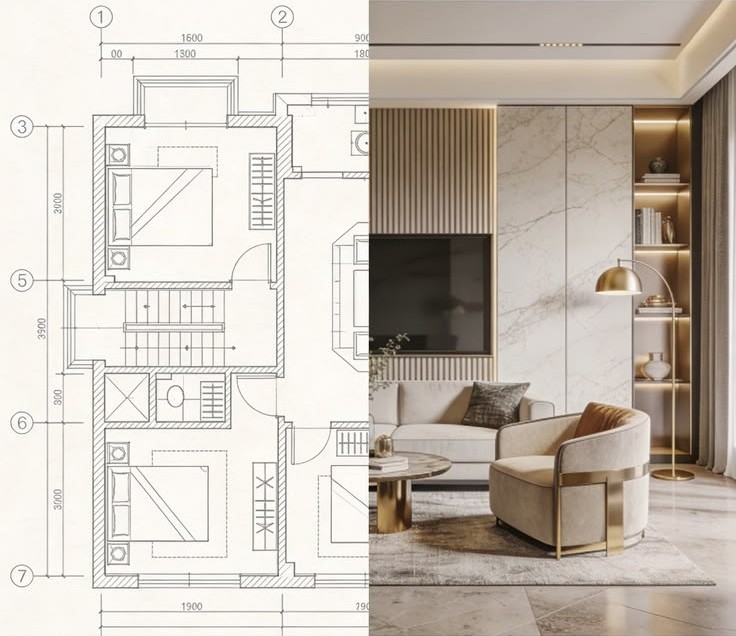
2D Lighting Plans in Dubai and Abu Dhabi for New Villa Construction
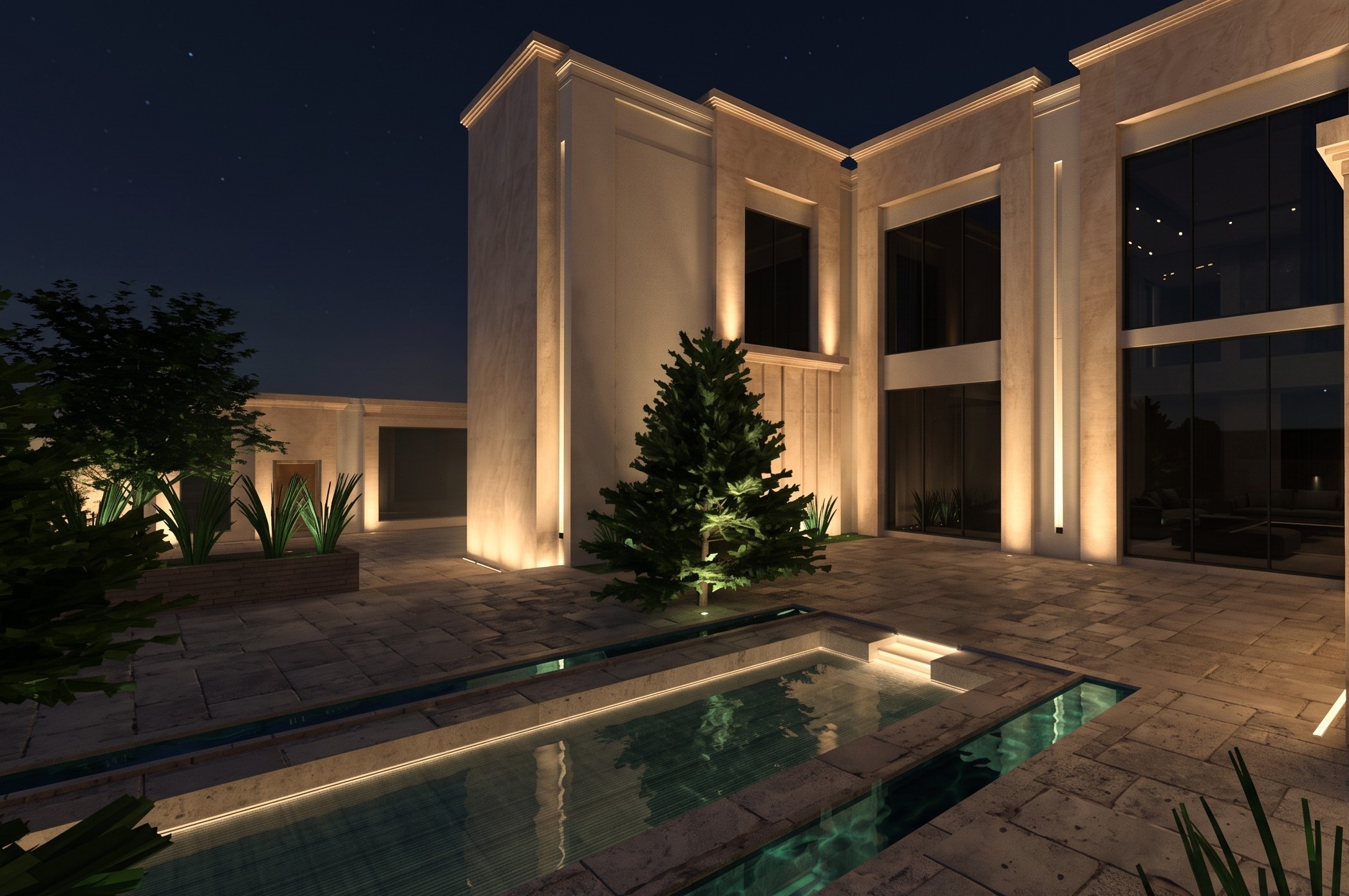
3D Lighting Design in Dubai and Abu Dhabi for Villas, Hotels, and Luxury Spaces
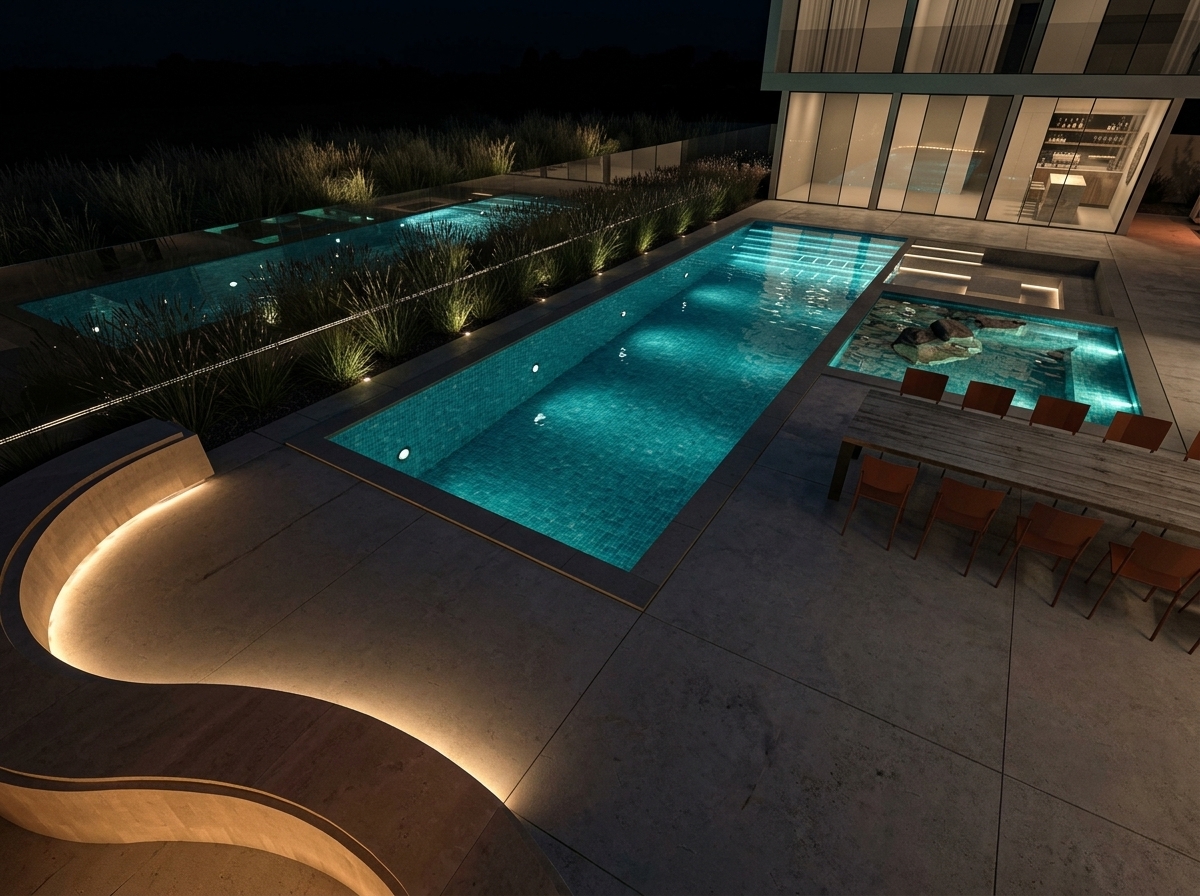
DIALux Lighting Design Service for Dubai and Abu Dhabi Projects
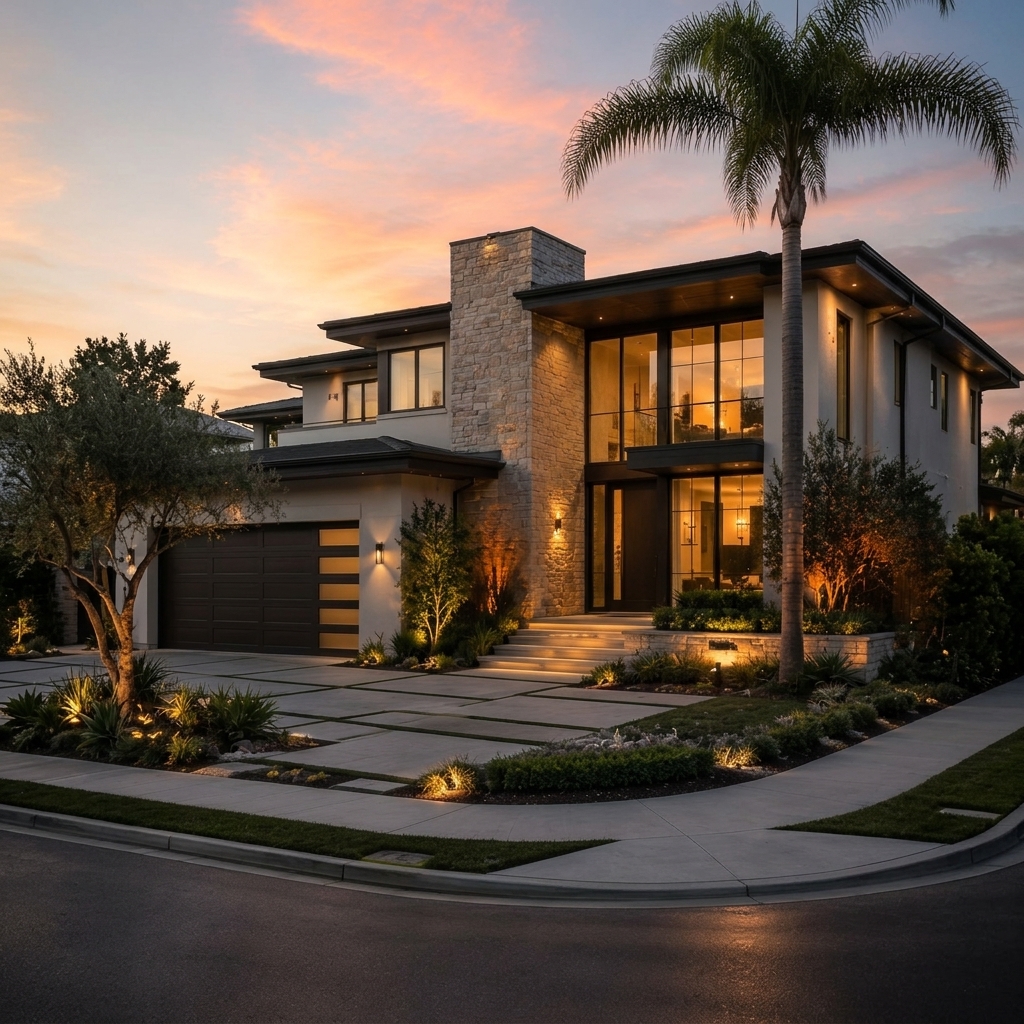
Facade Lighting in Dubai and Abu Dhabi for Villas and Homes
Skyscraper Facade Lighting in UAE: A Guide for CEOs, Contractors, and Architects


Wall Light Design in UAE for Homes & Villas

Staircase Light Design in UAE for Homes, Villas, & Large Malls


Light Installation in UAE for Homes, Villas, and Shops
